
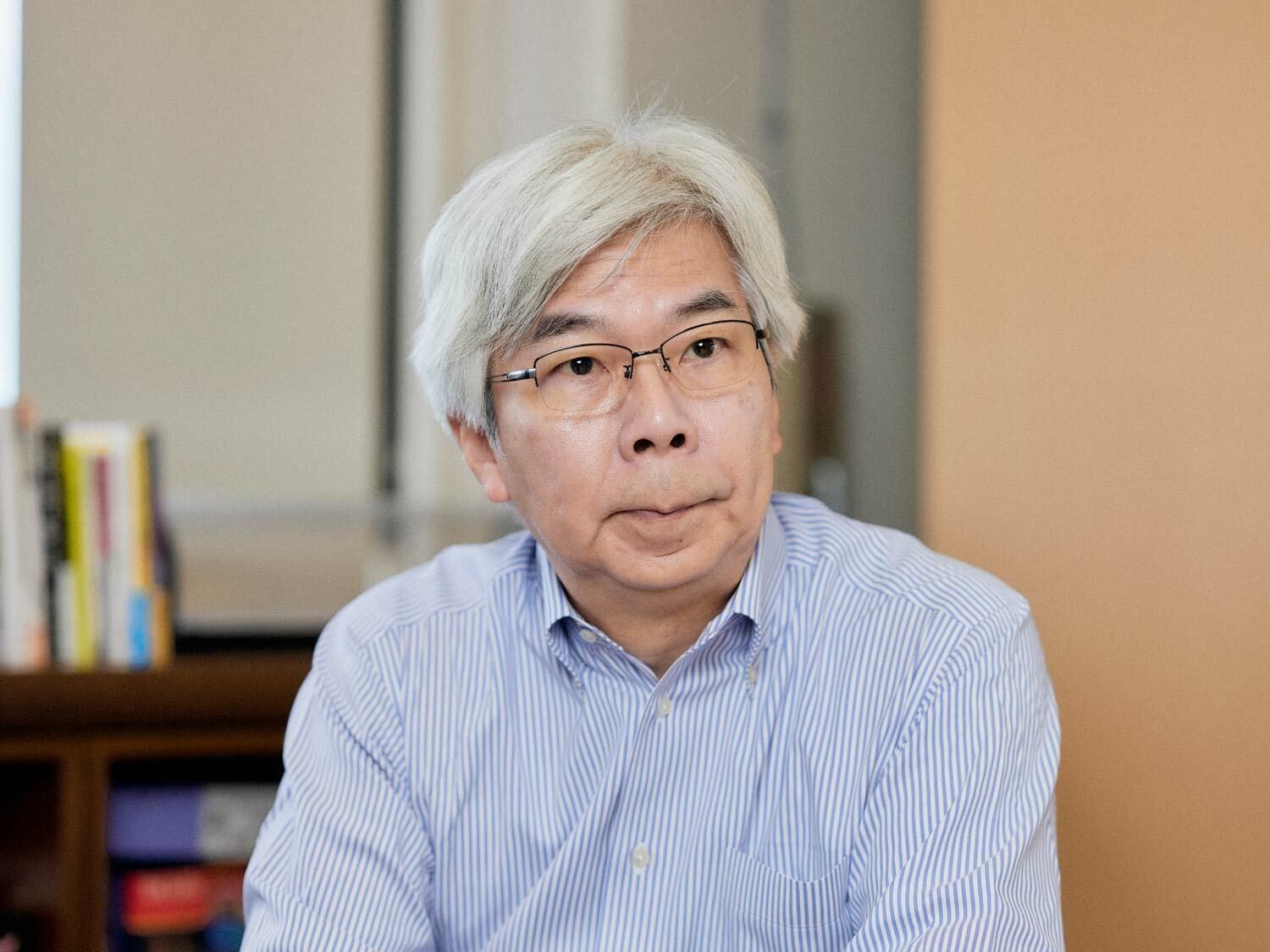
A Tokyo University professor has urged that AI use in education be banned outright, warning that students who let machines think for them are giving up the language-based reasoning their brains develop through, Bunshun Online reported.
Kuniyoshi Sakai, a language brain scientist and professor at the University of Tokyo's Graduate School of Arts and Sciences, made the call in the December issue of Bungeishunju, released on November 10. He said AI use in classrooms should be prohibited entirely.
Sakai described what he sees in his own classes. "In recent years, more students come to university without even a notebook or writing implements," he said.
He dates the shift to OpenAI's release of the ChatGPT chatbot in 2022. Students now ask AI first when given a writing assignment, he said, and feel no guilt about leaving their own minds unused.
Some have submitted AI-generated text as their own work. Worried by the risk, Sakai said he dropped written reports from his courses the following year and switched to exams that bar digital devices.
A threat to developing brains
Sakai argued from his field that the damage goes beyond coursework. Relying on AI and abandoning the habit of thinking in language, he said, hinders the development of brain functions including the grammar center people are born with.
Adults whose brains were trained before AI arrived may use the tools at their own risk, he said. Pushing them on children and students still in development is different.
“It is equivalent to a reckless human experiment.”Kuniyoshi Sakai, professor of language brain science, University of Tokyo
Falling reading scores
Survey data is beginning to show the cost. In last year's Program for International Student Assessment, or PISA, run by the OECD, test scores fell sharply across many countries.
The OECD tested about 760,000 15-year-olds in 91 countries and regions. In reading, the decline was equivalent to roughly a year and a half of schooling compared with 2015.
Japan's students placed first among OECD members in all three areas tested: reading, science and mathematics. Their average reading score nonetheless fell from the previous round.
AI adoption in Japanese schools has been advancing under the education ministry's direction. The Tokyo Metropolitan Board of Education began full operation of a generative AI service for all metropolitan schools in May last year, using it for tasks including grading essays.