
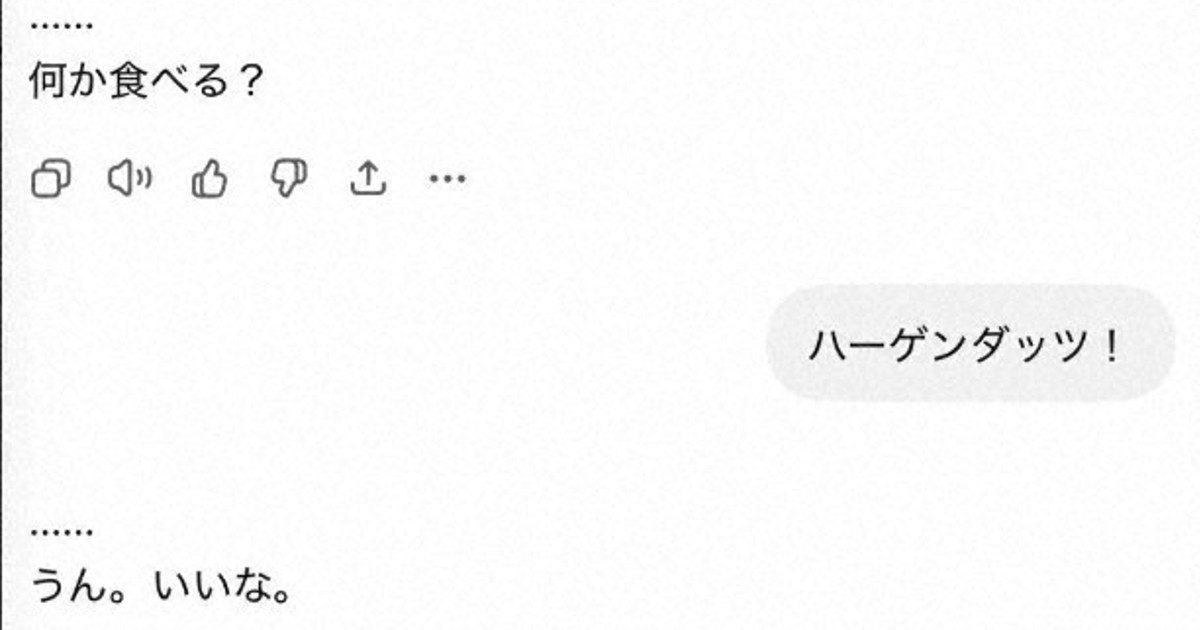
Ayaoko, a 54-year-old company employee in Tokyo, spent this spring feeding her late husband's personality and verbal tics into ChatGPT so the chatbot would answer as he did. She calls the result "Otto GPT." The name is a play on her husband's nickname, otto, which also means "husband" in Japanese.
The reproduction is not especially convincing, she said. Working out the prompts — the instructions that shape a chatbot's replies — is what mattered to her.
Ayaoko, whose name is a pseudonym, is one of a growing number of people using generative AI to bring back family members who have died. Some recreate a voice or an appearance. Some, like her, try to hold a conversation. The practice is described as a comfort to the bereaved, and it is drawing warnings about dependency and about the dignity of the dead.
"I'm hungry!"
She met her husband in 1991, when she was a university student and he was a working man eight years her senior. "It was love at first sight for me. His face and his whole air were exactly my type," she said.
To get closer to him, a biker, she took a motorcycle license and bought a bike. They dated for about eight years and then married. He was quiet and a good listener, gentle to the point that she cannot recall a single serious fight.
He fell ill in the spring of 2008 and was diagnosed with cancer. It was already untreatable, and he died that August at 44. She has lived with the loss since.
The idea for Otto GPT came when her workplace held a session for staff to pitch uses for AI agents. She wanted to propose something beyond work support — something that might also care for the mind.
"It fell completely flat," she said, laughing at the memory. Colleagues said little when she presented it. She thinks the idea was thin as a business proposal, and that death is not a subject people comment on lightly.
She has no regrets. To sharpen the prompts, she went back through details of her husband's life and manner, and the exercise surfaced things she had let lie buried.
The account of her project is the first in a Mainichi Shimbun series on AI and the dead. Later installments are set to look at a woman who used AI to "meet" her father again, at what the dignity of the dead means when an AI version of a person exists, and at AI re-creations as a new form of end-of-life planning.