
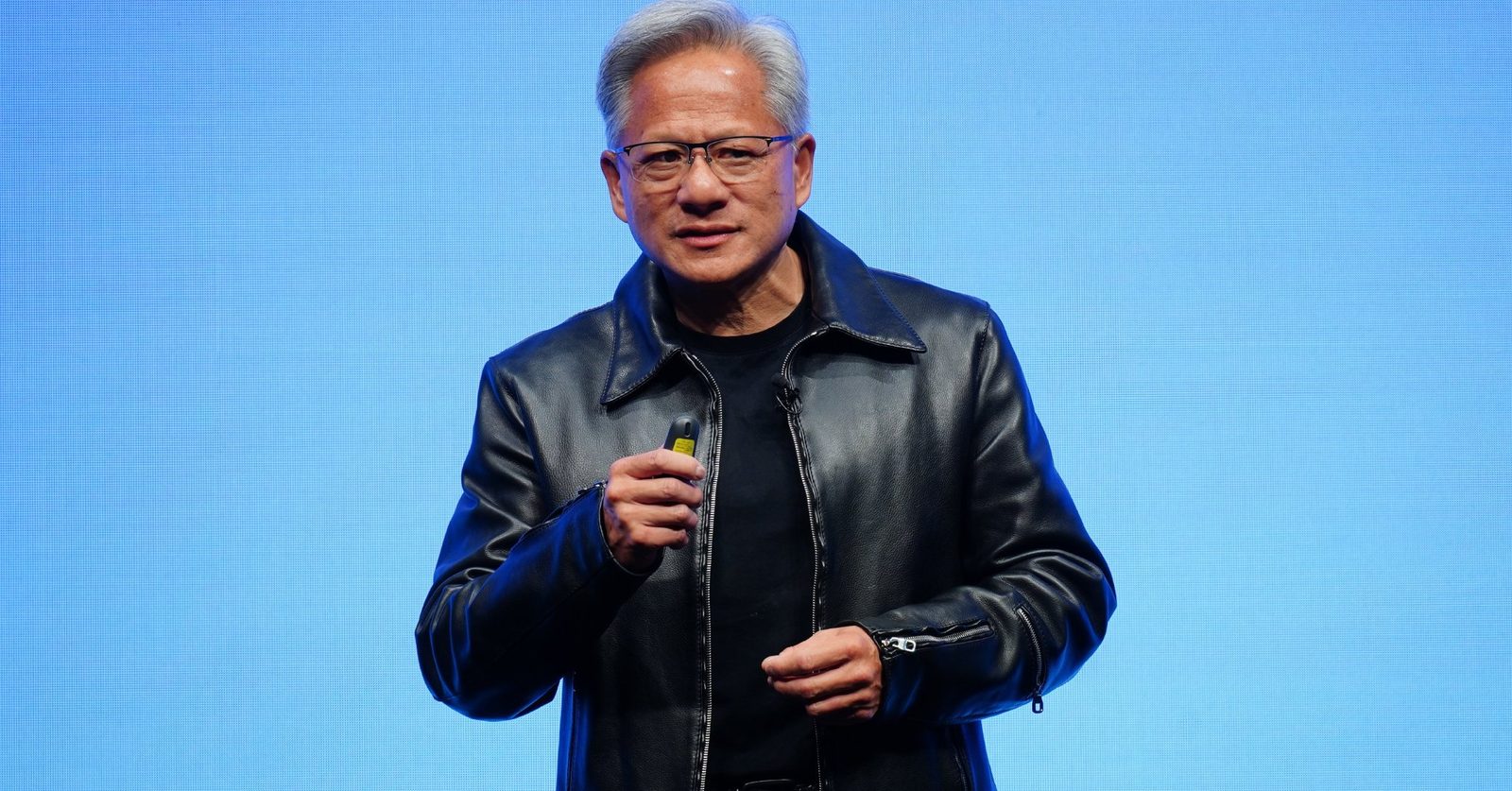
Jensen Huang, who founded Nvidia and served as its president, CEO and chairman, left the company on November 12, a departure ITmedia News reads as an effective dismissal, since the official announcement carried no message from him.
The outlet reported that the picture around the exit is hard to read. Beyond an affair, talk has surfaced of a honey trap and a turn into national security territory. Questions have also been raised about China-related sales.
Suspicions of circular transactions in other revenue have emerged as well. As of November 16, when the outlet was writing, it was unclear how the matter would settle.
The bets that built Nvidia
Huang's record starts with the NV1, Nvidia's first product. The chip was manufactured on a 0.5μm process at Swiss semiconductor maker STMicroelectronics, then SGS Thomson, and ran ports of Sega Saturn games such as Virtua Fighter. Its DirectX compatibility was poor.
Nvidia next worked with Sega on the NV2 for the Dreamcast, and the development failed. The company came close to bankruptcy. Shoichiro Irimajiri, then CEO of Sega of America, saved it: Sega paid Nvidia's NV2 development costs despite the failure.
Nvidia survived, changed course and began work on the GeForce 256. When Nvidia and Sega held a 30th-anniversary collaboration event in July, Huang came to Japan.
Ian Buck at Stanford later developed the prototype of CUDA, an API and language that let GPUs be used for general purposes. Nvidia brought Buck in, a decision the outlet attributes to Huang, and announced CUDA in 2006.
For years CUDA was used only in narrow fields such as HPC. That changed in October 2012, when the University of Toronto demonstrated AlexNet, a CNN-based image recognition network that beat the field. It ran on Nvidia GPUs using CUDA.
The image recognition community swung to CUDA-based AI almost at once. By 2014, Nvidia had made AI the theme of its GTC annual event, down to a demo of AI-based autonomous driving, and pitched its focus on AI ahead of other chipmakers.
That single-minded pivot is what the outlet calls Huang's essence. The first-mover advantage in AI delivered the steep sales and profit Nvidia has enjoyed since.
The outlet singles out the Groq deal as something only Huang could have done. Nvidia announced Rubin CPX, a product aimed at LLMs, in September 2025. Six months later, in March 2026, it effectively shelved Rubin CPX.
Instead it announced the effective acquisition of US AI infrastructure company Groq and the adoption of Groq's LPU, a processor built for LLMs. Nvidia had pushed its AI strategy under the banner of "CUDA everywhere."
Dropping that banner within half a year to build systems on a CUDA-incompatible chip is a feat the outlet says only a founder-CEO could manage.
Huang knew the technology, decided quickly, and his bets, meaning Nvidia's corporate strategy, mostly paid off. He was hungry for new technology and kept taking risks. That, the outlet writes, is what made Nvidia Nvidia.