
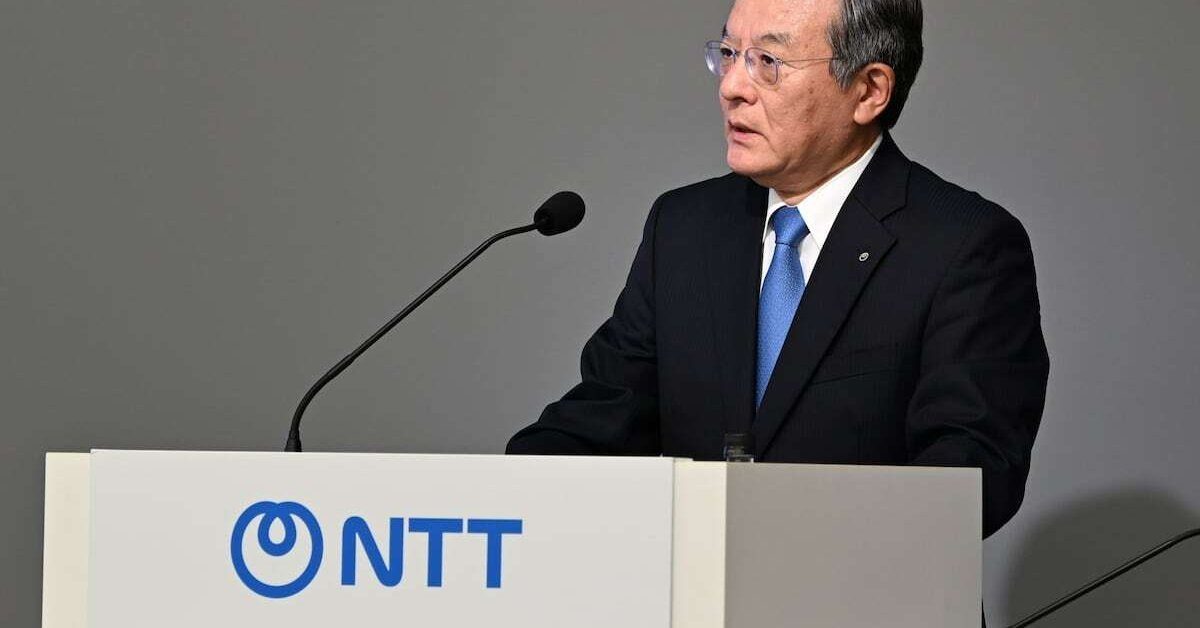
NTT President Akira Shimada wants the government to legislate on cutting off access to attackers' websites, saying the rules need to be settled before an attack rather than during one. He spoke at the company's earnings briefing on November 4, after the government asked telecom carriers to block connections to the sites behind an unauthorized access incident at GMO Internet Group.
Shimada said it was important to establish provisions such as the criminal law defense of necessity — acting to avert a present danger when no other option exists — and that NTT would press the government on the matter. He declined to comment on how NTT would respond to the government's request.
Guidelines before the fact
On blocking, which forces connections to be cut, Shimada said user protection and the confidentiality of communications guaranteed by the Constitution have to be reconciled. "We need to draw up guidelines in advance, assuming the kinds of cases in which blocking would be allowed," he said.
Blocking of child sexual abuse material sites is currently accepted as falling under necessity. Treating piracy sites or illegal online casino sites the same way was not accepted in past debate.
Shimada also raised the risk of advanced AI being misused in cyberattacks. "The most advanced models aren't in Japan, so we have to access them overseas," he said, arguing for AI that can be managed and operated domestically.
Twelve leaks in two months
At the briefing Shimada disclosed that 12 information leaks occurred at NTT Group companies and contractors between September and October, a period in which breaches came to light one after another. Five of them originated within NTT's own operations, including a remote monitoring service for solar power generation and the e-book store Comic Cima, and he apologized for those.
"The number of cyberattacks detected in October is seven times the figure a year earlier," Shimada said.