
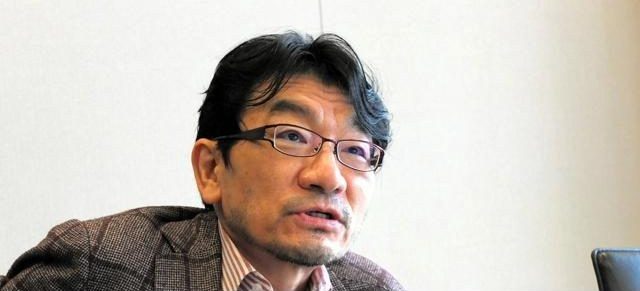
Expectations are high that the spread of cutting-edge AI will lift productivity and ease Japan's labor shortage. But in Japan, productivity has risen for years without wages following, and Ryutaro Kono, chief economist and head of economic research at BNP Paribas Securities, warns that pushing AI adoption on the current path would amount to "extractive innovation."
Kono made the argument in an interview with the Asahi Shimbun, part of a series on the lessons of Mythos, the frontier AI model from the US developer Anthropic.
A bubble nobody can audit
Asked about the threat that frontier models such as Anthropic's Claude Mythos pose to financial institutions' systems, Kono said banks and other firms are in a position where they must keep adopting the newest AI. No one can verify whether the spending is actually worth the cost, he said, yet they have to keep buying the services.
That dynamic, in his view, appears to be prolonging the AI bubble. He compared it to Albert Camus's essay "The Myth of Sisyphus," in which the boulder is pushed to the summit only to roll back down, forcing the labor to begin again — an "endless toil."
“In a sense, this looks like what is keeping the AI bubble alive.”Ryutaro Kono, chief economist, BNP Paribas Securities
Kono's warning rests on Japan's own record: productivity gains that did not translate into higher pay. If AI is introduced the way it is now, he said, it will become a form of innovation that extracts value rather than spreading it — the pattern he associates with the Industrial Revolution, where wages are described as falling for a century.
The interview was published as part of a series. The full text sits behind a paywall, and the published portion covers only the opening exchange on the AI bubble; Kono's discussion of the Industrial Revolution parallel is not reproduced in it.