
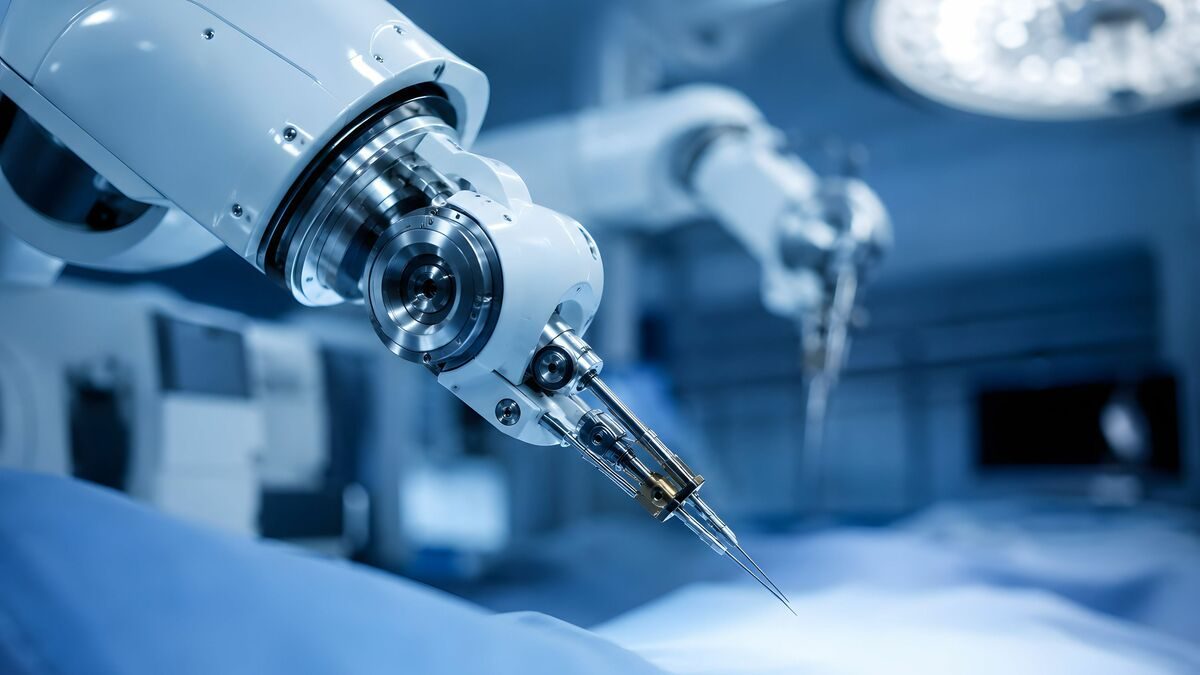
Surgical robots are becoming a test case for physical AI — machines that move arms and bodies in the real world — and the money is moving toward the software. Companies that pair robots with AI and data platforms are raising far more than firms that sell hardware alone, and Japanese makers still focused on precision arms risk being left behind.
Moon Surgical, which builds a platform robot on Nvidia's edge AI base to integrate and analyze operating-room data, raised about $85 million (around ¥12 billion) without difficulty. Digital Surgery, a British firm strong in AI-driven surgical data analysis and digital training, was acquired by Medtronic in 2020 and folded into its ecosystem. The price was not disclosed, but the Telegraph reported it at more than $300 million, citing people familiar with the matter.
Pure mechanical makers, which sell hardware outright and carry no AI, see their valuations languish despite fine engineering. The gap in how the market values the two kinds of company is stark.
Two kinds of investor
The difference runs deeper than the size of the checks. Investors backing AI and data-platform companies expect recurring software revenue, the kind of subscription model that has replaced one-off sales of expensive machines. Hardware-only firms instead run into what the article calls the burn-rate wall — they spend heavily to develop and build machines while waiting for lump-sum sales.
Nvidia is becoming essential infrastructure as the operating system for surgical robots, the article notes. Intuitive Surgical, maker of the da Vinci system, is pursuing an Apple-style approach that keeps its data closed. Rivals including Johnson & Johnson MedTech and Medtronic have formed alliances around an open, Android-style platform, and the two camps are fighting for dominance.
Japan stuck on hardware
Japanese surgical robot developers have strong precision-machinery skills. But competition has shifted to combining hardware, AI, patient data, cloud services and recurring revenue, and few Japanese firms have built that kind of ecosystem.
Many remain at the level of craft engineering, asking how to make a more precise arm or move it more accurately. That hardware-first outlook leaves little room to see the global shift, and the worry is that Japan is being left behind — the same way feature phones, once a Japanese strength, were stranded when the market moved to software.