
A joint team at a nonprofit Silicon Valley institute and Stanford University has used artificial intelligence to design a virus that does not exist in nature and confirmed for the first time that it works, killing bacteria in the lab, the Mainichi Shimbun reported.
The team designed the complete genome of a phage — a virus that infects bacteria such as E. coli — with AI, then built the virus and tested it. The results appeared in the American journal Science in August and drew wide attention.
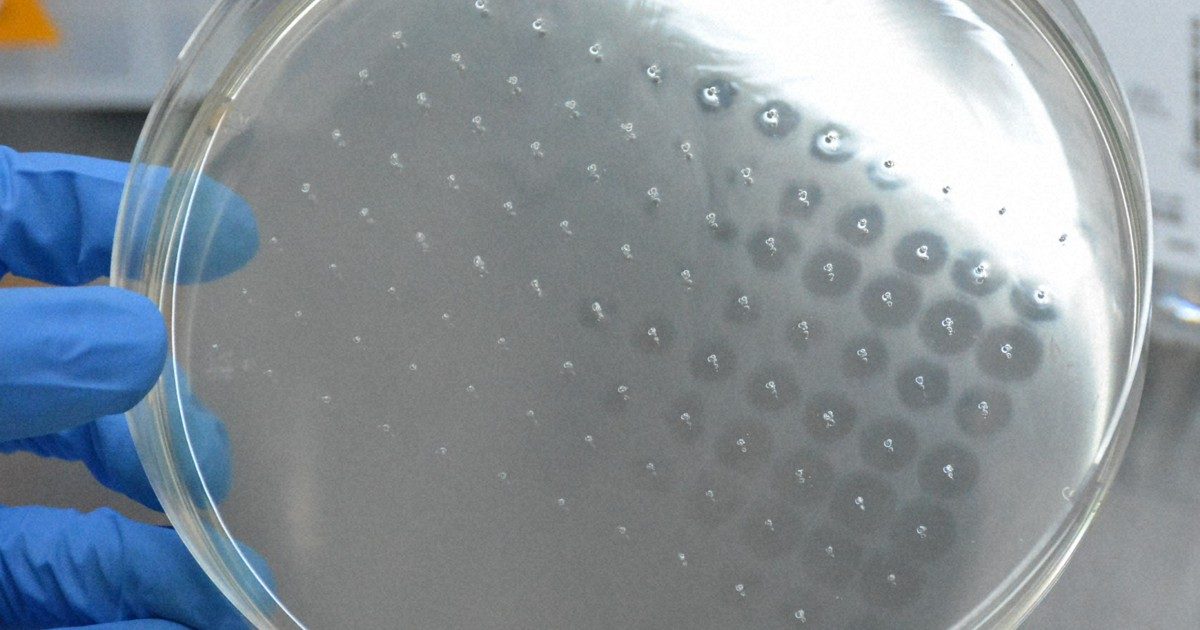
In a petri dish at the Palo Alto institute, now filled with cloudy E. coli, small clear circles stand out under a lamp. They are the marks left where the AI-designed virus killed the bacteria.
“I thought spots should appear if the virus was working, but I was really nervous the first time I found them.”Samuel King, researcher at the Arc Institute
King, 27, looked down at the dish in a laboratory lined with bacterial incubators the size of large microwave ovens. The institute is the Arc Institute, a nonprofit research organization.
A chatbot for genomes
The Arc Institute was founded in 2021 and is funded by donations from Silicon Valley investors. It works with Stanford and other nearby institutions on life science research that departs from conventional boundaries.
What made an unknown virus possible is an AI model trained on the genetic information of living things instead of language — in effect, a genome version of ChatGPT.
“If you input a prompt of DNA sequence here, a new sequence is generated.”Samuel King, researcher at the Arc Institute
King spoke in the institute's lobby, where sunlight filtered through the trees.
The same tools that could be turned to medicine can also be turned to harm. The Mainichi Shimbun is running a two-part series on the expectations and concerns the work has stirred; the second part, on keeping the technology from misuse, is scheduled for publication at 6 a.m. on the 14th.