
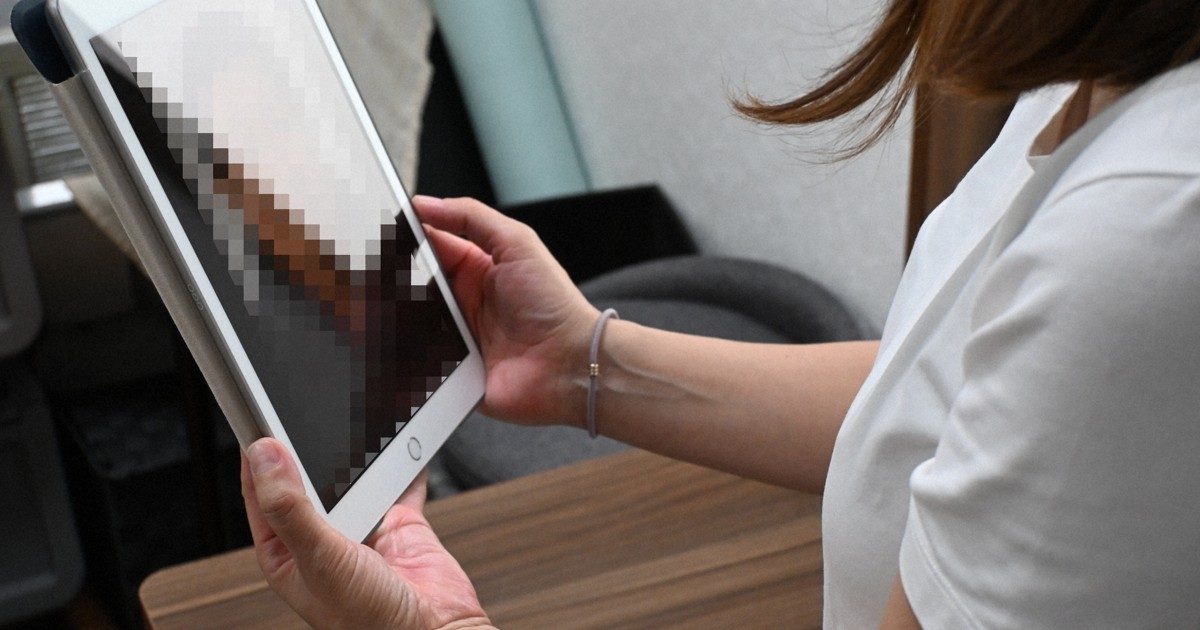
On a tablet screen, a father's portrait wears a calm expression. When his eldest daughter touches the glass, the photograph begins to talk.
"He was cheerful, a joker, devoted to his children," said Mika, 47, who lives in Saitama Prefecture and asked that her real name not be used. The portrait greeted the grandchildren born after his death. "Nice to meet you. I'm your grandpa."
The service is called Irei 81, formerly Irei AI, and Beyond AI, a Tokyo company that develops AI-based systems, runs it. It trains generative AI on images and voice recordings of the deceased to produce a moving memorial portrait.
A scripted return, priced by the minute
The replica does not converse. It speaks from a script written in advance. Users pay 50,000 yen for the clone, a one-time charge, plus video production at 19,800 yen per minute; background music, captions and other options cost extra.
Mika used the service this year, the 13th anniversary of her father's death. The intonation is slightly unnatural, but the smooth movement of his face and the timing of his blinks make him look, at a glance, as if he were really speaking.
Her father died of illness in May 2014 at 68. Mika had to leave Japan on a long business trip the day after the funeral. She carried his hair and a photograph abroad and set them out in her lodgings, placing her hands together in prayer every day. "I was desperate not to cry in front of anyone," she said.
Comfort, and a loud objection
Since generative AI spread in 2023, techniques for reproducing the appearance and voice of the dead have proliferated in Japan and abroad. In Japan they are usually called "AI kojin" — AI deceased — and a growing number of companies now list such a service among their offerings.
Some see grief care in it, a way to ease loss. Others describe it as a new form of end-of-life planning, in which people leave an AI replica of themselves to carry their thoughts to their families.
Objections are just as persistent. Critics call the practice insensitive and say it desecrates the dignity of the dead. The technology can also be misused to deceive people, or to present an influential deceased figure as still alive in order to sway the public.
No clear rule protects the rights of the dead. The technology is spreading with nothing but the ethics of companies and users standing between it and abuse.
Mika grew up in a green country town in the Kanto region, the middle child of a civil servant father, a homemaker mother, an older brother and a younger sister. Her father did housework without being asked and made takoyaki for his children's friends. "He was 100 percent family," she said.
Her mother's grief was the heaviest in the house. When Mika came home briefly for the interment on the 49th day after the death, her mother, in front of the urn, began to say that with father gone — and the account of that moment stops there.