
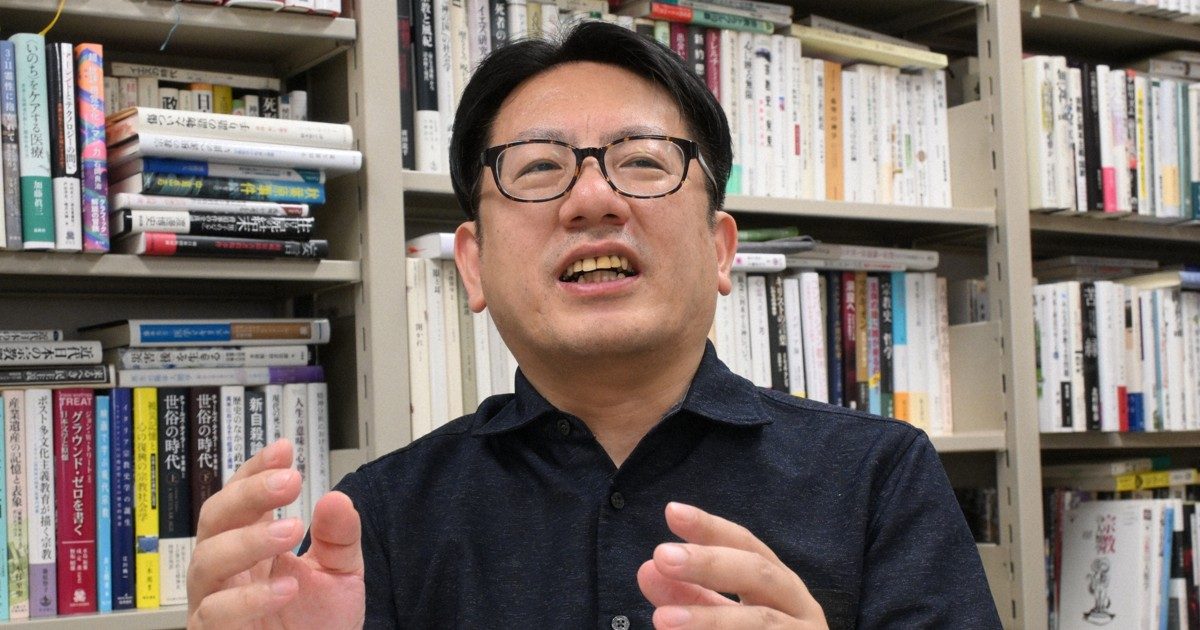
Services that use generative AI to recreate the faces and voices of dead people are spreading in Japan and abroad with no clear rules, and the debate over them has so far been framed too narrowly around the bereaved, according to Keisuke Sato, a professor of death and life studies at Sophia University's graduate school.
Sato, who studies the ethics of the dead, told the Mainichi Shimbun that the term "AI kojin" — AI dead person — is becoming standard but carries a strong image of something families use. Companies offering the services mainly target the bereaved, which he said he understands.
"The dead" as a word, by contrast, carries the sense of the dead as seen by society as a whole, Sato said. He argues the question of how the technology should work should be considered by society at large, not only by the families who buy it.
Three grounds for regulation
Sato groups calls to regulate AI replicas of the dead into three broad models. The first is harm: the psychological effect on users and the potential for confusion across society. The second is truthfulness: the risk that a dead person's past or shared image is distorted.
The third is dignity and rights: the possibility that the technology amounts to desecration of the dead. Commercial use adds a further question, he said — who is entitled to profit.
Misrecognition, dependence, disappointment
On psychological risk, Sato lists three points. One is misrecognition, in which a user mistakes a dead person for one who is still alive. The others are dependence and disappointment — for example, a person who uses a service expecting to talk with a late husband and is hurt when it says something entirely unlike him.
Misrecognition is unlikely when someone has commissioned the replica themselves, Sato said. Dependence should be treated as a general problem of AI dependence rather than one specific to replicas of the dead. What is needed, he said, are measures in how the services are used and built so that users do not become overly reliant.
From forgetting to staying connected
Sato said the approach to grieving has shifted. Until around the 1980s, he said, the mainstream view in grief care was to dwell as little as possible and look forward.
The Mainichi Shimbun's interview with Sato runs to 3,002 characters; the published portion ends mid-sentence as he turns to how that thinking has changed in recent years.