
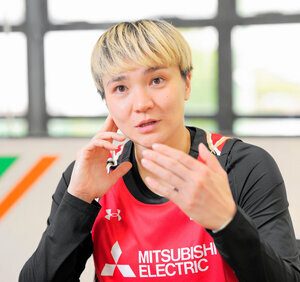
Yoshida Asami, the 39-year-old former captain of Japan's women's basketball team, has spoken about her cancer diagnosis and her return to competition, in an interview with withnews by the Asahi Shimbun.
Yoshida has led the women's game in Japan for years. At 165 cm she is small for the sport, and she controls games with sharp passing and forceful leadership.
She has won a long list of individual awards, 12 titles in the W League — Japan's top women's competition — and 11 in the Empress's Cup. She also captained the national team at the 2016 Rio de Janeiro Olympics.
The illness struck in July 2025. Yoshida has not disclosed where the cancer was found. It was caught early, and after surgery and rehabilitation she returned to games in December 2025.
“I was truly blessed with the people around me and my environment. There is no way I could have done it alone.”Yoshida Asami, former Japan women's basketball captain
Coming close to death, she said, changed how the world looked to her. She now urges people to go for screening before they have reason to regret it. "Cancer is an illness that can happen to anyone," she said.
'Am I going to die?'
The pain began as little more than a feeling that something was wrong. She told herself it was probably fatigue from training, that she could bear it, that a day's rest would settle it.
About a week later, on the way home from training, she was hit by a pain she had never felt. She crouched on the spot and could not move for a while.
She had dealt with many injuries as an athlete. This pain was a different kind altogether. On the advice of a local clinic she went to a larger hospital, where she was told the doctors thought it was cancer and that she should see a specialist.
Her mind went blank. "Wait, am I going to die?" she recalled thinking. She had to wait about two more weeks for an appointment at a specialist hospital.
“It felt like the longest time in my life.”Yoshida Asami, on the wait for a specialist appointment
She could not tell teammates or friends the details. She stopped training and rested at home. The pain stayed away as long as she did not move, but the thought that it might be cancer turned her mind toward death, and the strain wore her down.
“The nights were the worst. I couldn't sleep, and I thought about unnecessary things. I was scared.”Yoshida Asami, on the weeks before her diagnosis
Her sister, three years older, told her firmly to stop searching the internet for answers before a diagnosis had even been made. Dark thoughts came anyway: what if she were given a terminal prognosis, what if her body could no longer play basketball.
Each night she turned on the TV to distract herself and waited to fall asleep.