
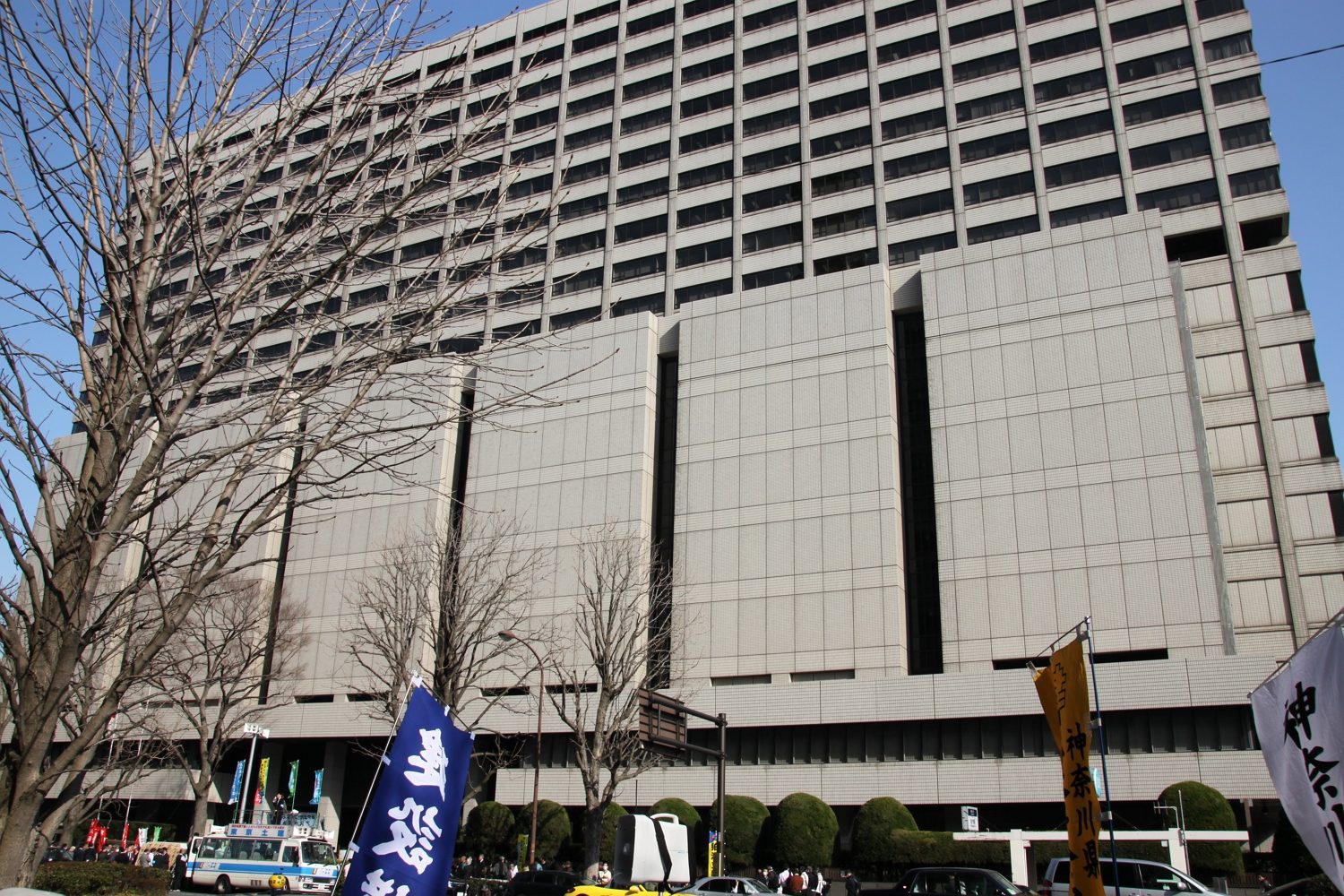
Six groups working on asbestos relief and prevention asked the Supreme Court to hold briefings on the renovation of the courthouse complex that houses the Tokyo High Court and District Court. The court refused, and the groups say the refusal breaches the government's own guidelines.
The complex has a record of asbestos releases. In December 2015, work to strip asbestos from a duct shaft is believed to have leaked material outside, and courtrooms on the fourth through eighth floors were closed.
Testing first detected up to 7.5 fibers per liter of air in the broader "total fiber" count. The Supreme Court said no asbestos had been dispersed. It had used an analysis method the Environment Ministry later dropped from its manual because it understated asbestos concentrations by a factor of 10 to 100.
After the discrepancy was pointed out, the court re-measured six days after the accident using the method the manual specifies. The result was 2.1 asbestos fibers per liter, confirming that asbestos had been dispersed.
In January 2018, air in an elevator shaft was found to contain up to 15.1 asbestos fibers per liter. Every elevator for visitors was shut down except one reserved for emergencies.
The problem was not confined to the Tokyo complex. Asbestos dispersal was found in the Supreme Court's Grand Bench in October 2018, and a Law Day event was canceled. In May 2022, a white powder suspected of containing asbestos was found at the complex housing the Osaka High Court and District Court. The Supreme Court's General Secretariat announced that no asbestos had been detected and declared the building safe, though the material had not in fact been analyzed.
The renovation now under way was planned against that history. Work began in fiscal 2023 and asbestos removal is expected to continue intermittently for about 10 years.
The six groups include the NPO Mesothelioma, Pneumoconiosis and Asbestos Center, which supports victims and works on prevention, and the Tokyo and Kanto lawyers' teams for construction asbestos litigation, which have handled many suits against the state and building-material makers on behalf of victims.
The groups, which also use the courts, sent their request to the General Secretariat on May 20. They wrote that they had come across no information that a briefing required by the Environment Ministry's guidelines had been held, either after the 2018 accident or for the planned renovation. They said they had been told nothing about the details of the removal work by any other means.
They asked for briefings for staff and building users, with adequate advance notice, and for the briefings to cover the causes of past asbestos releases in courts and the measures taken in response. They also asked that materials and minutes be posted on the courts' website.
The General Secretariat answered on June 17. It said it explains the work to relevant bodies as it progresses, with the guidelines as a "reference," and that notices are posted for visitors in line with the law "during the work." It said notice documents had been displayed in the entrance hall while work was under way, one of the methods the guidelines list alongside handing out and circulating leaflets. On briefings, it said none were planned.
The groups have repeated their request.