
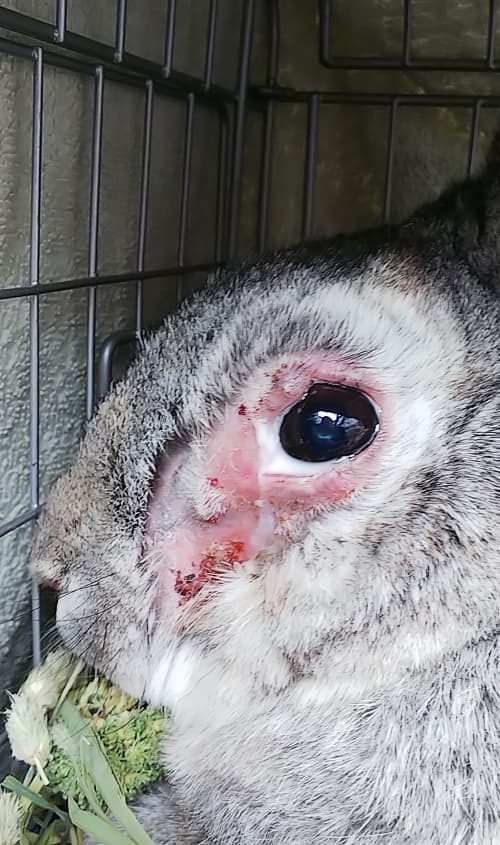
Animals kept in Japanese schools to nurture children's empathy are instead being abandoned and mistreated, with rabbits found suffering untreated tumors and hernias, according to a rescue group that has removed such animals from public elementary schools.
Yukari Nishimoto of Small Animal Rescue, a private animal protection group, said rabbits are the most common school animal and are in fact very difficult to keep.
A female rabbit that is not spayed has a 90% chance of developing uterine cancer, Nishimoto said. Rabbits can mate year-round and bear 6 to 8 young at a time, so a single pair can quickly become a collapsed multi-animal household.
Their teeth grow about 10 centimeters a year. If they cannot wear them down, the teeth can pierce the skin of the cheek.
“When I have visited public elementary schools, I have found and taken in rabbits whose groins had swollen to the size of ping-pong balls with testicular cancer, or that could no longer move because of a hernia.”Yukari Nishimoto, Small Animal Rescue
Teachers and children know too little about how rabbits live, she said, and that is behind many of the problems at schools.
A pattern of neglect
The most common trouble is neglect. Animals are shut in filthy hutches caked with droppings and urine, left in heatstroke or hypothermia, or given too little food.
A rabbit produces several hundred droppings a day, so a hutch becomes soiled unless it is cleaned daily. Rabbits need temperatures of 18 to 24 C, and an animal kept in a drafty hutch in extreme heat or cold will fall ill.
“Neglect is more likely on weekends and during long holidays, whatever happens on weekdays. Teachers are very busy and cannot get to the animals, and in some cases they are barred from coming to work on days off.”Yukari Nishimoto, Small Animal Rescue
Children have less room to help as well. More of them are busy with entrance-exam study and lessons, or are allergic to animals, Nishimoto said.
Dislike of animals adds to the problem. Fewer people keep pets because they live in apartments, and children have fewer chances to meet animals outdoors, she said.
“Perhaps both adults and children have a weaker sense of caring for animals. Many people feel aversion to animals, let alone look after them.”Yukari Nishimoto, Small Animal Rescue
In cities where contact with animals has fallen sharply, some children reportedly cannot tell a living creature from a robot. Rough handling and violence toward school animals are easy to imagine.