
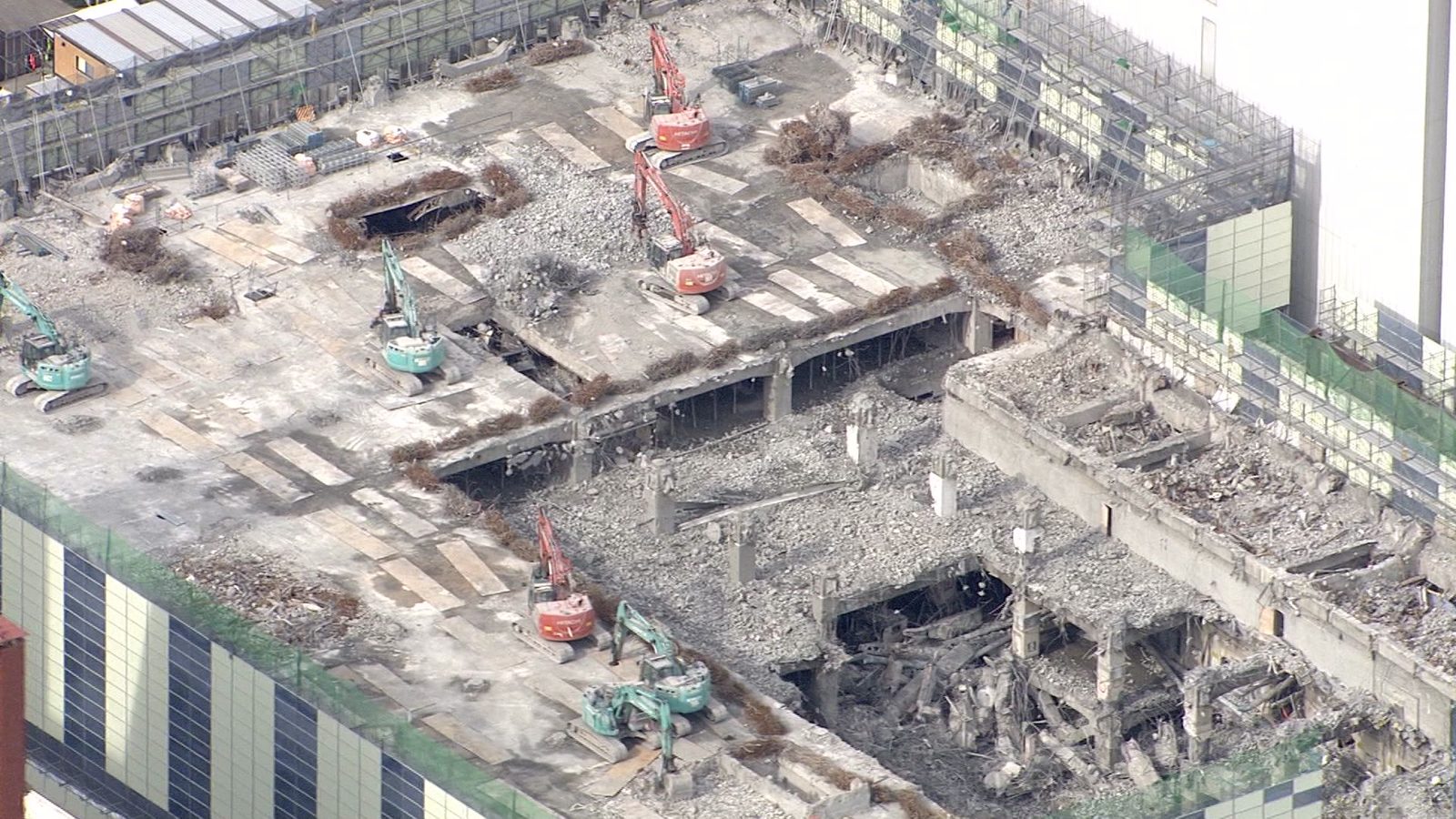
Work to add a platform at Sapporo subway station is running months behind schedule after crews hit a concrete wall roughly twice as thick as the drawings showed. The station, on the city's Namboku Line, handles about 53,000 passengers a day, and the new platform is meant to ease crowding.
The city has closed part of Ekimae-dori to build the platform for trains bound for Makomanai. It had aimed to open it in fiscal 2028. The wall stood where Exit 7 had been, an entrance that once led into the old Sapporo Seibu department store.
Crews had estimated the work from drawings but found the concrete thicker than expected. "We dug and it was about twice as thick," said Kohei Kanamori of the Sapporo City Transportation Bureau.
Those drawings date from the building's years as Gokan, the predecessor of Sapporo Seibu, more than half a century ago. Pipes not shown on the plans and large volumes of groundwater have added to the delays, which are measured in months.
Costs rise with prices
Rising material and labor costs have pushed the project cost above the ¥11 billion the city had budgeted. Construction workers say the oldest drawings on file date to 1927, the second year of the Showa era, and include gas pipes. Some lack detail and cannot be relied on, so much is discovered only by digging.
Gas and electricity lines run through the ground in a mesh, forcing crews to work around them the way a surgeon works around blood vessels and nerves.
Sapporo's subsidies for private redevelopment are adding to the pressure on city finances. The city pays out when a project is judged to contribute to the cityscape, and in past cases the subsidy has come to 10 to 20 percent of total project costs, said Naganori Sasamori, the city official in charge of redevelopment support.
The Moyuk Sapporo commercial complex, which opened three years ago, received about ¥6.2 billion in redevelopment subsidy, roughly a quarter of its total cost. The city's share was about half of that, ¥3.1 billion. "We disbursed about ¥5 billion in subsidies in fiscal 2024 and about ¥7 billion in fiscal 2025," Sasamori said.
¥400 billion at the former Esta site
At the former Sapporo Esta site, the original total project cost of ¥250 billion is now expected to exceed ¥400 billion because of inflation. The city's subsidy is expected to grow to between ¥40 billion and ¥50 billion.
Mayor Katsuhiro Akimoto said the spending pays for itself. "For the city it leads to increased tax revenue, including property tax," he said. "We pay it out as a subsidy, but we expect the effect of that to be recovered through higher tax revenue."
Nearby, a 33-story building for electronics stores and restaurants is under construction and due for completion in July 2028. A 34-story high-rise is going up on the Esta site.
Residents watching the work are divided. A woman in her 70s said delays were unavoidable given rising prices, while a man in his 20s said he was looking forward to the new buildings after the loss of the one where young people used to gather.
New buildings have not filled up. Some completed in recent years still have vacant tenant space, and weekend foot traffic worries some. Sapporo is a city of 1.9 million, and its main gateway is being rebuilt one blocked street at a time.