
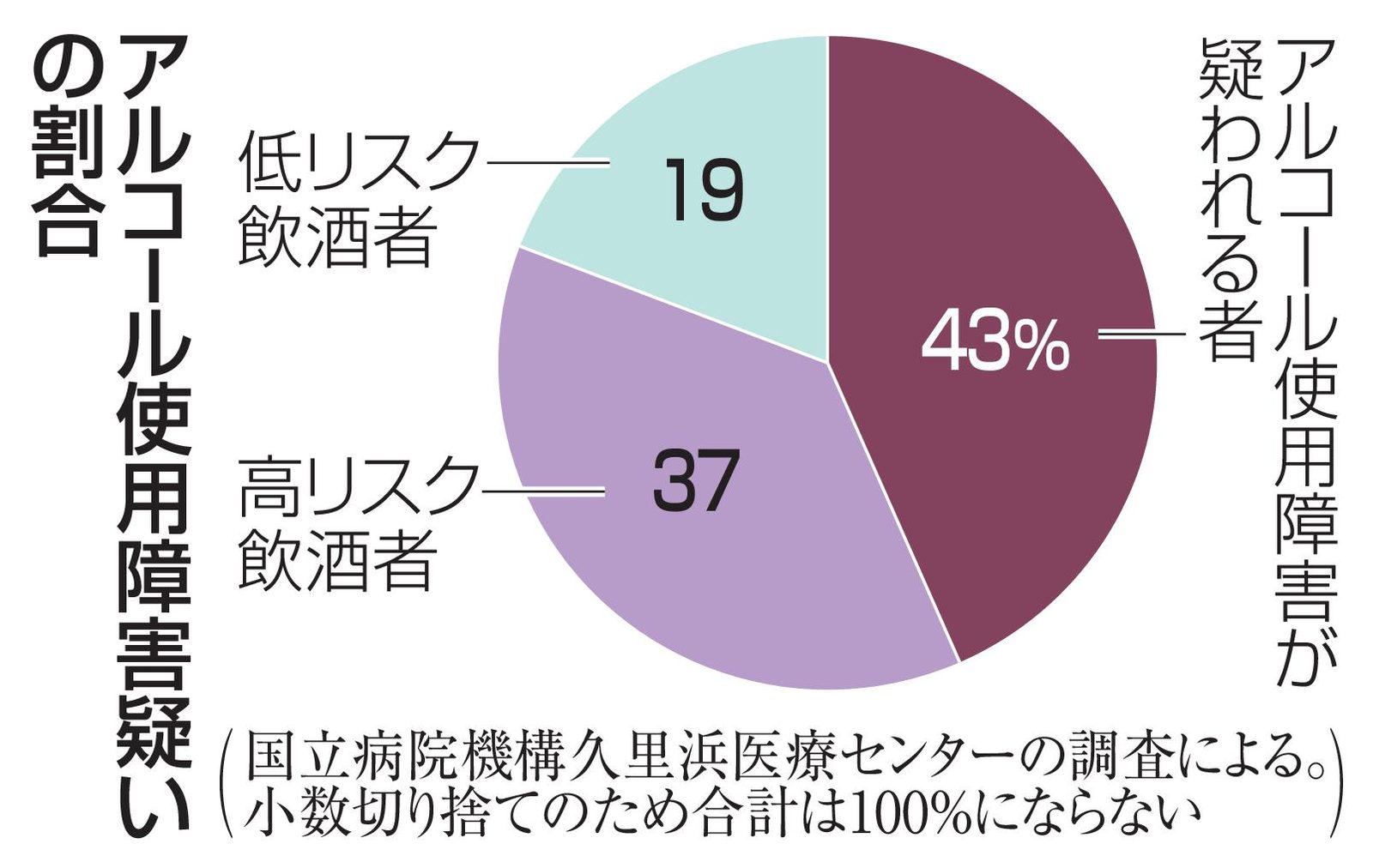
More than 40% of people who took the course required to get their driver's license back after it was revoked for drink-driving and other violations show signs of alcohol use disorder — a condition that makes drinking hard to control — a survey by the National Hospital Organization Kurihama Medical and Addiction Center found. Some said they drank and drove "almost every day."
Only about 20% of those suspected of having the disorder had ever seen a doctor or said they wanted treatment, the center found. The survey results were reported on the 7th, ahead of Alcohol-Related Problems Awareness Week, which begins on the 10th. The center says drinkers need to be connected to medical care.
What the survey asked
The survey ran from June to December last year and covered people taking the mandatory drink-driving revocation course, which anyone whose license was revoked for violations including drink-driving must complete before getting it back.
Participants were asked about their drinking in the year before their license was revoked and in the year before they answered, about their driving in the month before revocation, and about any history of medical visits or treatment. The survey collected 1,037 valid responses.
Eight in ten showed a drinking problem
Researchers sorted drinking in the year before revocation into three risk levels. The highest, "suspected alcohol use disorder," accounted for 43% of respondents. The next level, "high-risk drinker," accounted for 37%.
The center concluded that more than 80% of the two groups combined may have had a drinking problem at the time. The course tests knowledge of the rules; it does not assess whether a driver has stopped drinking.