
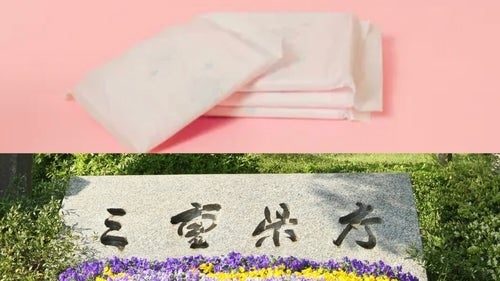
Mie Prefecture said on November 13 it will keep free sanitary products permanently in the women's restrooms of its main government building, a measure that began with one lawmaker's own experience and drew about 8,000 death threats against her.
The push came from Monka Yoshida, a member of the Mie Prefectural Assembly. On March 25, 2025, she wrote on X that her period had started suddenly while she was at a city office in Tsu and no pads were available.
“It happened suddenly today and I was stuck. The toilets at Tsu City Hall, where I had business, unfortunately had no pads. I couldn't deal with it properly until I got home. This happens even at 27. I want sanitary pads available everywhere, like toilet paper.”Monka Yoshida, Mie Prefectural Assembly member, in a post on X
The post drew wide attention and debate. Before entering politics, Yoshida worked as a nurse in a university hospital's gynecology department, and she has questioned the assembly on how schools teach students to use sanitary products.
After the post, the assembly secretariat received death threats against her from the same email address at one-minute intervals, about 8,000 in total. She filed a damage report with the Tsu police station.
At a news conference, Yoshida said the threats were "something that shrinks the activities of a prefectural assembly member" and that she felt "a backlash against gender." She also said men in their 20s had told her they had not known much about women's periods until they saw the debate.
“I myself have raised the lag in Japan's sex education in the assembly. I take the fact that debate happened itself positively.”Monka Yoshida
Trial run and permanent installation
In response to her lobbying, Mie Prefecture installed sanitary products in the women's toilets of the main building on a trial basis from November 2025, for about one year. It introduced one todokuto dispenser, which releases a single pad when a hand is passed over it, using donations.
The dispenser was bought through the corporate version of the furusato nōzei — the hometown tax donation system that lets companies give to local governments — and the products came from donations by the Co-op Mie consumers' cooperative and from stockpiles for the Osaka-Kansai Expo.
The prefecture also displayed panels on health issues that differ by sex in the citizens' hall on the first floor of the main building, to deepen understanding of menstruation.
During the trial, an average of five products were taken a day. A survey conducted during the period drew comments such as "I needed one suddenly, so it helped" and "I feel reassured knowing they are there."
In its announcement, the prefecture said it aims for "a society where everyone, regardless of sex, can fully demonstrate their abilities and individuality." It said the products were installed "to ease women's anxiety about menstruation and to make health issues that differ by sex something society as a whole thinks about."
When Yoshida reported the permanent installation on X, replies called it "a wonderful initiative" and said "I hope this spreads across the country."
The Asahi Shimbun reported that Tsu, the city where Yoshida was caught without a pad, began offering free sanitary products in June 2026 at toilets in its main building, its board of education building and nine regional offices including Hisai.
In recent years, "period poverty" — difficulty affording or accessing sanitary products for economic and other reasons — has drawn attention, and governments and private groups have set up free dispensers and distribution programs.
A fifth survey by the Cabinet Office's Gender Equality Bureau, conducted in October 2024, found 926 local bodies across Japan running programs such as free distribution of sanitary products.