
Base-isolated buildings, which are spreading across Japan, are meant to soften violent shaking and limit damage. In the Kumamoto earthquake in July, some went beyond what their designs allowed, producing damage a survey report calls a world first.
The most striking case was Yatsushiro city hall in Kumamoto Prefecture, a seven-story steel-frame building. The city rebuilt it in 2022 with base isolation, after the Kumamoto earthquake 10 years ago, but access was restricted immediately after the quake because its safety was not assured.
Early attention focused on photographs of one of the isolation devices in the basement, a damper. Steel originally bent into a sideways U had warped. A bribery scandal over the rebuilding work had already drawn scrutiny, and social media users questioned the design and construction.
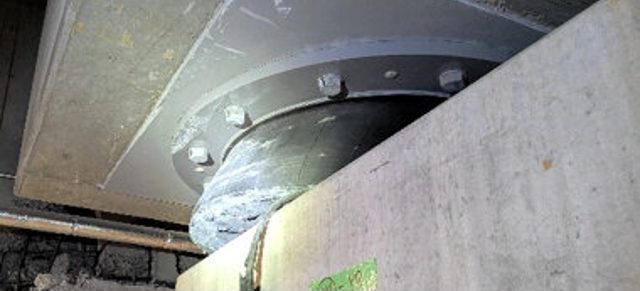
The damper's deformation is a phenomenon anticipated during strong shaking. What surprised experts was the rupture of the rubber in the isolation devices and a collision between the building and the retaining wall around it.
That meant the building moved far beyond the scale assumed in its design. The collision occurred not only at city hall but at another base-isolated building in the city.
The Japan Society of Seismic Isolation described it as "a phenomenon seen for the first time anywhere in the world" in a survey report published at the end of September.
How isolation works
Base-isolated buildings deflect strong shaking and glide horizontally. Cylindrical laminated rubber bearings join the building to the ground, with rubber and metal layered together. They deform with the building's movement and return it to its original position. Dampers brake that movement.
“Our concerns have become reality.”an expert, quoted by the Asahi Shimbun