
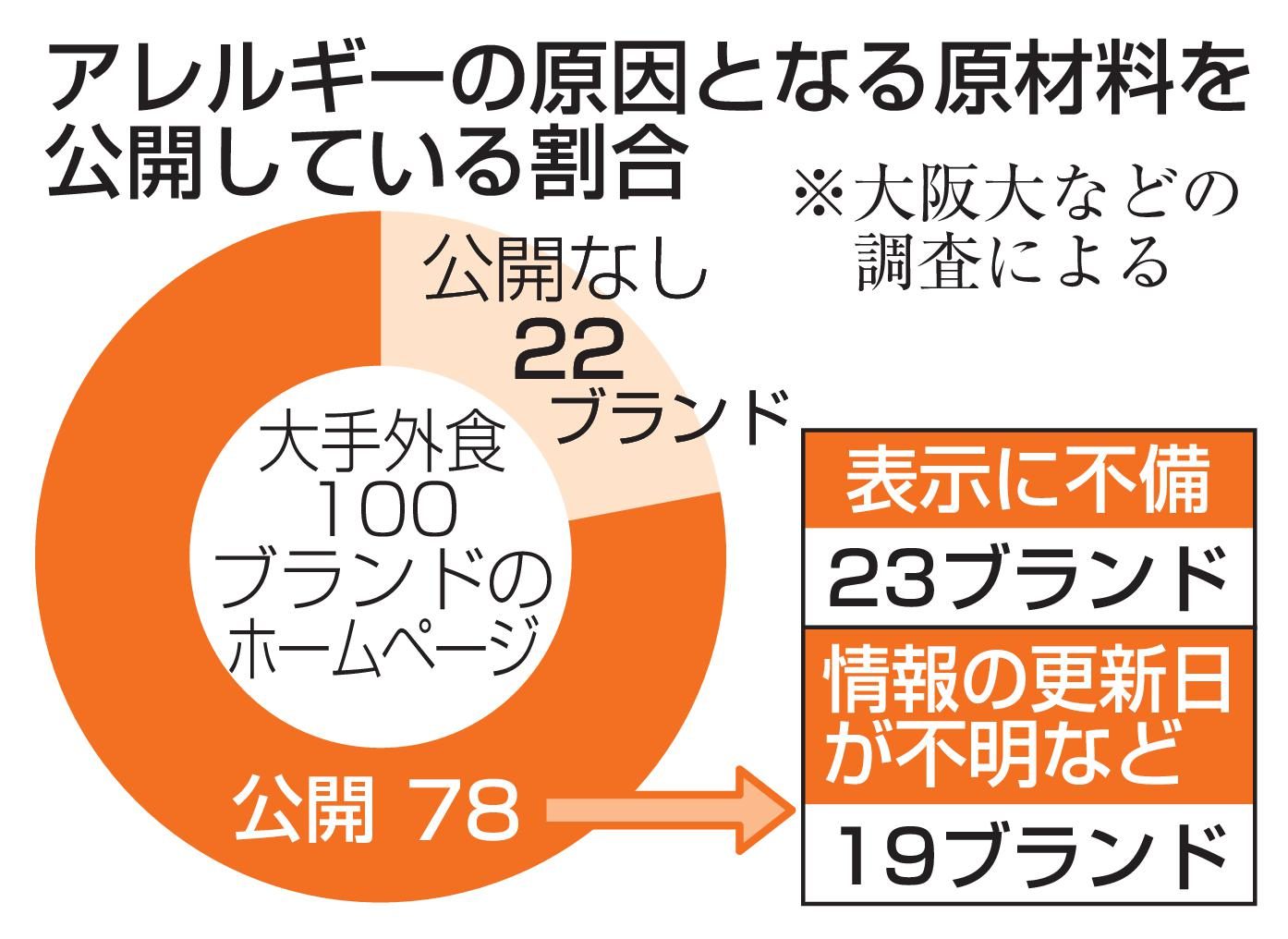
Twenty-two of 100 major restaurant chain brands do not disclose on their websites which ingredients they use that can trigger allergies, a team from Osaka University and others found. The team published the results in the Journal of Japanese Society of Allergology by Friday.
Restaurants face no clear rules on allergen labeling. The team argues that diners with food allergies may find it harder to eat out as a result, and calls for guidelines.
Processed foods sold in containers and packaging must carry labels for specified raw materials — shrimp, crab, wheat and other ingredients that cause food allergies most often — according to the Consumer Affairs Agency. Dishes served at restaurants are not covered by any such requirement.
Gaps at izakaya and elsewhere
The team examined the websites of 100 major restaurant chain brands between May and August last year. Twenty-two brands made no mention of allergy-causing ingredients.
Half of the 24 izakaya — Japanese-style pubs — brands in the survey carried no such information, a higher share than in other types of restaurants.
Even among the 78 brands that did provide information, 23 had deficiencies, such as failing to list walnut, one of the specified raw materials. Nineteen brands did not say when their information was updated, or had not updated it in more than six months.