
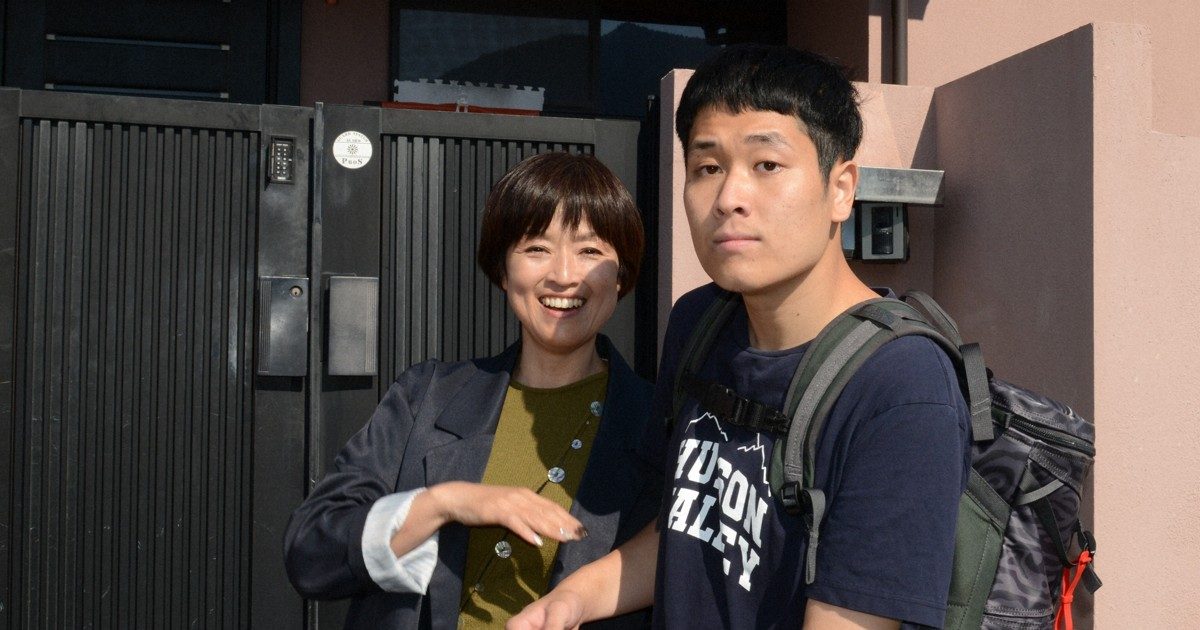
At midnight in an apartment in Fukuoka, a young man shouted every few dozen seconds and struck his head against the walls and the floor. His mother could not keep him indoors. At 3 a.m. she put him in the car and drove loops of the urban expressway until it was time for school at 8:30.
Shiho Zahebu, of Fukuoka, now runs study sessions for families facing the same struggle. "I don't want anyone left behind," she said.
Her eldest son, Yuto, 23, has severe autism and an intellectual disability, and is highly active. He attended a special needs school in Fukuoka. He also injured himself: in junior high he broke the windows of his school bus with his head several times. He struck himself hard enough to draw blood, and needed a helmet. He had developed severe behavioral disability — a condition in which repeated, intense behavior such as self-harm, harming others or destroying things appears, most often in people with autism and a serious intellectual disability.
The behavior worsened after he entered the upper division of high school, along with sleep problems. That was when the nighttime expressway drives began. "The family was going to fall apart," Zahebu said. He was hospitalized, and she has not forgotten the frightened look on his face when he was locked in a protected room.
About three months in the hospital settled him, but his condition deteriorated again after he was discharged. Told he could not live at home, Zahebu approached about 40 group homes and other facilities. All refused. "If he shouts, it disturbs the other residents," she was told. As the family grew more isolated, they found one-to-one support through a welfare service called juudo houmon kaigo — intensive visiting care, in which a helper assists a person with a disability at home for long hours.
A satellite life
In October 2019, in his first year of the upper division, Yuto left the family apartment and began living alone in a nearby flat. After school a helper picked him up, helped with dinner and bathing, and handed over to his mother once he was asleep. The next morning she took him to school and a helper collected him in the afternoon. The family calls it a satellite life.
Yuto has calmed considerably. "I think it was good for him to live at his own pace," Zahebu said. Drawing on that experience, she set up a visiting-care helper station called Okaeri in Fukuoka in October 2020, aiming to help people with severe behavioral disability live in the community. Six years on, it supports six people living alone.
Keeping the service running brings its own problems. The homes are rented older properties that need soundproofing and reinforcement of walls and floors to withstand shouting and self-harm. The cars used for leisure outings need panels between the driver and the rear seats to prevent attacks on others. Securing helpers is the key to continuing at all.
Families still turned away
Zahebu speaks on a video podcast about the experiences of families and the staff who support them, and Okaeri's YouTube channel and Instagram show the work. Asked what drives her, she points to the look on Yuto's face in the hospital and describes a feeling close to anger: "I don't want anyone to go through that."
Families still come to her for advice. Refused by every welfare service, they are isolated, and their situation echoes her own. She holds regular online meetings so they can talk, and those gatherings sometimes lay bare gaps between regions in what services are available, on top of the lack of understanding around them.
Yuto now lives calmly around the clock with helpers at Okaeri House, a detached home in Fukuoka's Sawara Ward. "Yuto and the others are all straightforward and seem to live with everything they have, which is very appealing," Zahebu said, smiling. "Their smiles are lovely, and they give me energy too."
Okaeri is collecting donations on its website. Inquiries go to Okaeri on 092-407-0972.
According to the health ministry, an estimated 128,000 people nationwide were receiving support related to severe behavioral disability as of July 2025.