
A man in his 30s who lives in the Kanto region with his wife and two children cooks dinner when his wife is busy or gets home early. He used to make breakfast for the family, he said, until depression worsened after what he calls his "misconduct" and deciding the morning menu became too much.
Eight years ago he was a high school social studies teacher and tennis club adviser, well liked by his students. Over several years he used a small camera to film in toilets and club changing rooms. Police caught him, he was fined, and the school dismissed him.
He now attends counseling once a month. Asked how the session had gone, he said it had been easy to talk frankly, and that a bad spell the day before had settled as he spoke.
“What starts as a small fantasy — the means, the method, the environment are all there. Repeat the fantasy enough and a moment comes when you can cross the line. Once you have crossed it, voyeurism is like a drug.”the former teacher, speaking to CBC Television
He keeps a record of his actions as part of his rehabilitation. In it, he wrote that in July there were times when he noticed the line of a woman's underwear as she walked ahead of him. He wrote that even without a desire to film, the habit of seeing women sexually has not completely disappeared.
281 teachers disciplined in one year
Ministry of Education figures show that 281 teachers at public schools received disciplinary action for sexual harm including voyeurism in fiscal 2024 alone. Such cases are rising.
In 2025, elementary and junior high school teachers formed a group and shared images they had taken of children at school. Seven people were arrested, including a teacher in Nagoya. Four received prison sentences, two received suspended sentences, and one is still on trial.
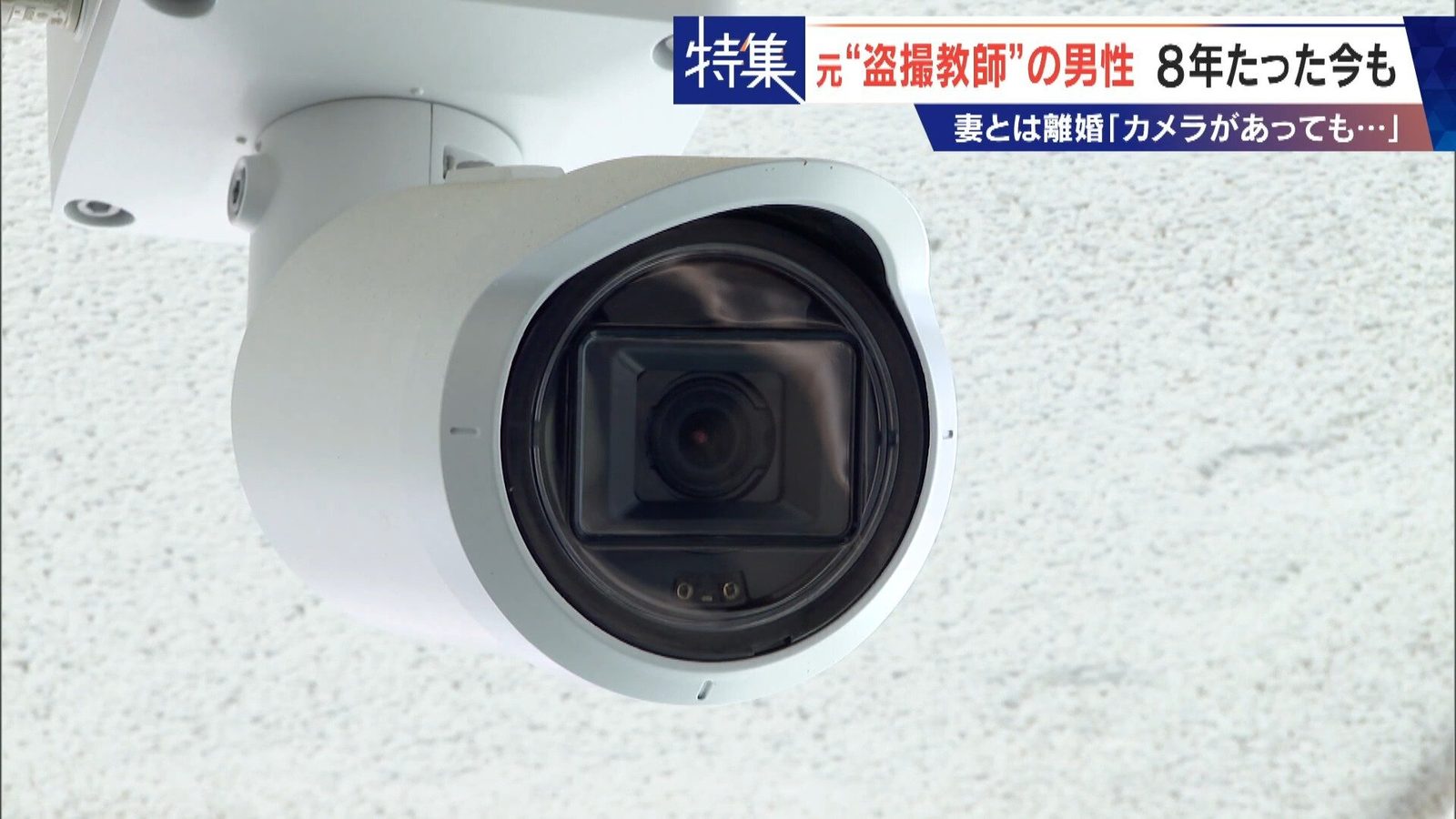
Asked whether cameras in schools would have stopped him, the former teacher said he thinks he would have done it anyway.
Cameras in every classroom
Taiwan has installed surveillance cameras in all public elementary and junior high schools, a measure Japan has not adopted. The comparison turns on how much privacy each country is willing to trade for the safety of children in school buildings.