
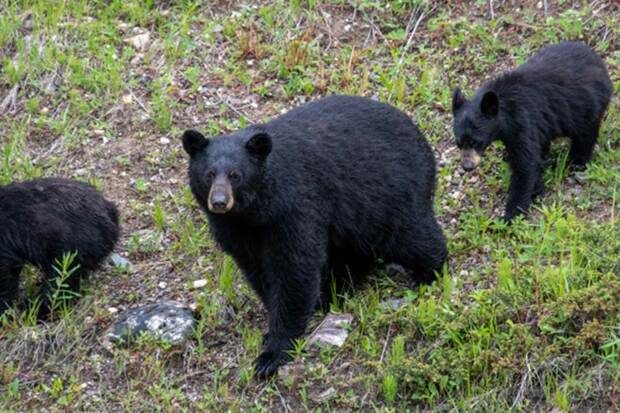
A man was attacked by an Asian black bear at the entrance to a house in Toyota, Aichi Prefecture, on October 11 and suffered a ruptured eyeball, one of a growing number of human injuries as bears move into populated areas.
In Hachioji, western Tokyo, a bear caught in a trap set for wild boar was killed by emergency shooting in September. On October 19 the capital ran its first drill for emergency shooting in the event of a bear sighting. In June, all elementary and junior high schools in Utsunomiya closed after bears were sighted.
Bears are now appearing in city centers rather than in the mountains where they usually live. Last year the acorn and other nut crops bears feed on failed in the mountains, and the animals came down in search of food, according to accounts of the previous season.
A second reason bears come down
This year the picture varies by region. Kazuhiko Yoneda, director of the Japan Black Bear Research Institute, said acorns are plentiful from Tohoku through the Sea of Japan coast, Niigata and Hokuriku, average in Kanto and Chubu, and poor from Kinki westward. Sightings have risen in Kanto and western Japan.
Food supply is not the only cause, Yoneda said. Depopulation has emptied mountain villages, and abandoned houses and fields have become bear habitat, bringing the animals closer to where people live. Young bears settle in these places because they fear stronger bears that hold territory deeper in the mountains, he said.
Culling plays a part too, he said. A cub that follows its mother into a village to feed cannot return to the mountains once the mother is killed, and stays where it lost her. Never taught by its mother how to survive the winter, it spends the cold months under the eaves of an empty house or a home, then raids the village for food in spring.
“One is that depopulation and other factors have made people disappear from mountain villages, and abandoned houses and abandoned farmland become bear habitat. That brings the bears' range closer to human living space.”Kazuhiko Yoneda, director of the Japan Black Bear Research Institute
Yoneda said the number of bears entering human settlements is unlikely to fall for several years.
Calls for a shared policy
He argued that local governments should not act alone. Hiroshima, Shimane and Yamaguchi prefectures treat the Chugoku mountains as one area and coordinate their bear measures, he said, because culling in one prefecture achieves nothing if the next prefecture releases captured bears back into the mountains.
“I think some adjustment of the population is necessary.”Kazuhiko Yoneda
Bears attacked 238 people nationwide last year and killed 13, both record highs, and attacks in the first half of this year are running ahead of that pace, according to the figures cited. Yoneda said the best outcome for bears and people alike is for the two never to meet.
“But this complicated situation will probably continue for a while yet.”Kazuhiko Yoneda