
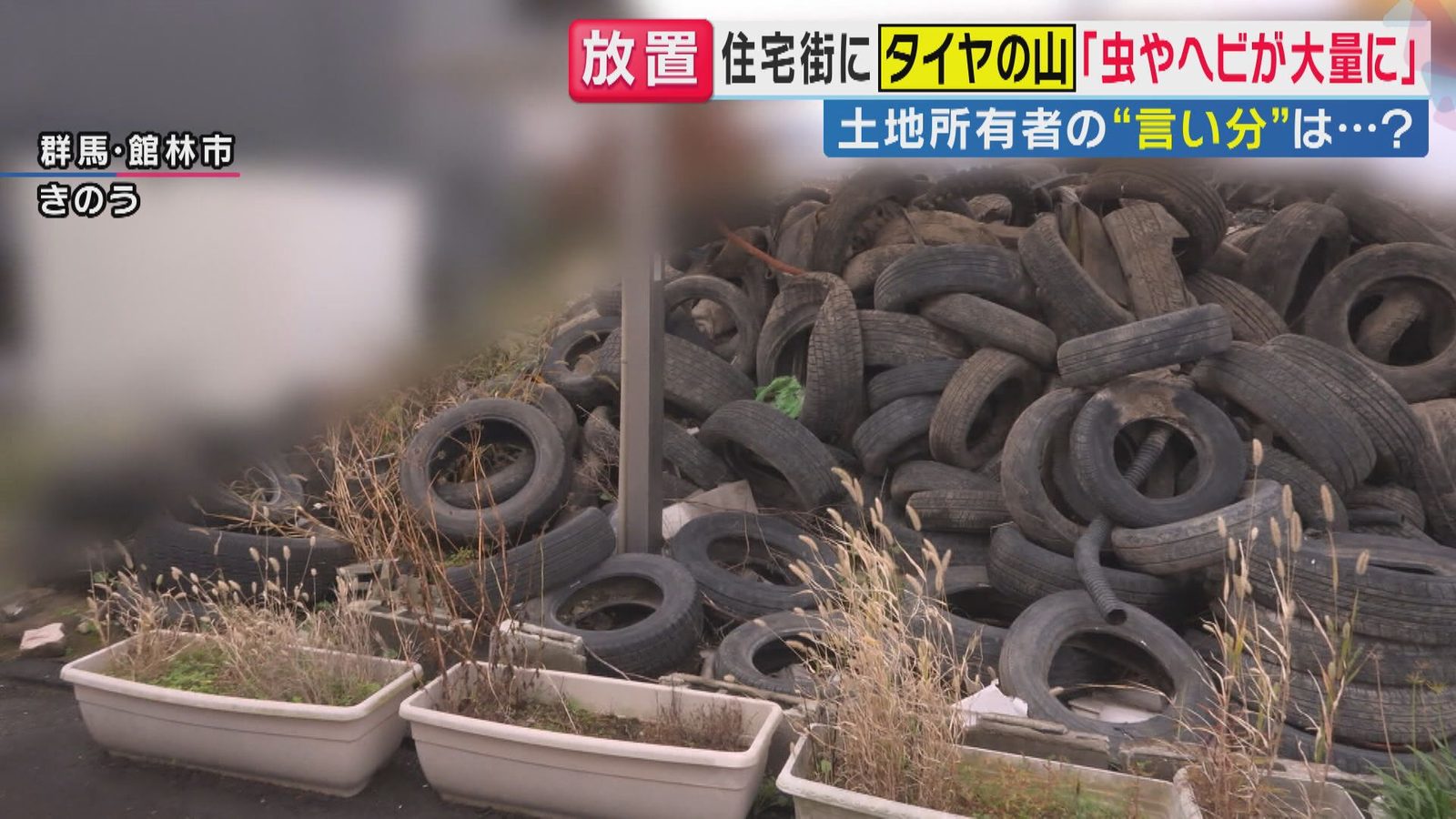
Gunma Prefecture has set aside about ¥964 million to remove thousands of tires piled up in a residential neighborhood in Tatebayashi, after the landowner refused to clear them and called the piles art.
The prefecture has not ruled out 行政代執行 (gyōsei daishikkō), administrative execution — the step that lets a local government do the work itself and bill the owner. The budget figure shows what that would cost the public.
A vacant lot, then a mountain
Tires ring the plot and garbage bags fill the gaps between them. About nine years ago the land was not overflowing with objects, according to the reporting.
Soil, tires and waste were brought in over the past few years, building the pile now visible. Tatebayashi has four such sites in the city.
At a site visit last September, tires sat on heaped soil in a hill about 4 to 5 meters high. Insects flew around during the visit.
The owner's case
The owner, a man, insisted the tires are not garbage. "I'll say it plainly: tires can be used this way too," he said.
He said he is in the middle of building a garden he calls a "tire art garden." As one of the works he showed okra in flower and fruit.
He also said he did not place everything himself, and that some material was dumped illegally. On the neighbors, he said he would act promptly and that once the garden takes shape there would be no insects.
Orders, then a budget
The month after the visit, the prefecture issued improvement orders for three of the four sites. Conditions did not improve.
This September the prefecture secured the roughly ¥964 million for removal. Soil samples taken during its on-site survey contained up to about three times the standard level of fluorine.
At a press conference that month, the prefecture cited insect pests, the risk of fire spreading and possible soil contamination reaching groundwater. It said the situation "significantly violates the public interest" in terms of residents' living environment.
Residents nearby had been asked to avoid using well water.