
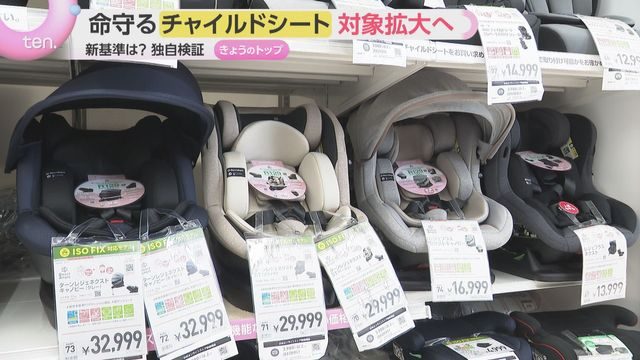
Japan has begun considering extending the child seat requirement to shorter children aged 6 and older, after a 2024 crash in Fukuoka killed two sisters, ages 7 and 5, Yomiuri TV reported.
Child seats are currently mandatory for children under 6. The National Police Agency opened the discussion at a meeting on Wednesday.
Shinichi Kusaka, director of the agency's traffic bureau, said the review would start with the scope of the child seat obligation under the Road Traffic Act.
What prompted the review
In the 2024 crash, a compact passenger car and a route bus collided in Fukuoka. The sisters in the car were using seat belts, which pressed on their abdomens and other areas.
The case showed that for children 6 and older, a seat belt can be dangerous depending on height and build.
A survey by the agency and the Japan Automobile Federation (JAF) in May this year found that only 65% of 5-year-olds use a child seat. Securing safety as children grow older remains a challenge.
Testing the height line
Yomiuri TV tested the question with three children of different ages and heights. A 12-year-old 158 cm tall wore a seat belt, and JAF's Tsuyoshi Fukuda said the diagonal belt sat near the middle of the collarbone rather than the neck.
"The build is almost the same as an adult, so this seat should be fine as it is," Fukuda said.
A 10-year-old 144 cm tall showed a narrower gap at the neck. Fukuda said the lap portion sat on the hip bones, but the shoulder belt was a slight concern.
“The neck gets squeezed.”Tsuyoshi Fukuda, Japan Automobile Federation
For such cases, Fukuda recommended a junior seat or booster, a type of child seat that raises only the seating position. Used on the 10-year-old, it left a suitable gap between the neck and the seat belt.
A 6-year-old girl, outside the current requirement, wore a seat belt that cut into her neck, a clearly dangerous state. JAF sets under 150 cm as its guideline for child seat use.
A mother of an 8-year-old welcomed the move, saying her child is used to a seat and that a belt alone slips off, so she also attaches a center strap.
A mother of a 2-year-old and a 5-year-old said children sometimes refuse to sit, and that an easy-to-use belt would probably make them more willing.
Tetsuo Ueyama of the Nishimatsuya chain said junior seats, especially high-back seats, are needed for elementary school children 6 and older. The chain tells customers to use a junior seat up to 150 cm for safety.
Cost and uncertified seats
Child seats usually sell for about 10,000 to 50,000 yen. If the requirement expands, families may need to buy new seats, a burden on household budgets.
A product sold on Rakuten Ichiba as a child seat cost 3,500 yen, far below typical prices. A reporter bought one and found no safety information anywhere on the product.
Child seats must meet national safety standards, and certified products carry a mark called the E mark. This product had none.
The seller told the reporter it could not provide detailed data because the product is imported from overseas.
Rakuten Ichiba said the product did not display an image of the E mark and that a violation of its rules and guidelines was confirmed. The marketplace deleted the seller's related product pages.
According to the Ministry of Land, Infrastructure, Transport and Tourism, suspected uncertified child seats are often seen on online shopping sites. In a video of a ministry test, a belt snapped and a dummy was thrown forward.
The ministry is urging shoppers to buy products that meet safety standards.
A report on expanding the requirement is expected to be compiled by the end of the year.