
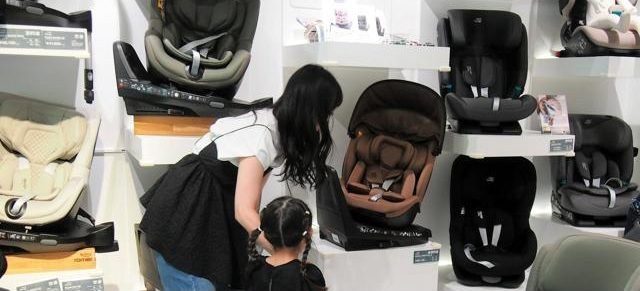
The National Police Agency decided on Thursday to set up a panel of experts to debate changing which children must use a child seat, including junior seats. Under the Road Traffic Act, drivers must put children under 6 in one.
The review will consider extending the requirement to children aged 6 and over, given that some are too small for a seat belt to fit them properly. The panel holds its first meeting on the 11th, is expected to meet about three times, and aims to produce a report as early as this year. The agency will then work on the revisions needed, including changes to the law.
The members include doctors specializing in pediatric medicine and experts in automotive engineering.
The law currently requires child seats for children under 6. Children aged 6 to 12 are in principle required to wear an ordinary seat belt.
Small bodies, adult belts
Smaller children aged 6 and over can still be unable to wear a seat belt in the right position. In a crash, the belt can press on the abdomen or neck and cause injury.
In August 2024, a light passenger car and a route bus collided in Sawara Ward, Fukuoka. Two girls in the car, aged 7 and 5 at the time, died. Both were wearing seat belts but were not in junior seats, and the court hearing the case heard that they might not have suffered organ damage had a junior seat been used properly.
Children were also more likely than others to be killed or injured in car crashes. Last year, the number of such casualties per 100,000 people was 59.8 for children under 6 and 60.7 for those aged 6 to 12, against 34.1 for everyone else, according to the agency.
The Japan Automobile Federation (JAF) raised its recommended height for child seats from under 140 cm to under 150 cm in September 2024. The agency also calls on its website for child seats to be used where needed, including by children aged 6 and over.