
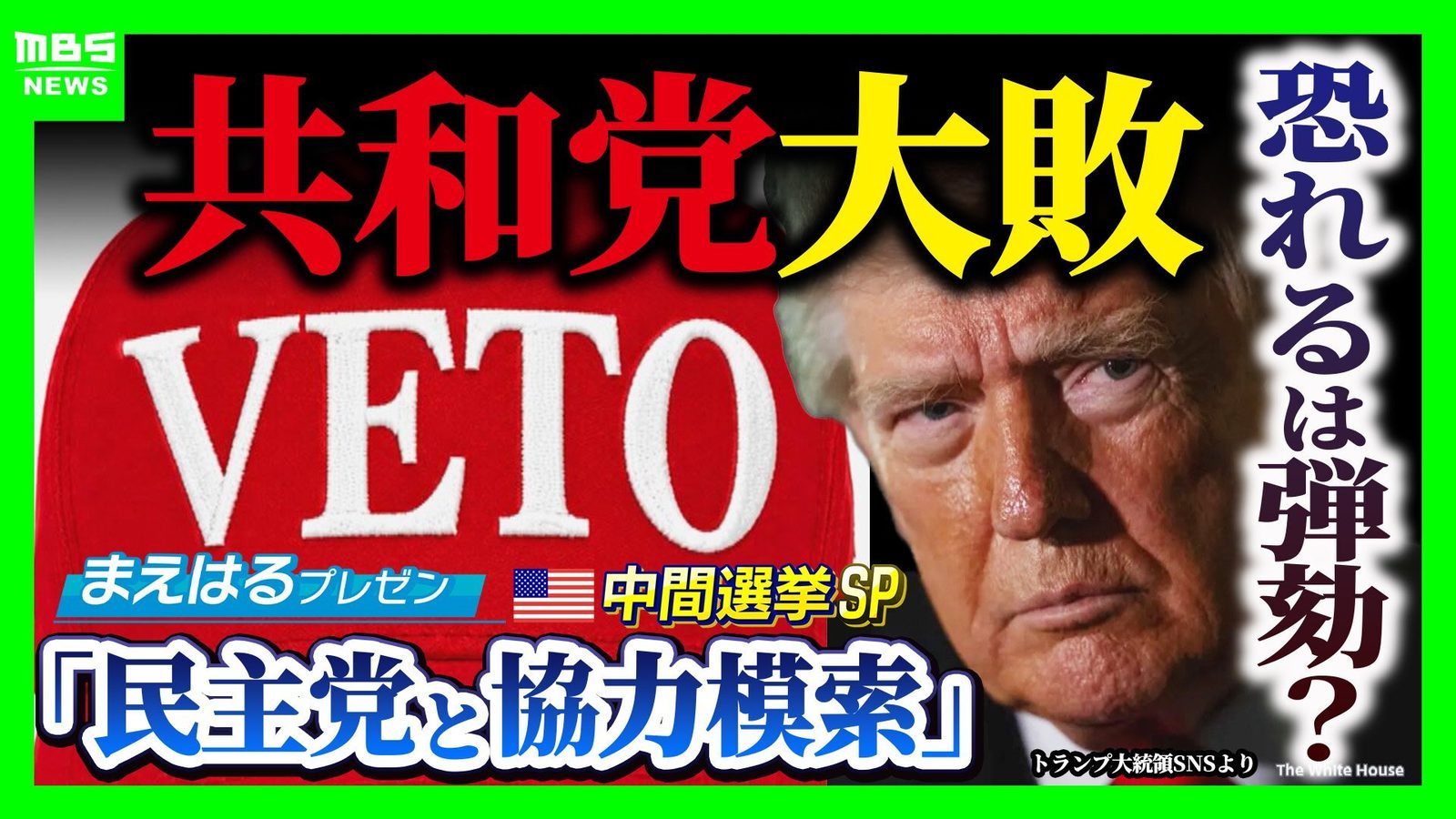
Republicans lost their majorities in both chambers of Congress in the US midterm elections held on the third of the month, falling short of 50 percent even in states the party had long dominated. With the Senate at 54 Democrats to 44 Republicans and the House at 247 to 152, according to RealClearPolitics figures as of 3 p.m. Japan time, President Donald Trump conceded defeat and said he was open to cooperating with the Democrats.
Trump also acknowledged that the fighting with Iran cost his party votes. Asked by a reporter about Vice President JD Vance's view that the war was to blame, Trump said: "I think that is largely correct. In the short term it pushed gasoline prices up a little. That is probably right."
Markets read the result as a de-escalation signal. The Dow Jones average rose by more than 1,500 points at one stage on the fourth compared with the previous day, and crude oil briefly fell to the $87-a-barrel range on expectations of easing tension in the Middle East.
Anger over war and fuel costs
Journalist Yoichiro Tateiwa, who reported from the United States during the campaign, said anger over the war and high gasoline prices drove the result. Supporters he interviewed expressed strong anger and distrust toward Trump, he said, though some still refused to vote Democratic.
“I did not think it would produce a result this large.”Yoichiro Tateiwa, journalist
Trump had projected confidence during the campaign, posting an image of a hat reading "VETO" on social media. In an interview with the New York Times, he said he was prepared to work with the Democrats.
A party that may turn on him
Tateiwa said Trump now fears instability inside his own party and wants to avoid impeachment. He raised the possibility that Trump could dismiss Defense Secretary Pete Hegseth as a way to halt the attack on Iran.
For Japan, a president entering his final two years with no majority in Congress and a restive party is a less predictable partner on both security and trade. Tokyo has built its defense posture and its tariff arrangements around the assumption that Trump can deliver his side of a bargain.
Nomura Research Institute executive economist Takahide Kiuchi also appeared in the broadcast to discuss the effect on Japan's economy, including the yen and gasoline prices.