
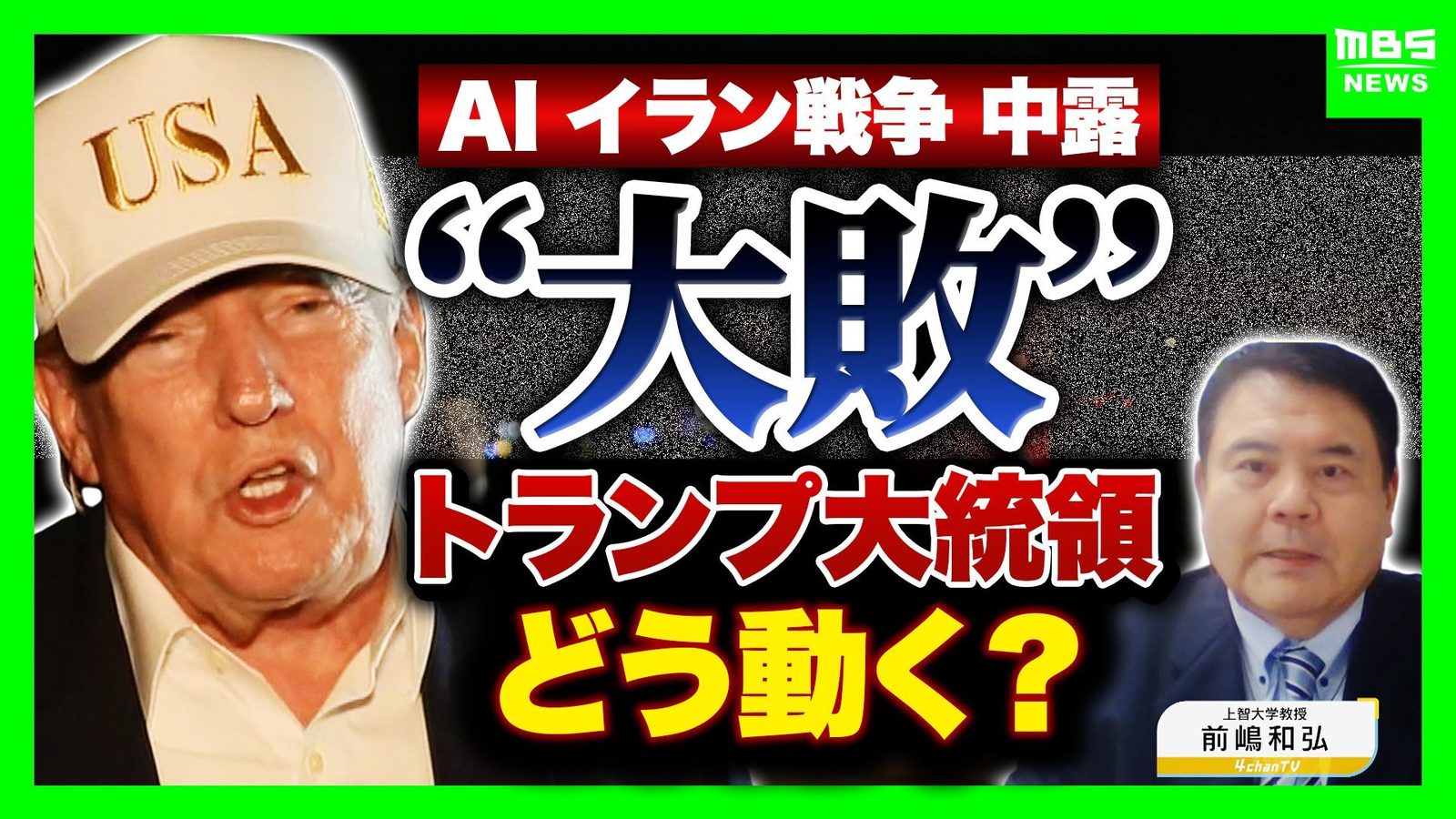
President Trump said on the 8th he wants a three-way meeting with President Xi Jinping and President Vladimir Putin on the sidelines of next week's APEC summit in China, a rapprochement that a Japanese expert warns could leave Japan with little room to manoeuvre.
Trump said the talks would cover denuclearization and negotiations to end the fighting with Iran, among other topics, MBS News reported.
The move follows the Republicans' heavy defeat in last week's midterm elections. Masahiro Maejima, a professor at Sophia University, gave MBS News his reading of how Trump will act from here, and what it means for AI policy, Iran and relations with China and Russia.
Veto threat, not cooperation
A bill passed by both chambers of Congress normally requires the president's signature. Trump recently signaled he intends to use his veto, saying he would become "Mr. Veto." He has also said he would work with the Democrats and that he is glad to be able to work with them.
Maejima said the talk of cooperation is partly aimed at the stock market. "His real intention is to exercise the veto," he said.
“Even now, with the Republicans in the majority, President Trump is forcing through policy using old laws and powers granted by the Constitution, on legal grounds that are highly dubious. In short, his relationship with Congress is already close to lame-duck status. Even if the Democrats become the majority after the midterm results, that stance probably will not change.”Masahiro Maejima, professor at Sophia University
Tariffs are one example, Maejima said. The Constitution states that the power to set tariffs lies with Congress, but Trump invoked old laws from the 1970s and interpreted them his own way to impose reciprocal tariffs. When the Supreme Court struck them down as invalid, he moved to apply a different law.
"He is acting without waiting for a new bill to pass Congress," Maejima said.
AI rules tighten as Trump courts the states
On AI, tighter regulation is expected to advance after the Democrats' landslide. Trump wrote on social media on the 6th, local time, that he would work with the many US states that want to grasp the "wealth" that AI adoption brings.