
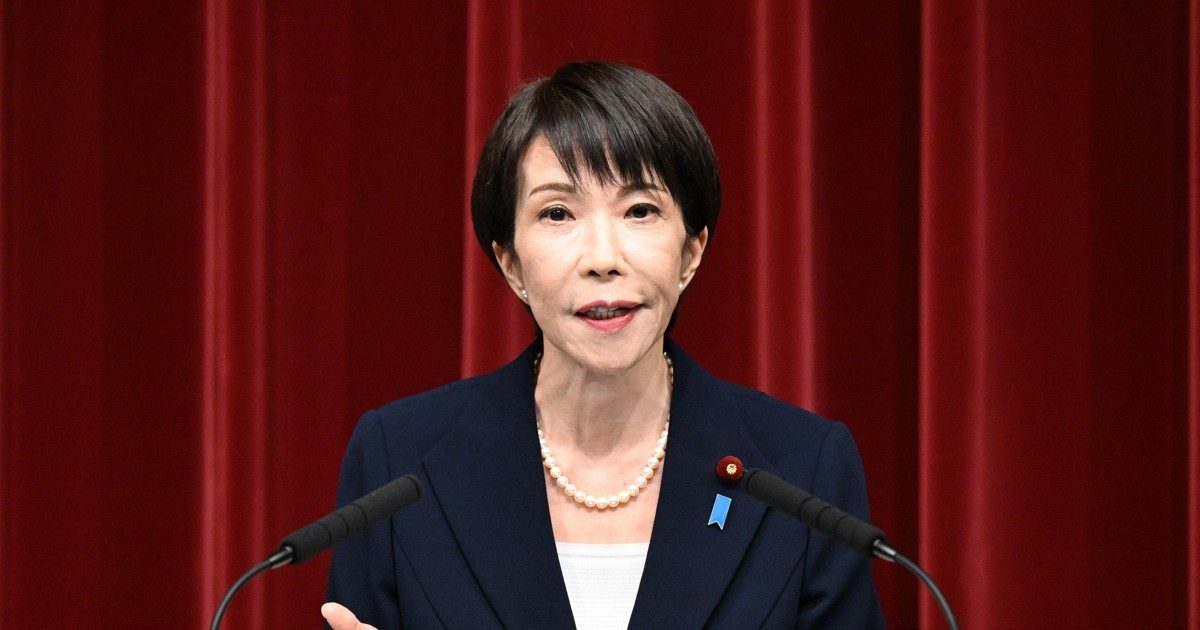
The cabinet of Sanae Takaichi, Japan's first female prime minister, marked one year in office on October 21. Its approval rating stands at 45%, down from the 65% or higher it held for three straight months after launching in October last year, but still close to half. The coalition of voters behind that number, however, looks very different from a year ago.
The cabinet's early strength came from outside the ruling Liberal Democratic Party. The LDP's own support sat steady around 25%, never climbing past 30%, while the cabinet ran far ahead of it. Support from other parties' backers made up the gap, according to a Mainichi Shimbun analysis of its opinion polls.
Two opposition parties stood out: the conservative-leaning Democratic Party for the People and the strongly conservative Sanseito. Both hold around 5% support, comparatively high for opposition groups. In the first polls after the cabinet launched, 70% of Democratic Party for the People supporters backed it, and more than 90% of Sanseito supporters did.
Conservative policy appears to have driven that. In a November survey, about 90% of backers of both parties said they approved of Takaichi's push to tighten rules on foreign residents. Support from all three parties' backers stayed high and carried the cabinet.
The turn in January
Then it began to fall. Takaichi dissolved the lower house abruptly at the start of the ordinary Diet session. After the LDP's landslide in February's general election, the government invoked its "numbers" to press for the budget's passage within the fiscal year rather than for more deliberation time. The budget was enacted on April 7.
The Democratic Party for the People asked for more debate time and proposed a stopgap budget including measures against energy price rises tied to the situation in Iran. Neither was taken up. Sanseito objected after it was denied a seat at a government-opposition council on social security that would discuss its proposals for a two-year zero consumption tax rate on food and drink and a benefit-linked tax credit.
The hard-charging Diet management may have cost the cabinet support among opposition voters, the analysis suggests.
Mainichi Shimbun is running the analysis as a four-part series. The first part examined which groups have fallen away and which have not. The third and fourth parts are scheduled for publication at 5 a.m. on the 10th.