
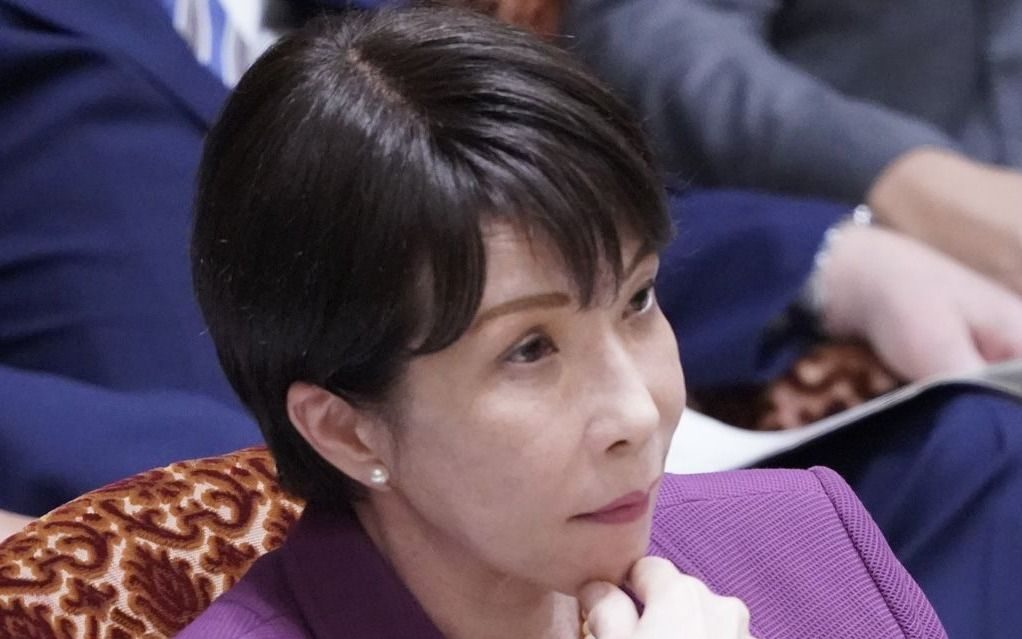
Prime Minister Sanae Takaichi skipped the October 2 online meeting of G7 leaders, and more than a month of explanations has produced conflicting accounts of that evening, including whether she drank.
On the night of October 2, G7 leaders met at France's call to discuss the Middle East and fuel prices. Takaichi did not attend, and a senior Foreign Ministry official took her place.
That evening, the prime minister had dinner with senior Liberal Democratic Party figures including Taro Aso. On October 5, Jiji Press reported the account of dinner attendees: "the prime minister drank too."
On November 4, Jiji ran a further article headlined "Takaichi's G7 absence a 'drinking party' reason? Government explanation vague, opposition presses." Attendees said she had also consumed alcohol.
Then came the Sankei Shimbun on November 9: "Prime Minister Sanae Takaichi did not drink at the dinner before the October G7 meeting; she was preparing to take part."
That day, Chief Cabinet Secretary Minoru Kihara denied it at a press conference. "The prime minister did not drink at all," he said, more than a month after the first report. She had been preparing in case her attendance became necessary, he said.
A growing list of explanations
What has drawn attention is how many explanations the government has offered, each different from the last.
- October 5: Takaichi said on X that the meeting had been set up suddenly and that sending a proxy was permitted. She added that the British prime minister had also been absent.
- October 16: The prime minister told the Diet that the meeting time had not been known until just beforehand, and that arranging a contractor to install the display and communications line needed for an online meeting had not been possible in time.
- October 27: Foreign Minister Toshimitsu Motegi said the meeting lasted about 30 minutes, Japan's chance to speak was a few minutes, and the agenda was mainly fuel prices for Europe and the US, so a proxy was judged sufficient.
- November 6: Takaichi told the Diet she had made a "comprehensive judgment."
A sudden convening, a proxy, equipment problems, a Western agenda, a comprehensive judgment, and now a denial of drinking. Who decided the prime minister would not attend, when, and on what grounds remains unanswered.
The tabloids took a blunter line. On November 6, Nikkan Gendai ran the headline: "'It was a memory lapse'... Foreign Minister Motegi admits 'false answer' in Takaichi G7 online meeting no-show scandal."
Motegi got the chair and the agenda wrong
Questioned by lawmaker Kiyomi Tsujimoto about a 2021 proxy attendance, Motegi got the chair country and the agenda wrong while explaining how this case differed. He later corrected the record in the Diet as a "memory lapse." The error came in the very argument meant to justify the absence.
Beyond whether she drank, the question is what makes the absence a problem at all. The Nikkei column of October 30 was titled: "Takaichi's G7 absence damages national strength; 'collective prestige' is the backing for diplomacy."
The column traced how Japan joined the G7. In 1973, Finance Minister Kiichi Aichi, concerned that the US and Europe alone would decide matters that affected Japan, lobbied other countries. Those efforts led to Japan's later place in the group. Nikkei argued that membership itself raises Japan's international credibility and voice.
Japan once sought a seat so that the US and Europe would not decide alone. This time it sent a proxy on the grounds that the agenda was mainly a US and European matter.
Prime Ministers Fumio Kishida and Shigeru Ishiba attended all seven G7 online meetings held between 2023 and 2025. Takaichi herself attended the online meeting in March this year.
Earlier prime ministers attended. If there was a special reason for this absence, it could simply be explained. Instead the explanations keep multiplying.
The record also brings back Takaichi's past conduct. In 2023, then economic security minister, she called internal affairs ministry documents on the Broadcast Act "fabricated." The question was whether a politician had intervened in how the government judges "political fairness" in TV programming.