
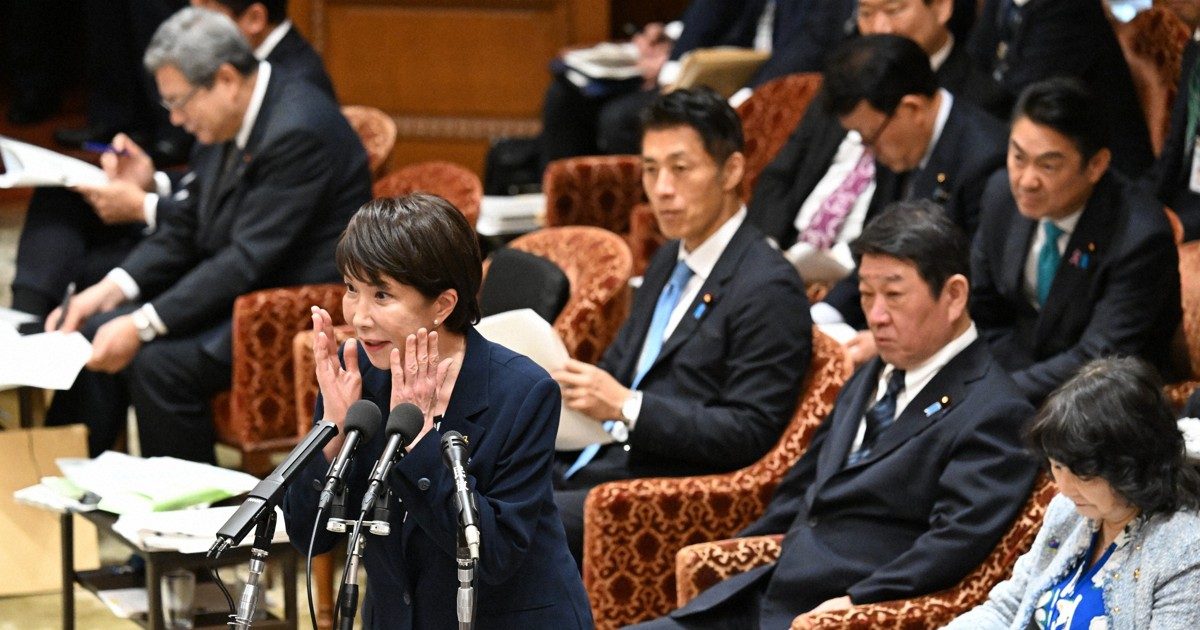
Prime Minister Sanae Takaichi told the Diet she may spend three or four more hours a day than a male prime minister on bathing, meals, clearing up and makeup, a remark that has stirred unease among dual-income families, the Mainichi Shimbun reported.
Takaichi said she "might be spending three or four extra hours" on such tasks. The comment drew a reaction from working parents raising children in two-income households.
Tatsuya Uehara, 38, runs XTalent, a job-change support service for dual-income households raising children. He told the Mainichi that balancing work with care at home is a problem most working people face.
A prime minister who carries that burden is "a party to a social problem," he said, and that is nothing negative in itself.
His objection is to the premise. The remark assumes the Showa-era division of roles between men and women, the period spanning Hirohito's reign to 1989, and it looks dated.
“Saying it takes longer because she is a woman is something many people, especially those of working age, will find jarring.”Tatsuya Uehara, head of XTalent
Data still shows housework in Japan falling disproportionately on women, Uehara said. But the fact of the imbalance is a separate question from treating the extra time as natural.
He argued for looking at how to cut the hours, and at how to erase the line between men's and women's work.
The uneven load of housework, child care and nursing care on women and the long hours forced on men are two sides of the same problem, he said. About one in four users of his service is a man.
Men and women alike say they want to change how they work, or to move jobs because of heavy overtime, according to Uehara. Many private companies are testing flexible hours and locations and shorter working time.
Politics has been slow to absorb that change, he said. Long hours remain the norm there, and the political world is clearly behind ordinary private firms.
Male leaders have not talked about housework because the burden never fell to them, Uehara said. Someone else was doing it in their place.
With a woman at the top, points that stayed invisible inside a male-dominated world have come into view.