
Japan's government is drafting a rewrite of its three security documents that would push defense policy past its old bounds, tying military strength to economic growth and enlisting academia and the public, the Asahi Shimbun reported.
The framework the government is sketching is one in which "society as a whole prepares for every kind of crisis." Prime Minister Sanae Takaichi is turning sharply toward building what the government calls "comprehensive national strength."
The shift rests on changes in the international situation and Japan's security environment. It joins three strands: defense strength and economic growth as one, closer ties with the academic world, and a public that understands security policy.
A ministry told to carry security
In September, a meeting was held at the Ministry of Economy, Trade and Industry in Kasumigaseki, Tokyo. Officials from the Acquisition, Technology and Logistics Agency were invited as instructors, according to people familiar with the matter.
Toshimitsu Fujiki, the ministry's administrative vice minister and its top civil servant, instructed the subordinates gathered before him, the people said. "From now on, I want METI to advance policy with the awareness that it, too, carries security," he told them.
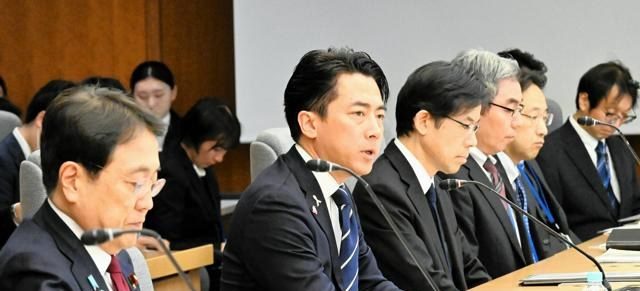
About two months after that meeting, the government presented materials at a panel of experts on the security documents rewrite, held at the Prime Minister's Office. The documents gave heavy weight to a vision in which economic strength underpins defense strength.
A postwar turn
The government has said it will make defense an industrial policy, a break from Japan's postwar approach, and establish a new organization to that end. It also frames the relationship as a "virtuous cycle between defense and economy."
The push extends to universities. Applications to a defense ministry funding program have surged, and the program supports research with both military and civilian uses. One professor who reached into the ministry's research budget said, "I even made my students economize."
Questions remain over whether the virtuous cycle can work, with contingencies in mind. Some have also asked where universities should draw the line with the military.
Under the government's plan, cooperating companies would be compensated for their role in contingency preparations, and publicity would promote public understanding. One expert described the approach as "possibly a modern version of a total-war system."