
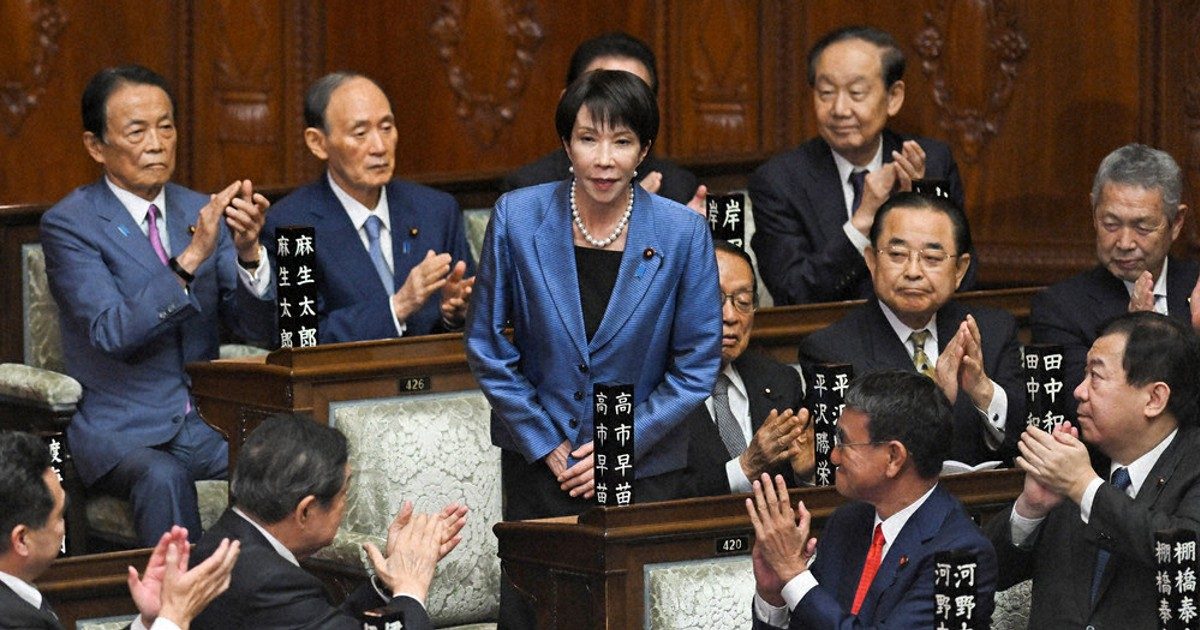
The Cabinet of Prime Minister Sanae Takaichi, Japan's first female prime minister, marked one year in office on October 21. Support stands at 45%, close to half, down from the 65% recorded when the Cabinet took office in October last year.
The composition of that support has shifted over the year, according to a Mainichi Shimbun analysis of opinion polls. Approval held above 65% through December, then fell below 60% for the first time in January. A landslide Liberal Democratic Party win in February's general election pushed it back into the 60s.
From March the figure slid, reaching 41% in July. Support stayed below disapproval until August. Since September it has recovered to 45%, once again above the disapproval rate.
A high start that outpaces disapproval is common. Shigeru Ishiba's Cabinet, Takaichi's predecessor, began at 46% support against 37% disapproval in October 2024. The Cabinets of Fumio Kishida and Yoshihide Suga also started with support ahead. A year later, Ishiba's support had fallen to 31% and disapproval stood at 53%, a majority. Kishida's and Suga's ratings each dropped by more than 20 points over the same span, leaving them well below disapproval.
Among recent administrations, only the second Cabinet of Shinzo Abe also kept support ahead of disapproval after a year. The Mainichi is running a four-part series on how the support structure has changed. The first installment focuses on LDP supporters and unaffiliated voters, groups that have moved in opposite directions.
The remaining installments cover opposition supporters who backed Takaichi and have since drifted away, discontent among voters who once treated her as an idol-like figure, and the shift from first-female-premier enthusiasm to a pattern of higher support among men than women. The Mainichi does not give a simple comparison across the year because the survey methods differ.