
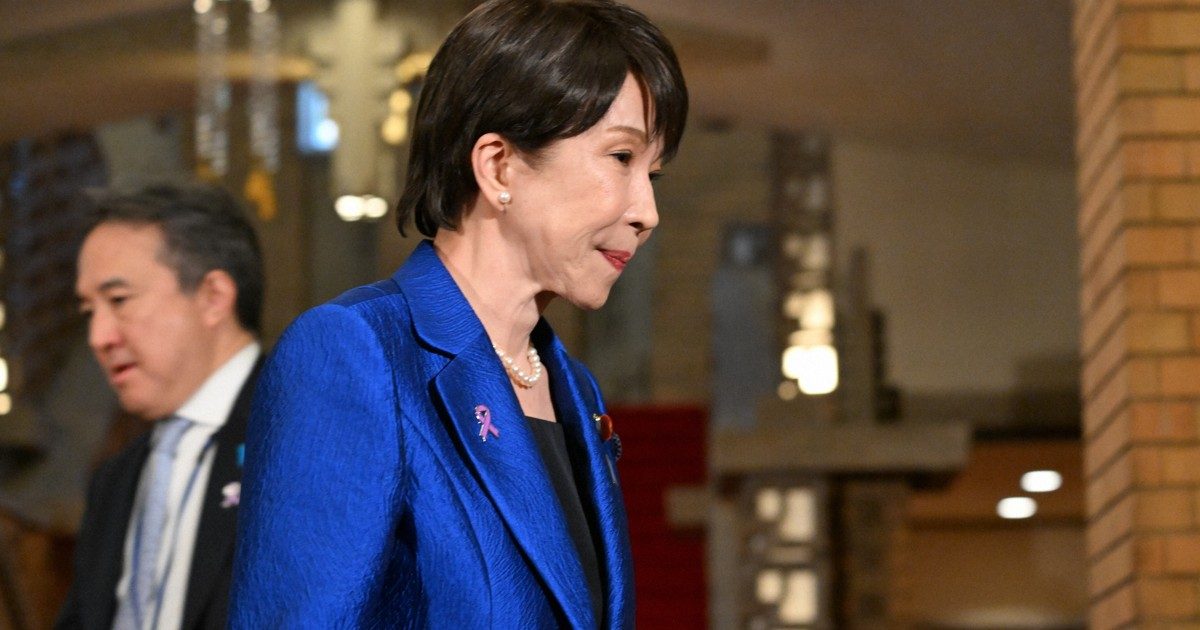
Prime Minister Sanae Takaichi will attend ASEAN summit meetings in Manila on the 17th, proposing a regional framework for oil procurement in a crisis and support for joint petroleum stockpiling in Southeast Asia, the Mainichi Shimbun reported.
She will also seek support for an updated version of the Free and Open Indo-Pacific (FOIP) vision. The aim is to raise Japan's presence in the region with China's economic and military rise in mind.
The push for engagement with ASEAN — the Association of Southeast Asian Nations — comes as relations with China strain over Takaichi's answers in the Diet on a Taiwan contingency. Beijing has avoided contact with her government.
Energy and sea lanes
The updated FOIP sets out three priorities for Japan: strengthening supply chains for energy and critical materials, sharing rules, and expanding security cooperation for regional peace and stability. It places economic security at the center.
Japan has built roads, ports and other high-quality infrastructure in Southeast Asia. To protect sea lanes, it has used the Official Security Assistance (OSA) program to supply coastal surveillance radar and high-speed patrol boats to like-minded militaries.
A Foreign Ministry official called ASEAN "the first and most important item on the FOIP agenda since it was proposed in 2016."
Takaichi has put weight on summit diplomacy. Leaders of Indonesia and the Philippines have visited Japan this year, and Japan and Vietnam have exchanged leader visits within six months.
A summit meeting of the Asia Zero Emission Community (AZEC) — Japan, Australia and Southeast Asian nations — will be held alongside the ASEAN meetings.
Japan set up Power Asia in April, a framework for energy cooperation in Asia that gives financial support to Asian countries struggling to procure crude oil. At the AZEC summit, Takaichi will propose a second round of support: cooperation toward a joint oil stockpiling system using Japan's surplus tanks and other facilities.
She will also propose building a mechanism for releasing oil within Asia in the future, modeled on the International Energy Agency.