
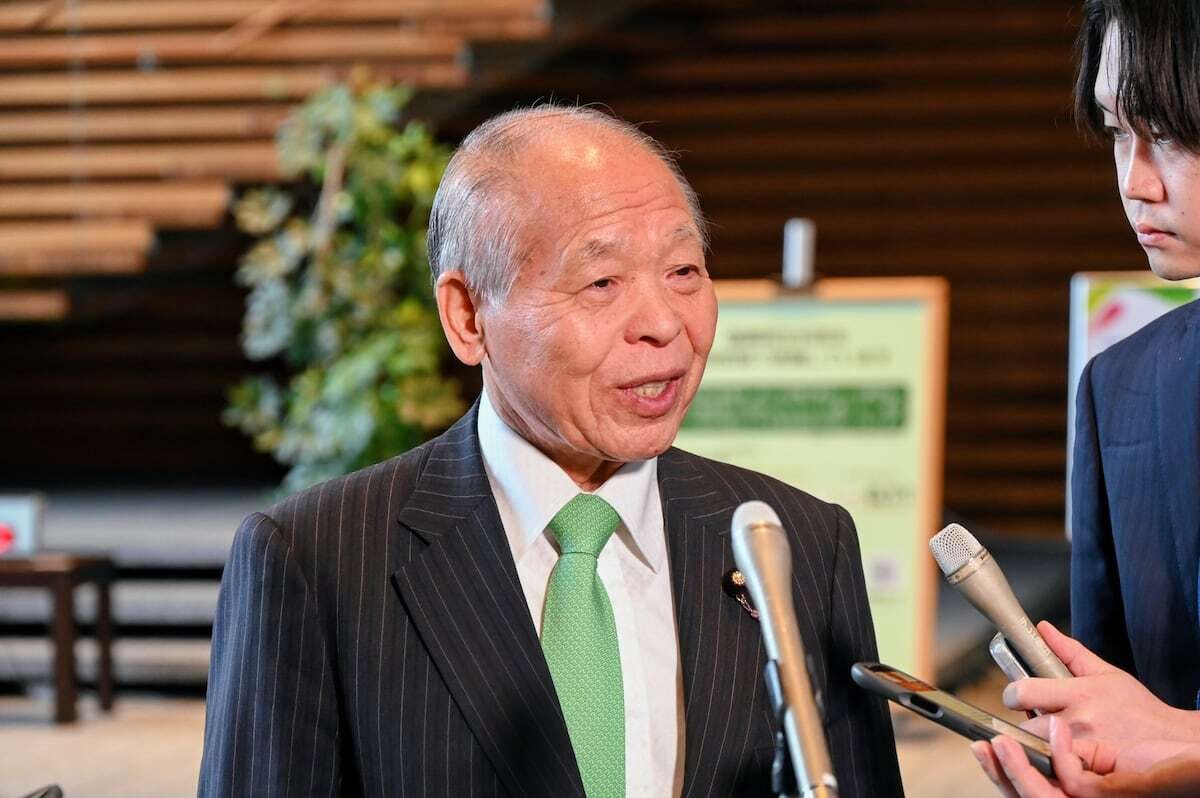
Upper House lawmaker Muneo Suzuki said on the 4th that the government is handling the case of a detained Hokkaido Shimbun reporter through quiet diplomacy, and called that approach correct. Suzuki, a Liberal Democratic Party member, met Prime Minister Sanae Takaichi at the Prime Minister's Office that day to discuss efforts to secure the reporter's early release.
Speaking to reporters afterward, Suzuki said the government is negotiating with Russia through diplomatic channels. "The government is now responding quietly. That is the right answer," he said. Of Russia he added: "I am sure they will respond humanely. I want to express my gratitude for that."
The male reporter was detained on October 13 in Sakhalin Oblast in Russia's Far East by the Federal Security Service (FSB) and transferred to Moscow. Russia says he was gathering information on the instructions of a Japanese intelligence agency. The Japanese government denies it. A court has approved his detention through December 12.
Suzuki said he passed on to the prime minister information he has received from the Russian side. Describing the exchange, he said: "I told her that Japan wants to make the utmost effort to secure his release, and that we are now doing this through diplomatic channels."
Foreign ministers meet for first time in about five years
Foreign Minister Toshimitsu Motegi held a formal meeting with Russian Foreign Minister Sergey Lavrov on October 30, the first in about five years, and demanded the reporter's immediate release. Suzuki said it was unclear whether the two sides were really communicating, but welcomed the contact. "Having a chance to talk was extremely good. It is a fact that we have reached the starting line," he said.
Suzuki stressed that cases like this can only be handled quietly. "Saying this and that unilaterally will only complicate the problem," he said, expressing understanding for the government's cautious diplomatic stance.
Suzuki has been involved in diplomacy with Russia for many years as a member of the Diet. On October 14 he visited the Russian Embassy in Japan to request the reporter's early release, and said he received word from the Russian side that the reporter's health was fine and that he was in good spirits.
Suzuki also asked the prime minister to take Okinawa's interests into account ahead of an Okinawa policy council meeting on November 6, where the prefecture's governor and relevant cabinet ministers will discuss economic policy for the prefecture. He said Takaichi was enthusiastic and told him she wanted to work hard for Okinawa.