
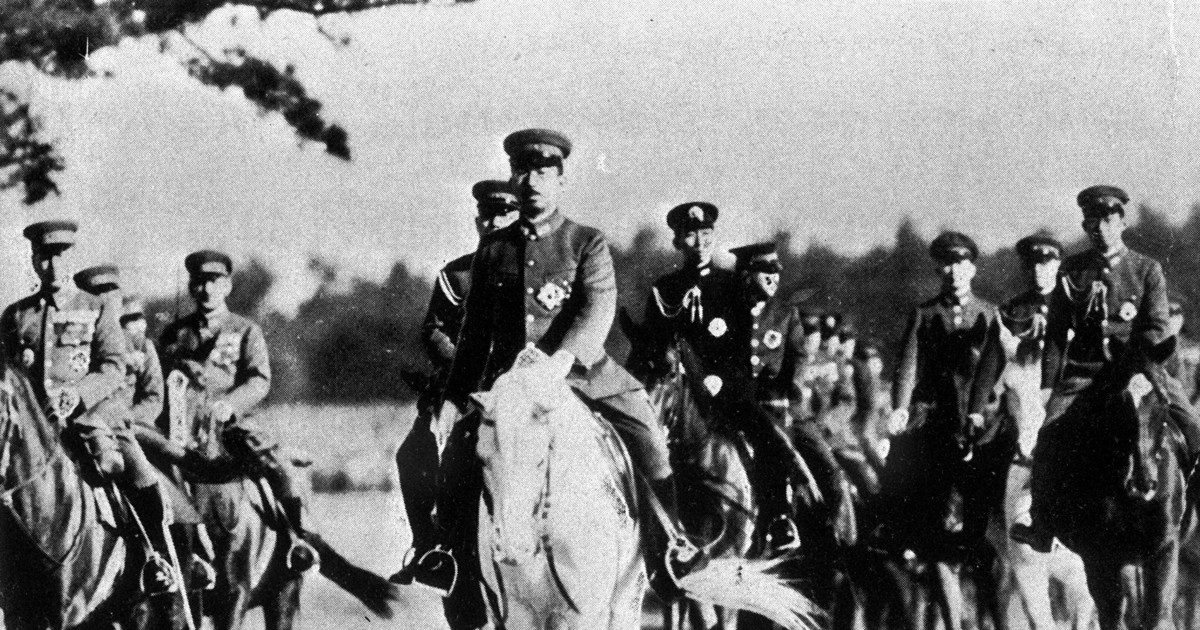
Calls to hold the Showa Emperor responsible for World War II have never faded. The emperor himself explained his failure to stop the war with the phrase "gekokujo" — the insubordination of the military — according to a record of his conversations with the first head of the Imperial Household Agency.
The record, "Showa Tenno Haikiki" (Iwanami Shoten, seven volumes), sets down the dialogues of Tajima Michiji (1885-1968) with the emperor. It is treated as a first-class source on the emperor's actions and thinking, the kind of material other documents rarely reveal. This series reads it for what it shows about the Showa Emperor's war responsibility.
A demand for accountability
After Japan's defeat in the summer of 1945, voices at home and abroad called for the emperor to answer for the war. He resented them. As described in an earlier installment, he told Tajima that people did not read his words in the imperial rescript declaring war — "I never willed it" — and stressed that the outbreak of war had not been his intention.
Tajima pushed back, telling him in substance that the excuse would not stand. The exchange is dated Feb. 10, 1949.
That the emperor worked to avoid war, however, is a matter of record.
The road to the imperial conference
Japan sent troops into northern French Indochina — now Vietnam and its neighbors — on Sept. 23, 1940. The aims were to advance southward and to cut the "enkyu route," the supply lines through which Britain and the United States were aiding China in its war against Japan.
France had by then surrendered to Germany, and Indochina was becoming a political vacuum. The dispatch was a piece of opportunism. Three days later, on Sept. 27, Japan signed the Tripartite Pact with Germany and Italy — in effect a military alliance aimed at the United States, and one that soured American feeling toward Japan.
On July 28, 1941, Japan sent troops into southern Indochina as well. The United States hardened its diplomacy and banned oil exports to Japan.
With tension rising, the government and military leadership were to meet on Sept. 6 in an imperial conference attended by the emperor. The day before, Prime Minister Konoe Fumimaro reported the agenda item, the "Outline for Carrying Out Imperial Policy," to the emperor in private. Its gist: if Japanese-American negotiations showed no prospect of settlement by around early October, a month away, Japan would resolve on war with the United States, Britain and the Netherlands.
The account of what followed, and of how the emperor later described the military's insubordination, continues in the full text of the article.