
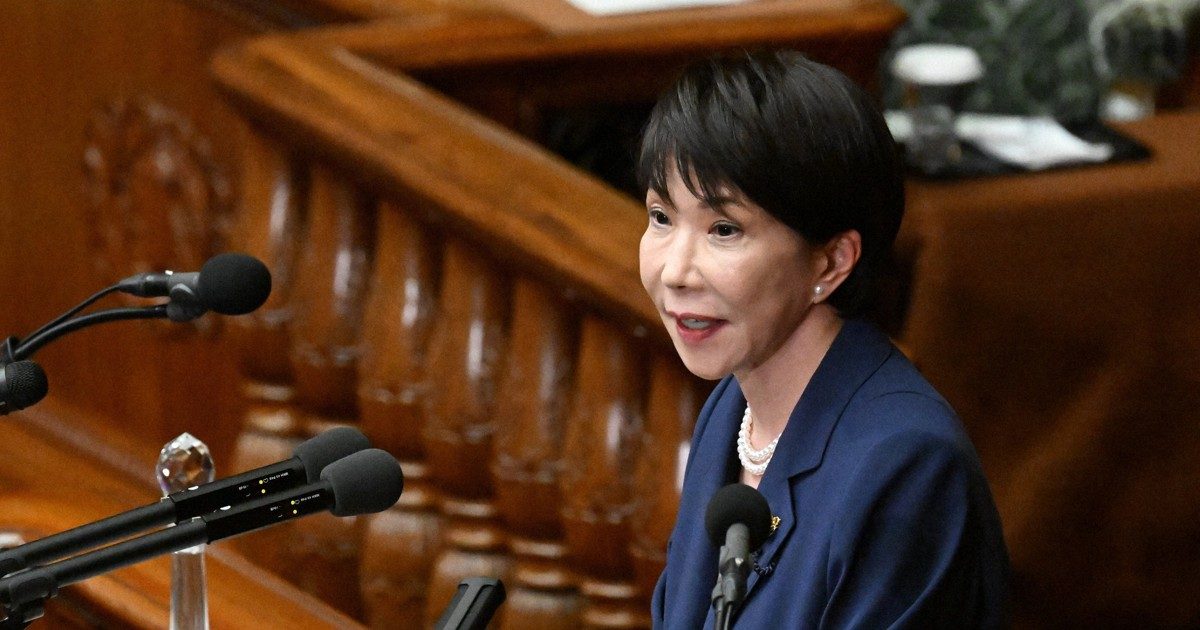
Legislation for a consumption tax cut backed by Prime Minister Sanae Takaichi cleared the House of Representatives during the extraordinary Diet session, but the government has yet to say how it will replace the revenue, and polls show the public divided on whether the cut is needed.
Under the plan, the reduced rate on food and drink would drop from 8% to 1% for two years from next spring. The cut would be a straightforward relief for households. The funding has not been shown, and whether the rate can return to 8% after two years is unknown.
Polls shift as the plan becomes policy
In a nationwide Mainichi Shimbun survey in June 2025, during the Ishiba administration, respondents were asked whether cash handouts or a consumption tax cut would better counter rising prices. Just 16% chose handouts, against 55% for a tax cut.
After the cut became a political task for the Takaichi administration, surveys in June and July this year put support and opposition to the government and ruling parties' plan at around 40% each. In September, 48% said the cut would not help household finances, against 31% who said it would.
Motohiro Sato, 57, a professor of public finance and vice president of Hitotsubashi University, said the mood mixes hope with worry. "People have a mixture of expectations and anxieties about the consumption tax cut," he said.
The revenue problem
The worry many share is the loss of tax revenue. The consumption tax is the base funding source for social security, and under the banner of "responsible proactive fiscal policy" the books have to balance somewhere.
Sato said the tax looks stable to economists but stays unpopular with the public because the burden is visible. Social insurance premiums, which are less visible, average about 15% of salary, he said, a far heavier load than the consumption tax.
International bodies including the OECD have recommended a substantial consumption tax rise to rebuild Japan's finances. Sato agrees. "Even with spending cuts, the consumption tax needs to be raised to around 15%," he said.
"If you dislike the consumption tax, you have to raise social insurance premiums or cut social security," he said. "Politics is avoiding the painful choice of presenting revenue and spending as a package." Pairing the cut with higher patient charges at hospitals, he said, would have been a chance to debate the future of social security.
The case for relief
The hope rests on cheaper food. One estimate puts the saving at close to ¥50,000 a year for the average household.
Sato reads the appeal differently. What is being praised, he said, is not the economic effect but Takaichi's leadership in keeping a campaign promise. The source interview is truncated at that point.