
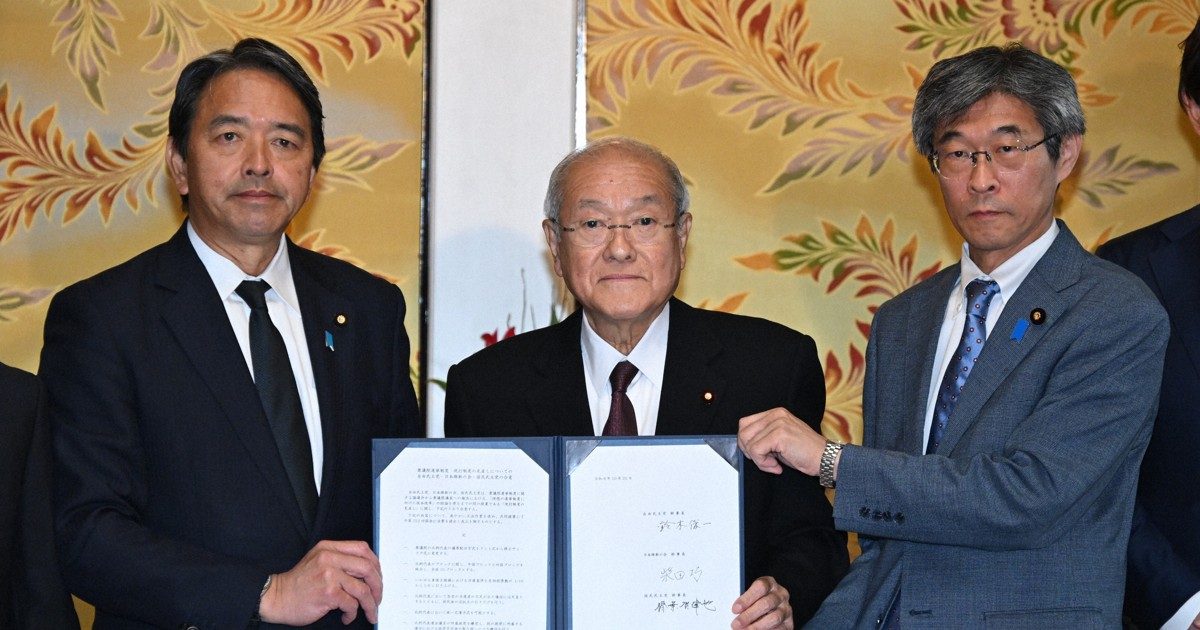
Three parties have submitted a bill to cut 31 proportional representation seats in the House of Representatives and merge the Chugoku and Shikoku blocs, with debate in the Diet expected to begin soon, the Mainichi Shimbun reported.
The bill is backed by the Liberal Democratic Party, Nippon Ishin no Kai and the Democratic Party for the People. The cut would be the largest to the lower house's membership since the war.
The chamber currently has 465 seats. The reduction is billed as part of "身を切る改革" (mi o kiru kaikaku) — reform that cuts the flesh, meaning lawmakers share the sacrifice they ask of others.
From 45 seats to 31
The cut was written into the LDP-Ishin coalition agreement. The two parties first aimed to remove 45 seats, a tenth of the total.
Opposition parties pushed back, arguing that cutting only the proportional tier would hurt smaller parties. The reduction was set at 31, and the DPFP's support carried the bill to submission.
The figure rests on population projections. The 2015 census, taken when the current seat count was set, projects a 6.7 percent fall in population over 30 years.
A new formula for dividing seats
The bill replaces the current D'Hondt method with a modified Sainte-Laguë method, which favors smaller parties. It also allows several parties to field candidates on a single shared proportional list.
On that joint list, the bill states only that "necessary legislative measures will be taken." The DPFP cited the stated basis for the 31-seat figure and the adoption of most of its other demands as reasons for backing the bill.
The DPFP has stressed that the bill is a stopgap. A fuller overhaul is to be studied over a year with experts involved.
The other opposition parties still oppose the plan. Passage looks likely: the ruling bloc holds more than two-thirds of lower house seats, and in the upper house, where it is a minority, its votes plus the DPFP's would clear half.