
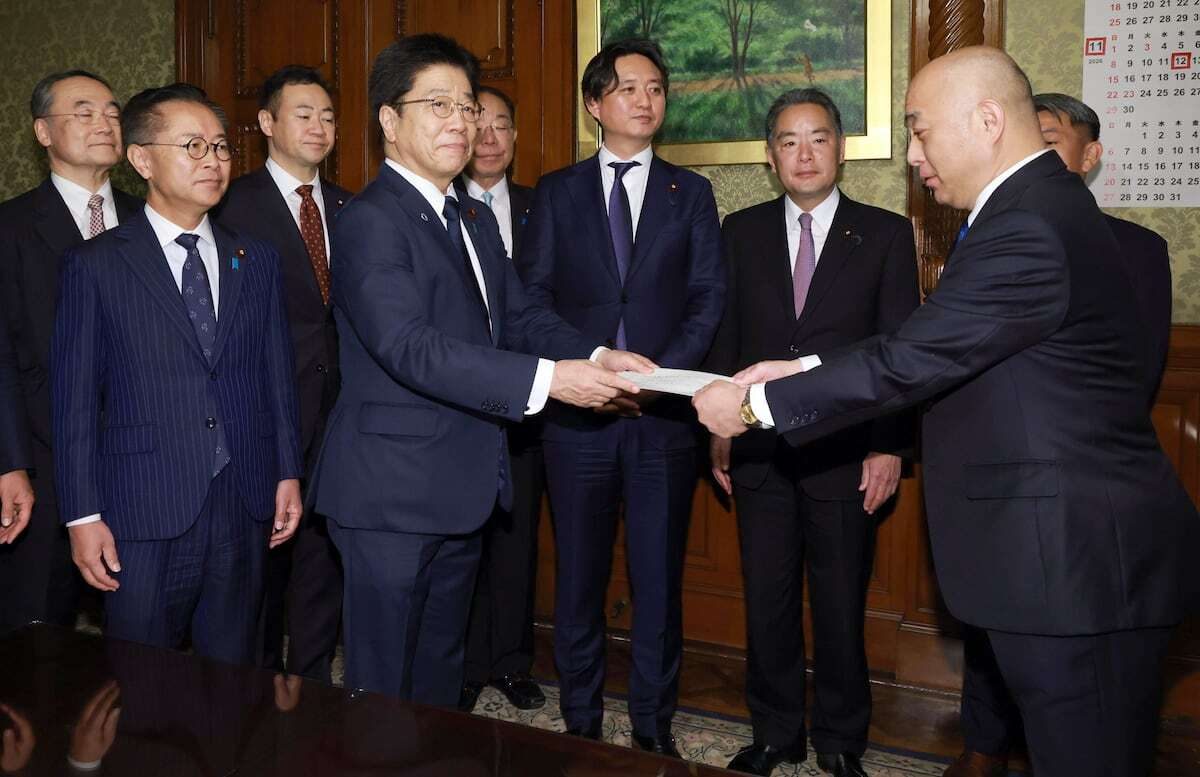
The Liberal Democratic Party, Nippon Ishin no Kai and the Democratic Party for the People jointly submitted a bill to the lower house on the 12th to cut 31 proportional representation seats and change how those seats are allocated, aiming to pass it in the current Diet session, the Sankei Shimbun reported.
The bill would merge two of the 11 proportional representation blocs, the Chugoku bloc with 10 seats and the Shikoku bloc with 6. The combined Chugoku-Shikoku bloc would hold 13 seats, three fewer than the current 16.
The Kinki bloc loses the most seats, falling from 28 to 23. Minami-Kanto and Tokai each lose four, and Kita-Kanto, Tokyo and Kyushu each lose three. Hokkaido, Tohoku and Hokuriku-Shinetsu each lose two.
The bill cuts 31 proportional seats in all, reflecting the falling population. It also replaces the current D'Hondt method of allocating proportional seats with a modified Sainte-Laguë method, which makes it easier for smaller parties to win seats.
Candidates who run in both a single-seat district and on a proportional list would need a larger share of the vote to return to the Diet after losing their district. The bill raises the threshold from one-tenth of valid votes to one-sixth.
If a party wins more proportional seats than it has candidates to fill, the seats would stay vacant. The bill also lowers the threshold for confiscating the deposit candidates must pay to run.
On a unified list system, which would let candidates from different parties appear on the same proportional list, the bill only states that "necessary legislative measures will be taken."
The LDP and Ishin, the two governing parties, are four seats short of a majority in the upper house. With the DPFP joining, they now have a path to a majority.