
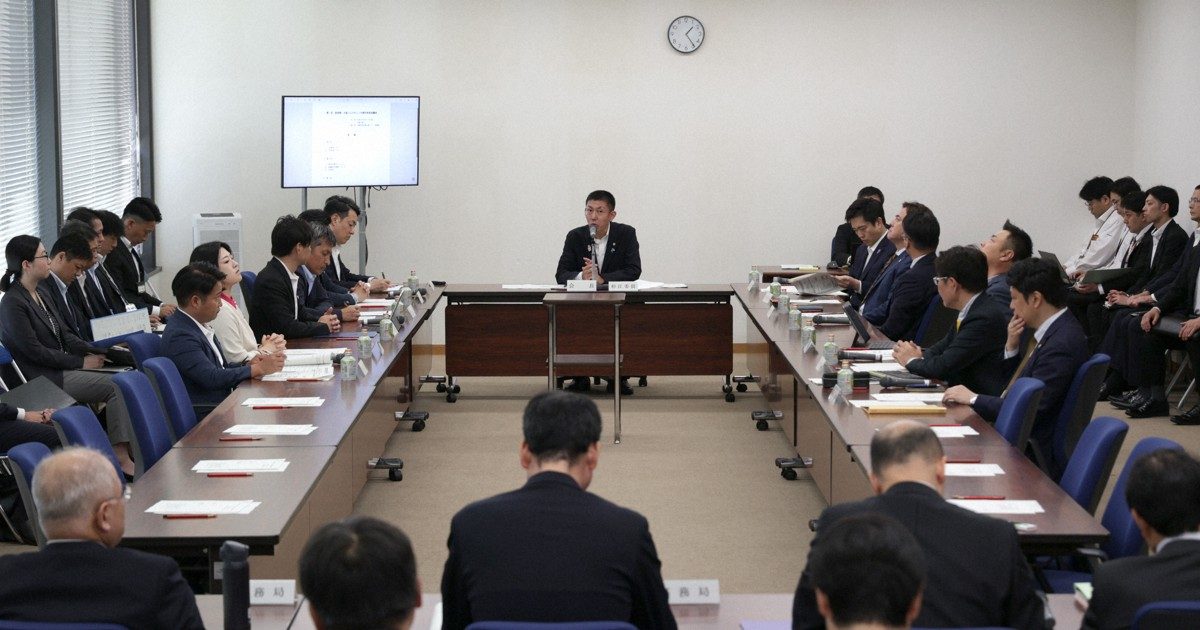
A joint council of the Osaka prefectural and city governments debating the Osaka metropolis plan — a proposal to abolish Osaka city and replace it with four special wards — met for the 12th time on November 5, where the two governments presented projections that the new wards' finances would be stable.
The panel also adopted proposed names for the four wards, drawn up by Nippon Ishin no Kai, the only party taking part in the council: Yodogawa, Kita, Chuo and Tennoji.
Earlier sessions settled the division of duties between the prefecture and the special wards and how many staff each would have. With the shape of the wards now concrete, the two governments turned to their future finances.
How the projections were built
The calculation assumes Osaka can achieve the middle of three medium- to long-term economic growth scenarios the Cabinet Office presented this summer. It further assumes the shift to special wards takes place on January 1, 2031, and works out each ward's fiscal balance through fiscal 2040.
The prefecture and city argue that concentrating wide-area administration in the prefecture under the plan will deliver higher growth than now and lift tax revenue. They also counted on an annual payment of 50 billion yen from the integrated resort including a casino, scheduled to open in 2030.
On those assumptions no ward runs a deficit, and in fiscal 2040 each would post a single-year surplus of between 13.5 billion and 27 billion yen.
Ward names unchanged from the last vote
The council agreed on the names for the four wards, which would regroup the city's existing administrative wards. The first, covering Yodogawa and three other wards, becomes Yodogawa; the second, covering Kita and five others, becomes Kita; the third, covering Chuo and six others, becomes Chuo; and the fourth, covering Tennoji and six others, becomes Tennoji.
The names are the same as those used at the time of the previous referendum. The council also decided that the mayor will settle names below ward level, such as town areas, by the day before the transition, taking residents' views into account.
The council plans several more meetings, taking up the date of the transition and a growth strategy aimed at securing designation as a sub-capital. It aims to compile an agreement setting out the institutional design of the plan within the year.