
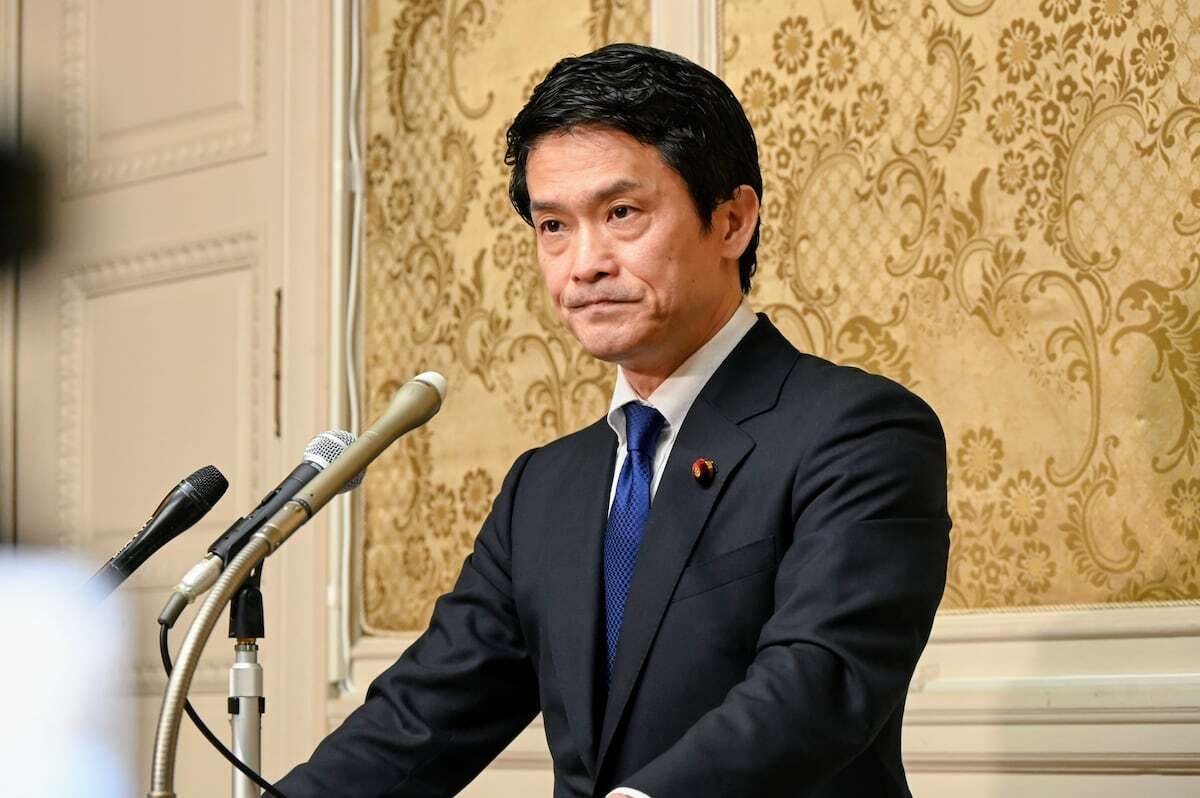
Junya Ogawa, leader of the Democratic Reform Association, said at a press conference on the 6th that his party will oppose the consumption tax reduction bill submitted by the government. He argued that cash handouts are preferable to a two-year temporary tax cut under inflation, on grounds of speed and fairness.
The bill passed the House of Representatives Financial Affairs Committee by a majority of the Liberal Democratic Party and Nippon Ishin no Kai after Ogawa's press conference.
Speed and fairness
Ogawa said he has "great doubts about whether the effect will really reach consumers" from a policy that cuts the tax only on food for two years under inflation. "Rather, a handout that is immediate and fair is more appropriate," he said.
He also cited unclear effects on restaurants and on support measures for farmers, forestry and fisheries workers, and raised concern about the tax rate going up after the two-year measure ends. "Can we really withstand a firm tax increase two years from now?" he said.
Permanent cut pledge not carried over
Asked about consistency with the centrist reform alliance's pledge in the February House of Representatives election to permanently zero the consumption tax rate on food and drink, Ogawa said he bears responsibility for having discussed it. But the Democratic Reform Association is a separate party, and "in form we have not directly taken it over," he said.
He described a permanent cut as "proper institutional infrastructure" and argued it "cannot necessarily be discussed on the same footing" as a tax cut serving as a temporary inflation measure. Basic policy and manifesto drafting are still to be settled, and he said the party will discuss them again in light of changing circumstances.
On election pledges in general, Ogawa said a party that campaigns on a promise and wins has a responsibility to carry it out. Even in defeat, he said, "at least during the term you bear responsibility for what you put forward, and if circumstances change, you are expected to explain the change."