
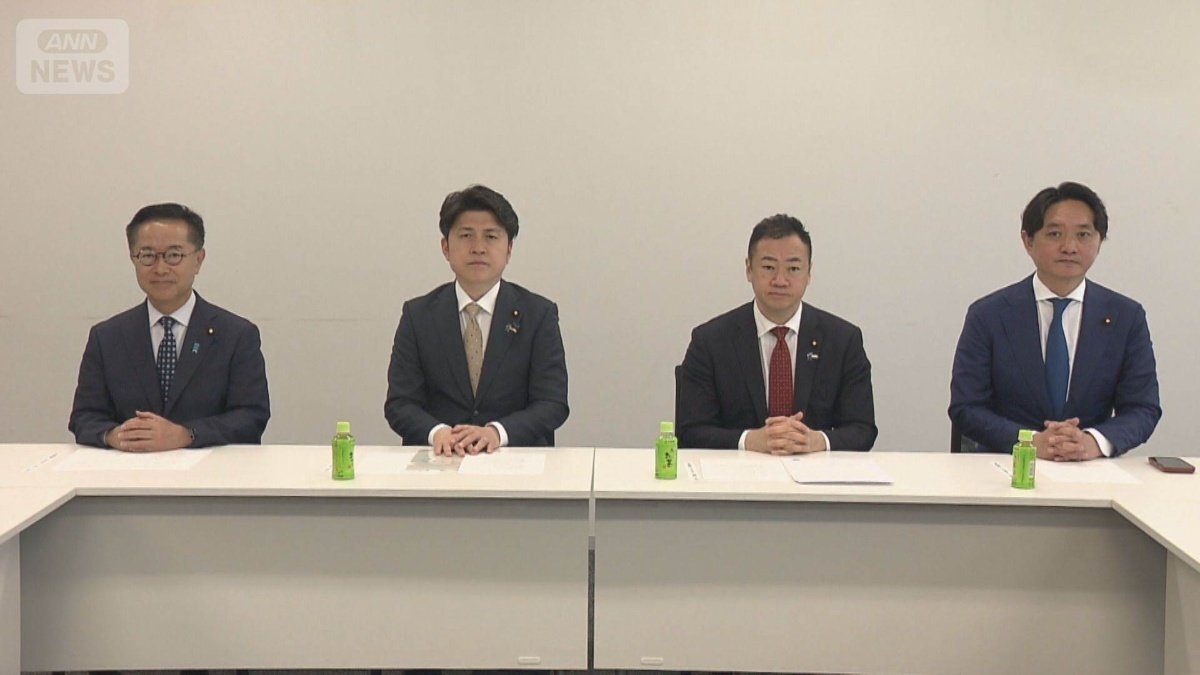
The Liberal Democratic Party, Nippon Ishin no Kai and the Democratic Party for the People agreed on Oct 29 to cut 31 proportional representation seats in the House of Representatives, the lower chamber of Japan's Diet. The ruling camp aims to pass the bill in the current Diet session, and the compromise gives it majorities in both chambers.
The three parties were to formalize the agreement at a meeting of their secretaries-general on Oct 29, then submit the bill to the Diet. Nippon Ishin had made cutting the number of lawmakers the centerpiece of its push for political reform, and had held out for a cut of 45 seats, roughly 10 percent of the chamber.
Ishin co-leader Fumitaka Fujita said the party had settled for less than it wanted. "There is a part of this that is extremely frustrating," he said. "While acknowledging our own lack of strength, we want to go into the talks from tomorrow onward with the stance of reaching a conclusion within this Diet session on a cut of 31, the largest number in the postwar era."
A compromise from the LDP
The LDP narrowed the cut to 31 seats and offered an amendment that would merge the proportional Chugoku and Shikoku blocs, a change the DPFP had sought. The DPFP had proposed cutting 19 seats, citing the rate of population decline through 2025, and swung behind the compromise.
“If 45 seats had been pushed through by force of numbers, nothing good would have come of it for Japanese democracy. We made our own proposal and it was largely accepted, so while this is a second-best outcome, our party is willing to accept this revision of the current system.”Taro Yamamoto, leader of the Democratic Party for the People
With the three parties aligned, supporters of the cut now hold majorities in both the House of Representatives and the House of Councillors, making passage in the current session likely. Former justice minister Kaoru Suzuki, who put forward the eight-point compromise, said the breadth of support mattered. "It is extremely significant that we received firm support from a considerable majority in both chambers," he said.
What the cut changes
Japan's proportional representation system fills seats from party lists in 11 regional blocs, alongside the single-seat districts that make up the rest of the 465-member Lower House. Merging the Chugoku and Shikoku blocs would combine two of the smallest regions, where shrinking populations have already reduced the weight of rural votes.
Reducing the total also touches the ratio between district and proportional seats, a balance the parties have argued over since the current system took effect in 1994. The bill's passage would mark the first cut to the Lower House's statutory membership since 2017, when the chamber was reduced by 10 seats.
The agreement leaves the shape of the merged bloc and the timing of its introduction to be settled in the bill's text. Nippon Ishin had argued that a larger cut was needed to show the public that lawmakers were serious about trimming their own numbers.