
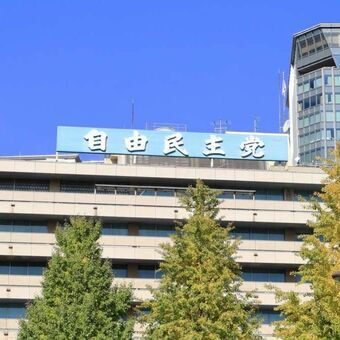
Japan's Liberal Democratic Party has decided to reprimand former Prime Minister Shigeru Ishiba and three other MPs for walking out of a lower house plenary session before a vote on a bill to cut the consumption tax on food for two years from next April, but it left Iwaya Taro unpunished for the same act.
The other three reprimanded are former Economic Planning Agency chief Gen Funada, former economy, trade and industry minister Yuko Obuchi and former justice minister Yoshihisa Furukawa. Party leaders asked all four to submit their reasons in writing by noon on November 9, and they complied.
Ishiba, who opposes the tax cut, explained his exit to reporters on the afternoon of November 9. "Consumption tax is by law entirely devoted to social security," he said. "Social security spending will rise sharply from here, and even the full amount is not enough. Losing revenue without finding a replacement source is a very serious problem."
He had made the same argument at a symposium in Tokyo on October 7, saying that if the fiscal position is damaged and interest rates and prices rise, "we will not know what the tax cut was for."
Funada, in a document filed with party headquarters on the 9th, said that in examining the weak yen, price trends and the content of the bill, he concluded he could not support it and would abstain. He called the cut "an act that throws cold water" on the efforts of the predecessors who introduced the consumption tax and raised its rate.
Suzuki says the punishment was not about policy
Secretary-General Shunichi Suzuki held a news conference at party headquarters and defended the reprimands. "The bill in question is an important one, it was fully deliberated in the policy and tax research councils, and it passed the general council unanimously," he said. "Party discipline applies, and it is our party's rule to act in unity."
He stressed that the party had acted "not on the substance of policy, such as funding sources or fiscal discipline." Article 43 of the Constitution states that both houses are composed of elected members representing all the people, meaning MPs act on their own judgment for the public.
The split in treatment has fueled talk of a double standard inside the party leadership, Toyo Keizai Online reported. The four reprimanded are drawn from factions outside the party's mainstream, while Iwaya's position was left untouched.
Ishiba's public campaign against the cut and Funada's written protest put their dissent on the record. The party's concern now is whether similar revolts spread to the upper house, where a rebellion could raise the prospect of a dissolution and snap election.