
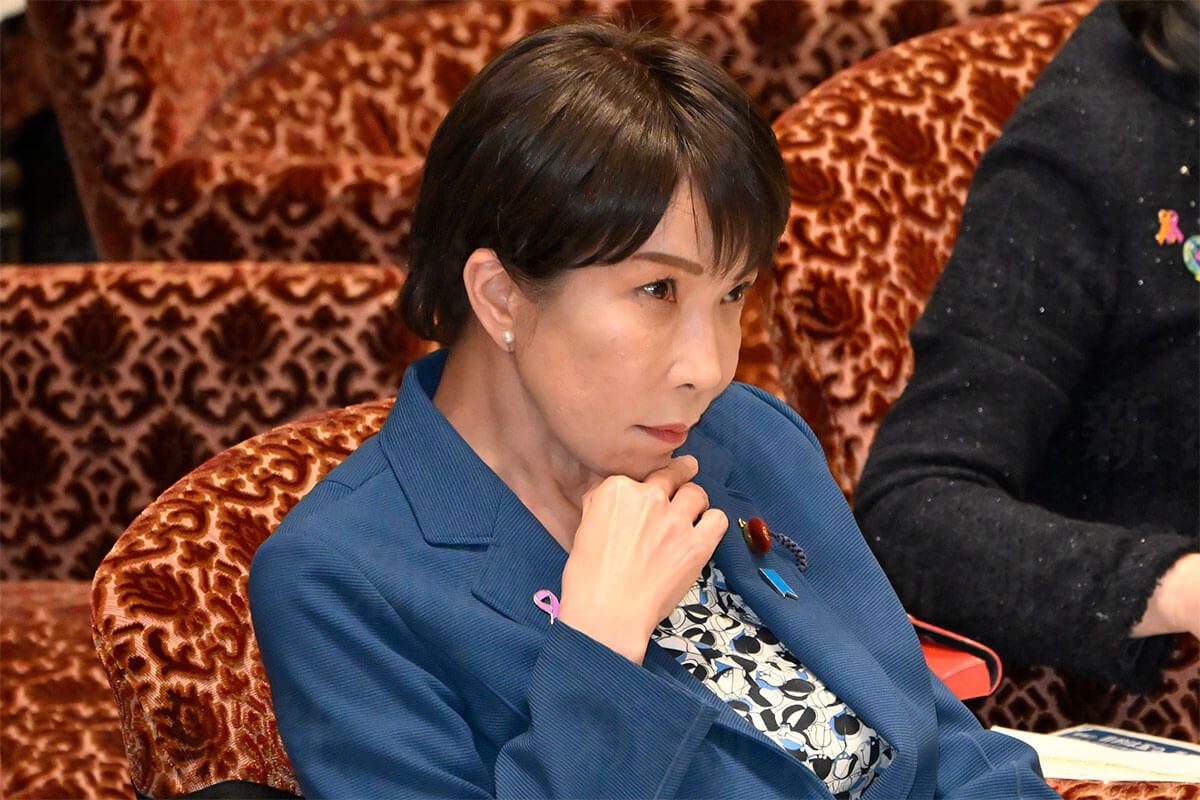
Four LDP lawmakers with leadership and cabinet experience left the lower house chamber before a food-tax cut bill passed on the 6th, and the party's swift reprimand of them has fed talk of a snap election, Daily Shincho reported.
The four were Ishiba Shigeru, a former prime minister; Obuchi Yuko, a former election strategy chief; Funada Hajime, a former head of the Economic Planning Agency; and Furukawa Yoshihisa, a former justice minister.
The bill cutting the consumption tax on food passed the lower house on the 6th with support from the LDP, Nippon Ishin no Kai and others. The four walked out before the vote.
The party secretariat asked them to explain the walkout in writing, and they complied. Secretary-General Suzuki Shunichi told a press conference the reprimand was issued because the conduct could not be overlooked "from the standpoint of party discipline and party unity."
Of the secretary-general's four penalties — expulsion, suspension of party membership, reprimand and admonition — the reprimand is the second-lightest. All four received it.
A political desk editor told Daily Shincho that Ishiba is the first former party president to be disciplined. The editor said Obuchi's exit was expected, and so was Funada's, given his recent record of opposing almost everything.
Furukawa's walkout drew surprise from the secretariat and from within the party and Nagatacho, the editor said.
The editor described Furukawa as known in Nagatacho as highly capable. He served as a vice chairman of the party's tax commission, known internally as the inner group, alongside Obuchi. Both resigned from those posts after the walkout.
Furukawa was originally a member of Ishiba's faction. Colleagues long questioned why he stayed with Ishiba, whose prospects looked dim, the editor said. He later split with Ishiba, a break that fed into the dissolution of the Ishiba faction, Suigetsukai.
Ishiba is said to be smiling at Furukawa's rebellion, sensing a chance to work with him again, according to the editor.
The secretariat moved unusually fast. The editor said Prime Minister Takaichi Sanae's anger drove the speed. The prime minister unloaded on aides in terms the editor described as abuse and invective at the level of "you idiots, don't mess with me."
A reprimand places no restriction on a member's activity within the party. The editor suggested the leadership needed the fact of a punishment more than its weight.
Suzuki said the conduct could not be overlooked, but the leadership feared serious fallout within the party if the penalty were too heavy, the editor said.
Takaichi's anger has its reasons, the editor said. The upper house, unlike the lower, is a minority government. If the four's move encouraged a chain of rebellions there, the vote would be in doubt.
The editor said Takaichi holds a strong wish that members follow what the party has decided.
Aso Taro, the deputy president known for disliking Ishiba, criticized him at a faction meeting. Aso cited Ishiba's remark that "if I were afraid of punishment, could I do this job?" and said the reprimand was not meant to instill fear but was a question of party governance. He said Ishiba had chances to speak during internal debate.
Moriyama Hiroshi, who was secretary-general under Ishiba, defended the four in a speech, saying internal debate had been thin. Kobayashi Takayuki, the policy research council chairman, pushed back at a press conference, saying he did not think debate had been thin.
Asked about next autumn's party leadership race, Kobayashi said he had no time to think about it and that his job was to support the Takaichi government with all his strength, according to the editor. The remark amounted to ruling out a run of his own. Talk has circulated that he was promised the secretary-general post in the next round of party appointments.
Defense Minister Koizumi Shinjiro, who has also run for party president, said on an internet program that he would back Takaichi fully if she runs.
The editor said Takaichi brought Kobayashi and Koizumi into senior party and cabinet posts to secure her re-election next autumn. Their statements of support now could be seen as an overreaction to the four's rebellion in the lower house.
The tax cut bill now goes to the upper house, where the minority government makes amendments likely. An amended bill returns to the lower house, and the party leadership is watching for further rebellion there.
The editor said any fresh rebellion would probably be small. But if the numbers grew, the view that Takaichi might call a snap election over a theme that divides public opinion has suddenly gained currency.
Until now, talk of a dissolution centered on cutting the number of lower house seats, the session's other main item. The Democratic Party for the People is set to support that bill, so it looks likely to pass without trouble.
Views differ on a dissolution tied to the tax cut bill. The editor said few in Nagatacho seriously expect one, but a lower house election was held this February when few expected it. Some in the district, the editor said, are even deliberately stirring rebellion to summon the mood for a dissolution.
The 2005 "postal dissolution" by then-Prime Minister Koizumi Junichiro followed the upper house's rejection of his postal privatization bills.
The editor said the number of lower house rebels over an amended tax cut bill would never approach a rejection. Still, many are on guard, wondering what Takaichi might do, the editor said. A silent message from the prime minister's office that a dissolution is possible may be spreading through parts of the party.