
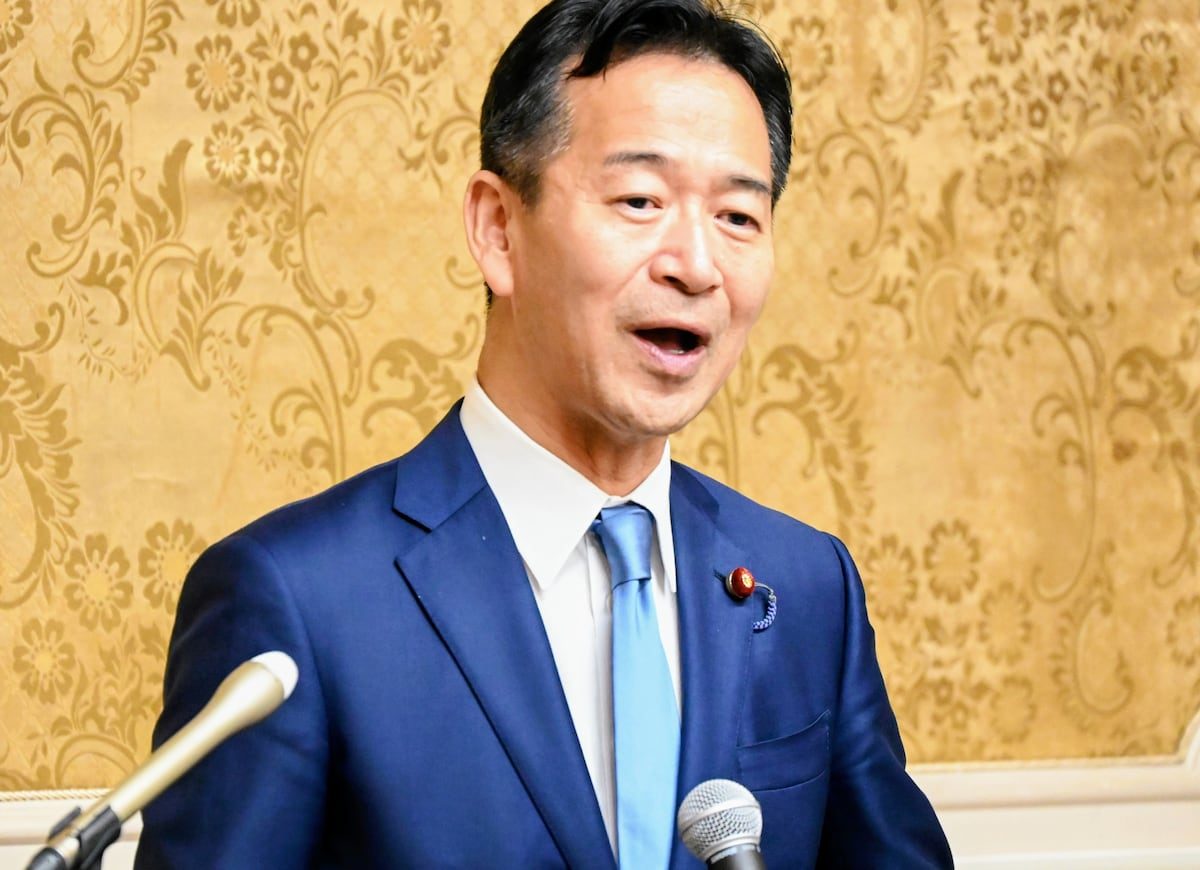
Komeito leader Mitsunari Okamoto on Tuesday called the consumption tax reduction bill that enters upper house debate on Wednesday "far too hollow," and said he could not support it as it stands, Sankei Shimbun reported.
Speaking at a news conference, Okamoto pointed to the four Liberal Democratic Party lawmakers who walked out before the lower house vote, including former Prime Minister Shigeru Ishiba. "Even people who played important roles in the LDP are putting a large question mark on this bill," he said.
He said the party is "not in any situation to vote in favor" and asked the government to review the bill as a whole.
Opposition voted as a bloc against the bill
Okamoto noted that opposition parties voted unanimously against the bill in the lower house vote on the 6th. He said "the overall picture is barely visible."
He argued that revising the bill should take priority over the LDP's reprimand of the four lawmakers. "We should improve the bill itself and make it something the public can accept," he said.
Rate cut to 1%, then back to 8%
The bill would cut the consumption tax rate on food and beverages to 1% for two years from fiscal 2027. It also includes a benefit payment system intended to ease the burden on workers.
Okamoto questioned whether the household support would achieve much, given the roughly ¥10 trillion in lost tax revenue the cut would cause. He also raised concern about confusion when the rate returns to 8% in April 2029.
On the benefit payments, he said the recipients, the amounts and the necessary funding have not been made clear. He called the provision "not worth deliberating as a bill."
No ground for compromise in the upper house
Asked about amendments during upper house debate, Okamoto said the bill is "not at all at a level where we can get on the footing of agreeing if only this point is addressed."
He criticized the government's approach of adopting opposition demands one by one as "patchwork-like work." He called for a review of the entire bill in light of the problems that surfaced during lower house debate.