
A senior government official said the three non-nuclear principles should be revised to state an exception allowing nuclear weapons into Japan in an emergency, a remark that has set the Prime Minister's Office against both coalition parties, the Nishinippon Shimbun reported.
The comment came on the day the Liberal Democratic Party and Nippon Ishin no Kai began talks on revising the three security documents. The official told reporters that writing the exception into the documents would give it a firmer legal basis.
The remark left the impression that the Kantei had already settled the matter. It landed as the two parties were only starting their discussions.
A hint from the prime minister
Prime Minister Sanae Takaichi raised the issue at a Lower House Budget Committee session on October 14. She referred to a statement by then foreign minister Katsuya Okada, under the Democratic Party of Japan government, that the government of the day would decide on nuclear weapons entering Japan aboard US warships.
Takaichi said there was room to reconsider how the three documents were worded, leaving open the option of stating an exception.
Nippon Ishin no Kai objected. Hiroshi Abe, the party's acting secretary-general and a member of the ruling-party talks, said on October 12 that leaving each government to decide only postpones the decision. He called a plan that merely states an exception insufficient and repeated his call to review the current policy.
Ishin had argued in a June proposal to the government for a "realistic review" that would allow nuclear weapons in even in peacetime. The party knew the bar was high. It had counted on Takaichi's political judgment, arguing that the "no introduction" principle is unrealistic given US extended deterrence, to open the way. Some in the party now ask whether the official's remark reflects the Kantei's collective view.
LDP caution
The LDP faces the same pressure. Many in the party, especially former defense ministers, are cautious about revising the principles. One veteran said that writing an exception into the three documents, however limited, would carry extremely heavy meaning. Others argue that any review must weigh the reactions of neighboring countries.
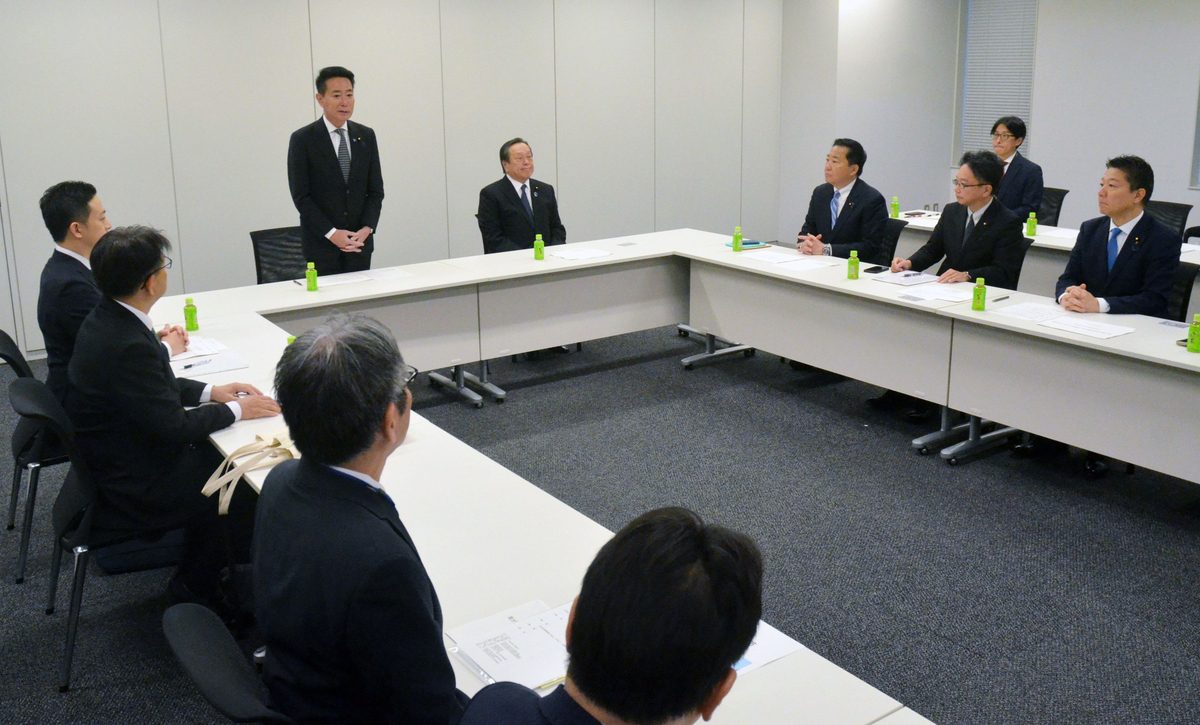
At the first meeting of the ruling-party talks on November 10, the non-nuclear principles were not on the agenda and the government offered no explanation. One member said the parties had not even discussed it yet and called the situation troubling.
Some in the LDP are also pushing in the other direction. At a party meeting on November 11, members called for debate on nuclear sharing, under which US nuclear weapons would be deployed in Japan and operated jointly. A senior official of the party's security research committee said some in the LDP want the principles changed, and described the difficulty of reconciling the views.
“However the exception is framed, writing it into the three documents would make its meaning extremely heavy.”a veteran LDP lawmaker, Nishinippon Shimbun
The Kantei, having thrown the ball to the ruling parties, appears relaxed. One official said it was now up to the parties to discuss the matter thoroughly and reach a conclusion.