
The Takayasu Cabinet lifted the five-category limit on weapons exports on April 21, 2026, opening lethal arms sales to 17 countries, and a political scientist warns the shift changes Japanese society itself, not just its military.
The five categories had restricted exports to rescue, transport, warning, surveillance and minesweeping equipment. Removing the cap lets Japan export weapons with lethal capability to the 17 countries with which it has a defense equipment and technology transfer agreement, as of April 2026.
The change came as the argument that "weapons are the key" has strengthened around the world since Russia's invasion of Ukraine. Defense spending has risen and arms exports have been liberalized in Japan as well.
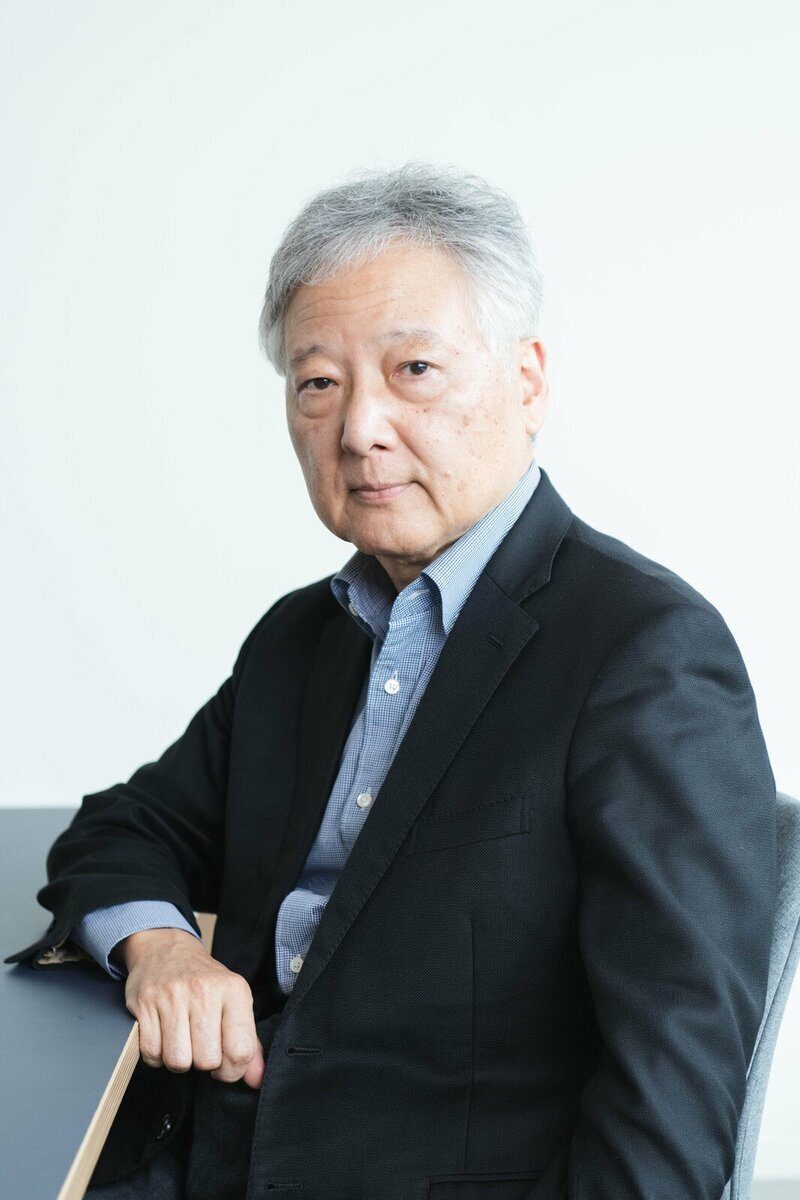
Atsushi Sugita, a political scientist, sets out the concern in a dialogue with constitutional scholar Yasuo Hasebe, published in their book "Positive Constitutionalism" (Asahi Shinsho).
The arms-race paradox
Hasebe said the "arms-race paradox" has long been understood. When one country builds up its military, rivals grow wary and build up too, accelerating the competition.
He said unilateral nuclear disarmament was once discussed, on the idea that one side disarming first would pull the other along. That thinking has faded, he said, leaving a single-track push for armament.
"It means people are losing the ability to see things over the long term," Hasebe said.
Sugita noted that defense spending is often debated only by comparing Japan's rank in the world. Hasebe said comparing numbers alone means little, and that the starting point should be the environment Japan sits in, surrounded by the United States, China and Russia.
If Japan were placed where Switzerland or New Zealand is, it would not need defense spending on this scale, he said. Whether the current budget is the true minimum or excessive should be argued separately, on that basis.
Sugita said constitutionalism can be described as a mechanism for making government think over the long term. Hasebe agreed, saying constitutionalism restrains authority in order to raise the government's capacity to govern.
Central bank independence and questioning in parliament work the same way, he said. Hearing the opposing side brings out problems a government had not noticed. Cutting that short saves time now but invites policy error later, he said, and the same should hold for armament.
A corporate body or a public square
Sugita said defenders of the constitution worry about more than war itself. They fear that militarizing society will change parts of national life beyond the uniformed military.
Hasebe drew on the distinction made by the British political thinker Michael Oakeshott (1901-1990) between two kinds of state. One is the universitas, a corporate body; the other is the societas, a state as a public square.
In a corporate body, the government sets a common goal for all citizens, and everyone serves that goal regardless of public or private, day or night. In a public square, there is no common goal. Each person decides what to live for.
There, the government's role is only to set the rules of social life, police those who break them and settle disputes.
Japan from at least the 1930s was a typical corporate body, Hasebe said. A quasi-religion making the emperor a god unified the public mind, and people served the state from morning to night, with no outside and inside, no public and private.
The result was mobilization for a war that made no sense and a vast catastrophe, he said. Postwar Japan turned sharply toward the state as a public square.
He cited constitutional scholar Yoichi Higuchi (born 1934), who said Article 9's rejection of the military created the precondition for Japan's healthy postwar democracy. Defenders of the constitution instinctively guard against military moves, Hasebe said, because they fear a return to the corporate-body state of the prewar and wartime years.
Civilian control as a paper argument
Sugita said a military is by nature hard to turn into a public square, since it cannot function without strong discipline. The old Japanese army had ferocious discipline, and aspects of it carried into school and company sports culture after the war.
Some who want the Self-Defense Forces written into the constitution argue that formal recognition should come with civilian control. Sugita said he doubts Japanese society has the capacity for that.
Even as the postwar Self-Defense Forces tried to break continuity with the old army, old traditions were carried on in education at the National Defense Academy, he said. Writing the force into the constitution, or defining it as a "national defense force" as Nippon Ishin advocates, would revive and pass on old army culture further.
"Isn't 'we can just control it' largely a paper argument?" Sugita said.
Hasebe linked the question to the Science Council of Japan, whose membership the government moved to change. Making scholars cooperate for a national goal is a corporate-body idea, he said.
Scholarship and science can only work when researchers pursue their own questions under the methods and evaluation systems of their fields, he said. Pulling them into a unified national goal is therefore a serious problem.
Sugita said the ideal of the state as a public square connects directly to a thick definition of constitutionalism, as the coexistence of plural values. Hasebe agreed: pursued purely, constitutionalism leads to the state as a public square, and protecting that state is protecting constitutionalism.
“Pursued purely, constitutionalism leads to the state as a public square.”Yasuo Hasebe, constitutional scholar