
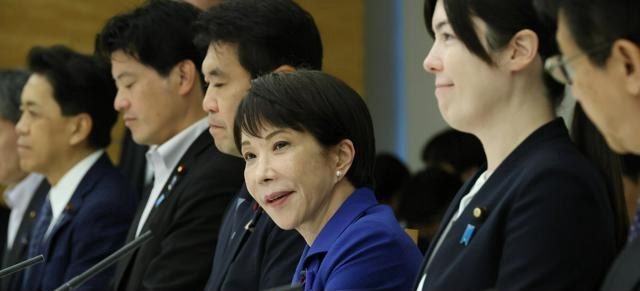
Japan's ¥1 trillion space strategy fund, a priority for Prime Minister Sanae Takaichi, went before a government review by experts on Friday, as officials questioned whether the spending is wasteful and why the sum is so large, the Asahi Shimbun reported.
The fund supports space technology development at private companies and universities for up to 10 years. It aims to expand Japan's domestic space market from ¥4 trillion in 2020 to ¥8 trillion by the early 2030s.
Space development demands heavy investment. One theme solicited under the fund, a high-resolution, high-frequency optical satellite observation system, carries a support ceiling of ¥28 billion.
How the fund reached ¥1 trillion
The government has added ¥300 billion in the fiscal 2023 supplementary budget, ¥300 billion in fiscal 2024 and ¥200 billion in fiscal 2025, for ¥800 billion in total. It is seeking ¥128.6 billion in fiscal 2027, aiming for a final total of about ¥1 trillion.
The ¥1 trillion figure is a policy target, not a sum of what each project needs. The Cabinet Office describes it as "a message to draw in businesses, investors and financial institutions."
Takaichi is closely tied to the fund. As space policy minister she oversaw the revision of the basic space plan that led to its creation. After becoming prime minister she included "prompt support totaling about ¥1 trillion" through the fund in the November 2025 economic package, and made space one of 17 growth strategy fields.
The Cabinet Office says a multi-year fund is needed because space development, satellite work for instance, takes a long time to reach demonstration and carries unprecedented challenges and risks. A medium- to long-term view of funding is essential, it says.
Where the money goes
Spending falls mainly into three fields: transport, satellites and exploration. It covers technology for rocket parts and launch sites, satellite communications and Earth observation data, and lunar infrastructure and in-orbit services.
Some adopted projects are already in practical use, including the construction of commercial satellite constellations that fly large numbers of small satellites.
- Phase 1: 22 themes, 55 projects, support ceiling ¥280.2 billion, ¥164.2 billion contracted or granted, as of the end of September
- Phase 2: 24 themes, 112 projects, support ceiling ¥250.6 billion, ¥131.3 billion contracted or granted
- Phase 3: applications and screening under way; the fund balance is projected at ¥587.4 billion at the end of fiscal 2026