
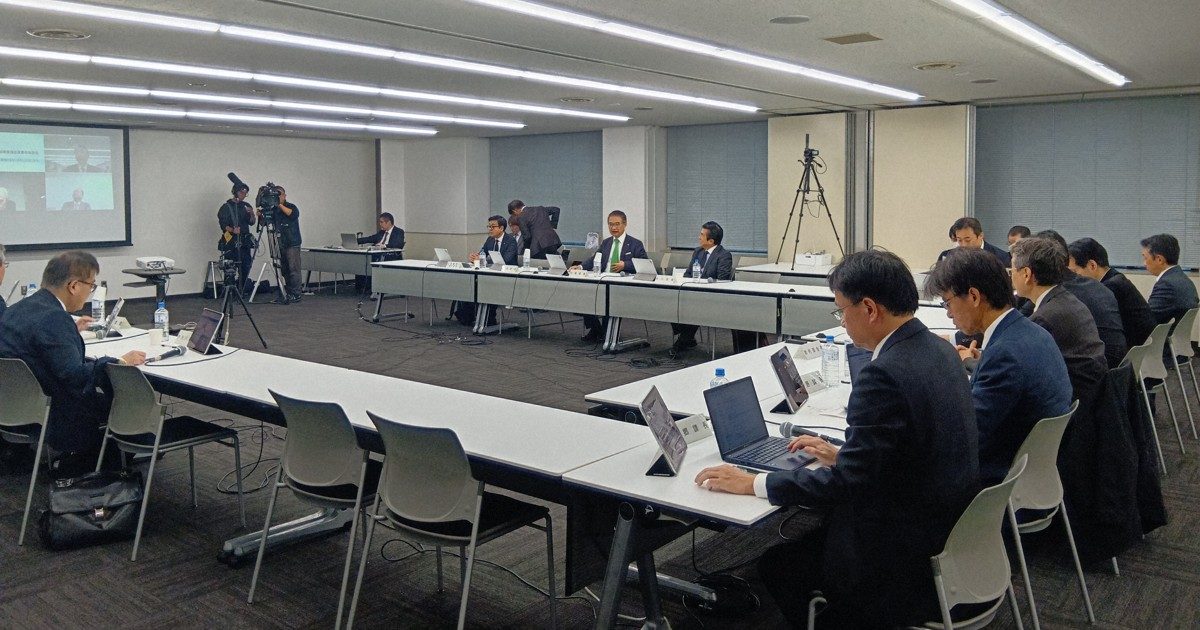
The health ministry began discussions on November 5 on raising the annual cap on premiums under the medical system for people aged 75 and over, and on revising relief measures for low-income enrollees. It sought the views of members of the Medical Insurance Subcommittee of the Social Security Council, an advisory body to the health minister, citing rising employment rates and average incomes among older people.
Premiums under the later-stage elderly medical system — the public health insurance scheme for people aged 75 and older — have two parts. Everyone enrolled pays a flat-rate portion, and those with higher incomes pay an income-based portion on top.
The flat-rate portion is about 56,000 yen a year, the fiscal 2026 national average. People with income below a set level have it reduced by up to 70 percent.
The income-based portion applies to people earning more than 1.53 million yen a year. They pay roughly 10 percent of the amount left after 1.53 million yen is subtracted from their income.
More elderly in work
Behind the review is the growth in the number of older people still working since the system began in 2008. The employment rate for people in their late 70s was 20.8 percent in 2024, up from 12.8 percent in 2008. For people in their early 70s, who are about to move onto the scheme, it was 35.1 percent, up from 21.8 percent.
Incomes among people aged 75 and over have risen in step, averaging 1.058 million yen in fiscal 2025 against about 890,000 yen in fiscal 2008.
Against that backdrop, the ministry plans to consider raising the annual cap, currently 850,000 yen, and further dividing the relief measures for low-income enrollees into finer categories.
The review will also cover a time-limited measure that lightens the burden on full-time homemakers and parents who were dependents of a household head such as a company employee until the day before they joined the scheme.