
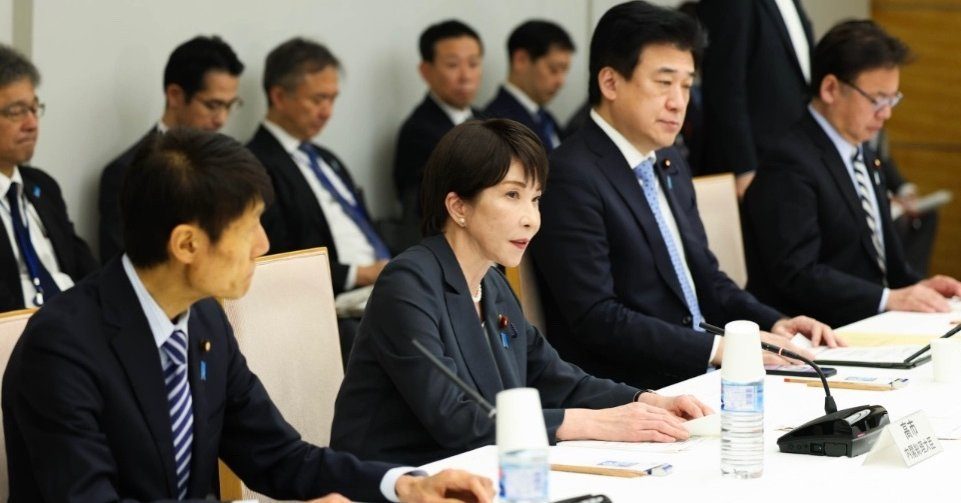
The government held the first meeting of its ministerial council on cyber security at the Prime Minister's Office on October 26. Prime Minister Sanae Takaichi said the government would put together an emergency response package by the end of next week and told ministers to speed up work on the measures, including funding.
"Repeated cyberattacks on Japanese companies and others are causing large-scale data leaks and many other incidents," Takaichi said at the meeting. She described the spread of leaked information and rising public fear of secondary misuse as serious, and said countermeasures needed to move quickly.
The meeting follows a run of attacks on Japanese companies and disclosures of leaked data. Ransomware attacks hit Asahi Group Holdings in September 2025 and Askul the following month, and companies have kept announcing breaches since. In September this year, about 6.6 million accounts were leaked from the car-sharing service Times Car, and more companies disclosed breaches in October.
Striking back at attackers
Takaichi said the government would choose and carry out every available response against cyberattacks it has traced, including "access and neutralization measures." Under active cyber defense, which began operating on October 1, police and the Self-Defense Forces can shut down the functions of servers used to launch attacks. The government will also work with allies and overseas agencies, coordinated by cyber security minister Toshihiro Furukawa, to identify who is behind attacks.
The government will bring forward checks for software and network vulnerabilities. Economy, Trade and Industry Minister Ryosei Akazawa said the government would draw on the expertise and staff of the Information-technology Promotion Agency (IPA) and use high-performance AI, with "top gun" specialists skilled at finding weaknesses running simulated attacks against systems. It will also build a monitoring network across supply chains so that small and mid-sized companies can respond quickly.
Checking the government's own systems
The government's own systems are in scope too. Ministers will carry out vulnerability checks using high-performance AI ahead of schedule, drawing on the AI Safety Institute (AISI), a domestic body that assesses AI safety, and will make sure the systems run by their ministries and agencies are secure. Furukawa is leading that work.
For companies that are attacked, the government will expand consultation services run by IPA and the police and strengthen cooperation with private organizations and local governments, so that victims can get the help they need wherever they ask. The National Cyber Security Office has been told to work with the Ministry of Economy, Trade and Industry to build a system that uses advanced private-sector expertise from the first response through to recovery.
For small businesses, the government will expand the Cyber Security Support Team program and its consultation desks, and push information out to them directly rather than waiting for them to ask.
Takaichi also asked ministries to improve how they gather and release information. Ministers will collect details quickly from affected companies in the industries they oversee, not only from critical infrastructure operators, and pass them to the National Cyber Security Office. The office will analyze the information and release it with a clear audience in mind, whether executives, specialists or the general public. The government will also urge security vendors and other firms to join a cyber consultative council to broaden its sources of information.