
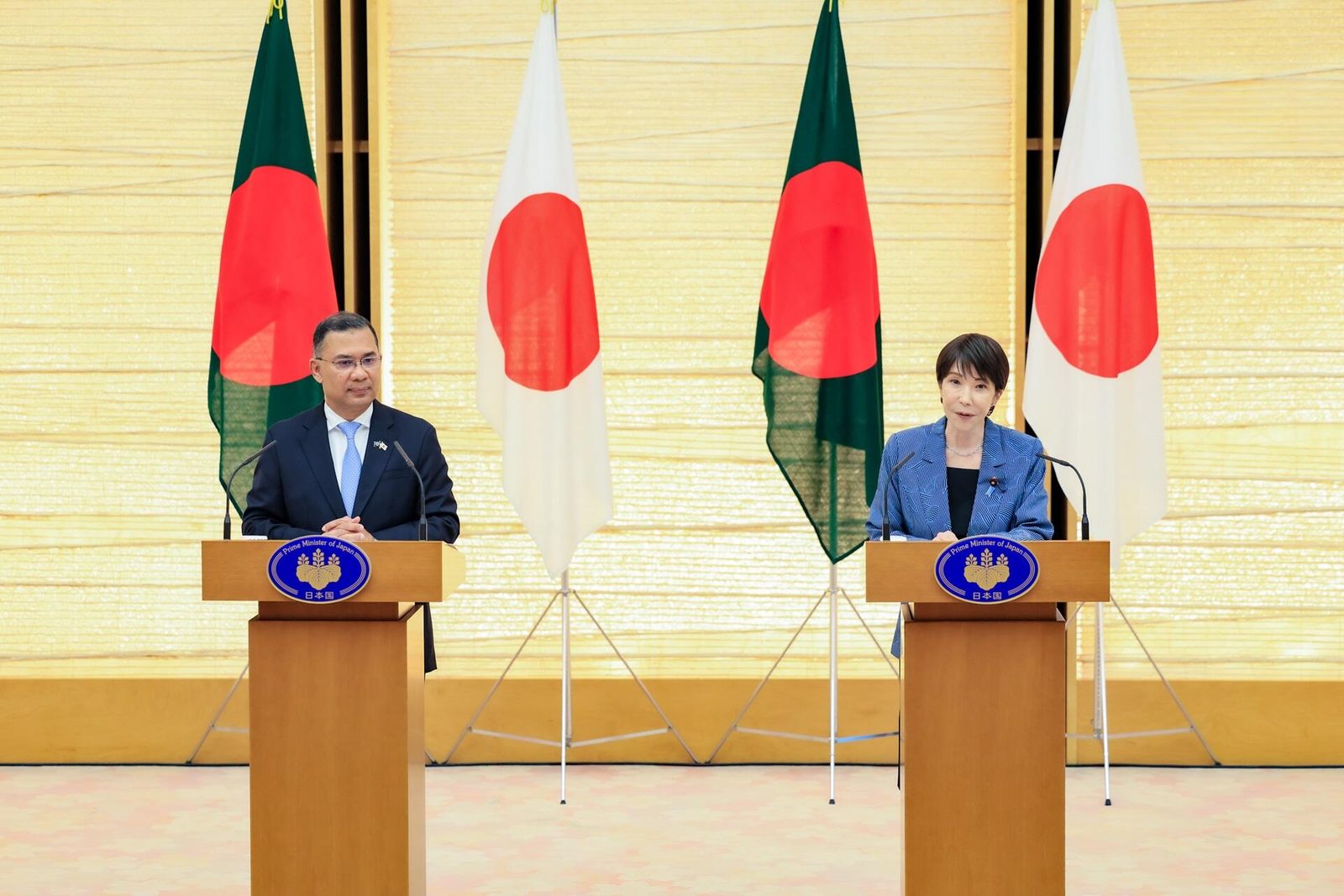
Japan's foreign ministry has denied social media claims that the government agreed to accept 100,000 workers from Bangladesh, after the false reports spread following a summit in Tokyo.
Prime Minister Sanae Takaichi met her Bangladeshi counterpart, Rahman, on October 27 and told him Japanese corporate investment in Bangladesh is expected to reach ¥1 trillion over the next five years. False claims that the two sides had agreed on a 100,000-worker intake spread on social media soon after.
On October 29, a foreign ministry spokesperson denied it on X, formerly Twitter, saying there was no such fact, including in the leaders' exchange. J-CAST News reported the sequence of events.
A similar false claim last year
A comparable rumor circulated in August last year, when the Japan International Cooperation Agency designated four Japanese cities as "hometowns" for four African countries. False claims that immigration would rise spread, the four cities were flooded with inquiries and complaints, and JICA withdrew the program.
Behind the sway of public opinion by such false information lies growing unease and dissatisfaction over the increase in foreigners, and a tangle in Japan's foreigner policy.
In last summer's upper house election, the Sanseito party, which campaigns on "Japanese first," made gains by eroding the Liberal Democratic Party's support base. In the LDP leadership race last autumn, Takaichi said she intended to reconsider foreigner policy "from scratch," drew the expectations of conservatives drifting from the party, and went on to become leader and then prime minister.
Stricter residency and naturalization rules
In January this year, Takaichi's government adopted a new policy on foreigners, titled "Comprehensive Measures for the Acceptance of Foreigners and Orderly Coexistence." It sets out responding to the unease and sense of unfairness felt by Japanese citizens over illegal acts and rule-breaking by some foreigners as its basic approach.
Under the policy, residency screening will check strictly whether applicants pay taxes and social insurance premiums. Permanent residency will require Japanese language ability, and the conditions for naturalization will be tightened.
In an NHK opinion poll conducted last December, before the policy was compiled, 70% of respondents supported tightening the conditions for acquiring nationality.