
Japan is expanding its defenses against cognitive warfare — foreign efforts to sway public opinion through disinformation and targeted narratives — even as researchers say the government has little experience running such operations.
The first official policy line came in the national security strategy revised in 2022. It called for a new government structure to gather and analyze information on foreign disinformation and to strengthen messaging abroad.
Work on that structure went forward through the Cabinet Intelligence and Research Office, the National Security Secretariat and the cabinet public relations officer, in coordination with ministries and agencies.
Takaichi puts the issue front and center
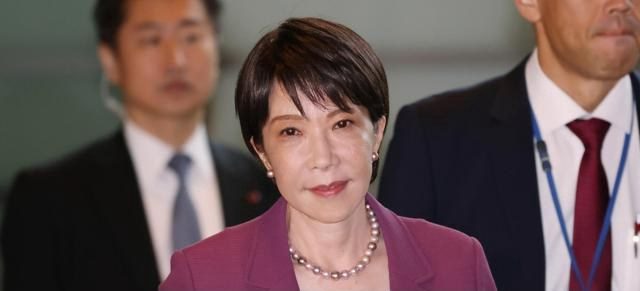
Prime Minister Sanae Takaichi's administration has made cognitive warfare a priority. At the Defense Ministry, the press secretary and the chief of the Joint Staff have opened accounts on X to rebut Chinese criticism of Japan as a "new militarism."
The ministry plans to create a dedicated unit for cognitive warfare in the next fiscal year. It would handle information gathering, analysis, evaluation and messaging in one place.
A new command center for intelligence set up in July at the prime minister's initiative, the National Intelligence Council, was also given responsibility for responding to influence operations by foreign forces.
In budget requests for fiscal 2027, the Cabinet Public Affairs Office sought 7.2 billion yen, ten times its request the previous year. The figure drew heavy debate, and the prime minister cited cognitive warfare as one reason for it.
“Looking at the world, as the security environment changes drastically, information warfare and cognitive warfare have intensified in recent years, and we will strengthen the transmission of Japan's position and policies to the international community.”Sanae Takaichi, prime minister, in a Diet answer in October
The government intends to go further. The national security strategy due for revision at the end of the year will address the topic "much more generously than last time," a senior official in the prime minister's office said.
A toolbox without a track record
Jun Osawa, a senior research fellow at the Nakasone Peace Institute, said Japan is still a beginner. "Japan is still inexperienced when it comes to cognitive warfare, and response methods have not been established within the government," he said.
Osawa said a command center with an overview of the whole effort is not enough. Better analytical tools and a long-term strategy are also needed, he said.
Overseas examples show the risk runs the other way too. Measures against cognitive warfare can themselves deepen political divisions in a society.
Kyoko Kuwahara, a research fellow at the Japan Institute of International Affairs who studies foreign information manipulation and interference, pointed to the United States as a case of failure.