
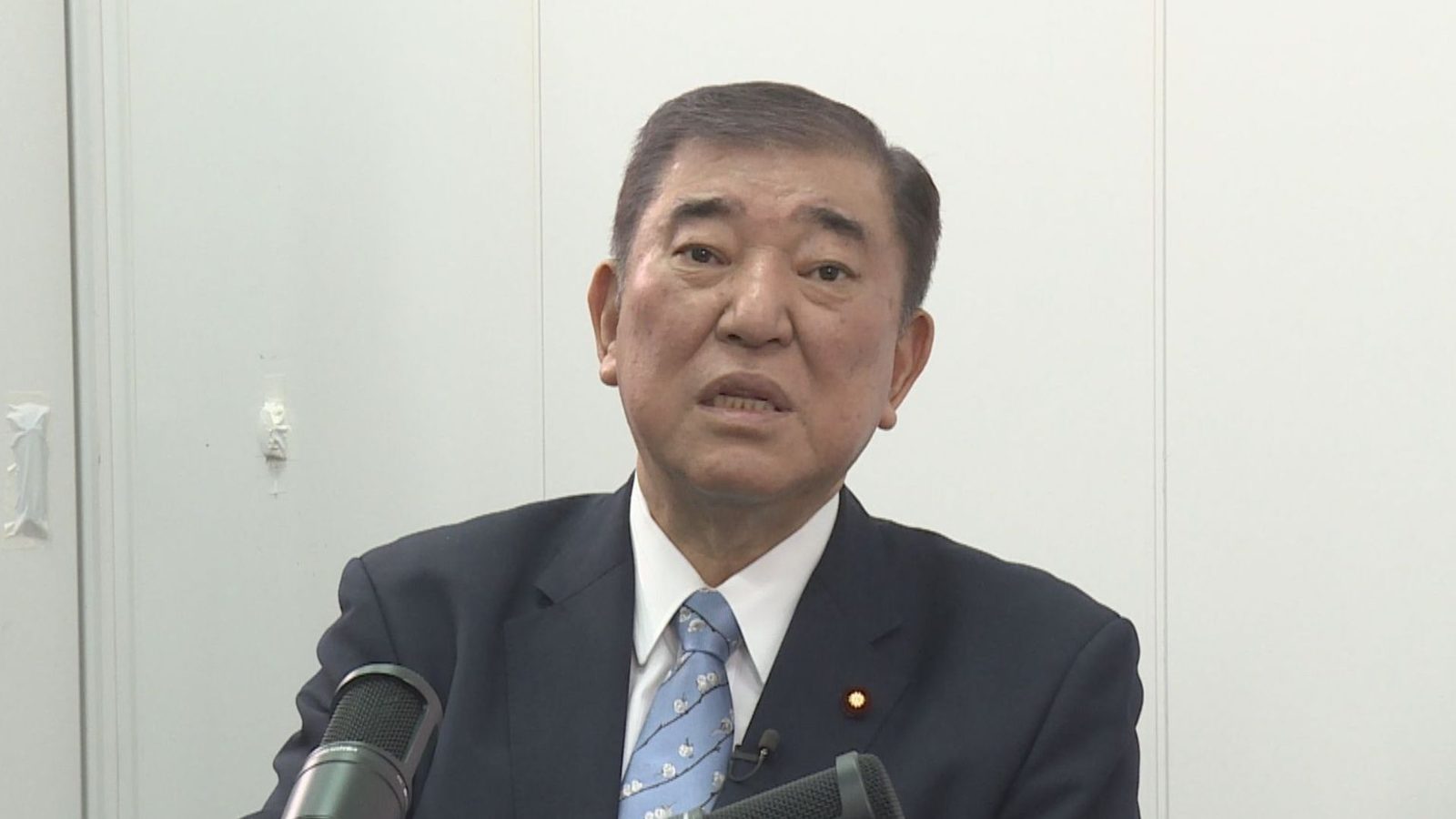
Former Prime Minister Shigeru Ishiba said the revised Imperial House Law took effect without the public's consent and that he wants to revise it again, Kansai TV reported.
The revised law took effect on the 24th of last month. It lets female royals keep their imperial status after marriage and allows male-line men from former imperial branch families to be adopted into the imperial family. Both steps are meant to halt the shrinking number of royals.
Ishiba appeared on a Kansai TV online program on the 2nd of this month. His interlocutor was former Lower House member Yasuko Ikenobo, who comes from the former peerage, the Meikei family. Her mother was a cousin of Empress Kojun, Emperor Naruhito's grandmother.
"Did anyone ask the public?"
Ishiba said the Constitution states that the Emperor's position rests on the will of the people, in whom sovereignty resides. He asked whether that will had been consulted this time.
“There was an election in February, but I don't know a single candidate who talked to the public about the Imperial House Law.”Shigeru Ishiba, former prime minister
He said he carries a strong sense of regret that politicians have neglected the public's will to protect themselves. Speaking about the Emperor's position, he added, is too awe-inspiring, and the debate was avoided for that reason.
“I feel very strongly that we have neglected the public's will out of self-preservation.”Ishiba, former prime minister
Since the Meiji era, only men descended from the Emperor through the male line have been able to inherit the throne.
What the revision changed
- Female royals keep their imperial status after marriage. Princess Aiko, the elder daughter of the Emperor and Empress, could remain in the imperial family if she married. Any children she had could not inherit the throne.
- Male-line men from former imperial branch families can be adopted into the imperial family. The adopted man himself cannot inherit, but descendants born to him could.
Why not a female or maternal-line emperor?
Ikenobo said she finds it odd that a royal woman who stays in the family would have a husband and children who remain ordinary citizens, a situation she likened to separate surnames for married couples.
“A husband and wife in the same household, yet not in the same position. I think that is a distorted way for a family to be.”Yasuko Ikenobo, former Lower House member
Ishiba said the revision never squarely debated whether a woman or a child of a female-line emperor could take the throne. He said there is no answer to the question of why such an outcome should be ruled out, and that fuller debate is needed.
He also recalled serving as chief attendant on the Emperor and Empress's visit to the Netherlands and Belgium in June. Watching them up close, he said, left him in awe.
“At the same time, did we politicians really speak to the sovereign people? I feel very strongly that we did not.”Ishiba, former prime minister
Ikenobo asked him to listen to each person's views and change the law under the next government. Ishiba replied that he would do his best.